
Waste Management – Ghazipur Landfill Remains a Major Challenge for Delhi
Waste Management – Delhi waste remediation efforts continue as authorities work to reduce the long-standing garbage mound at the Ghazipur landfill, where millions of tonnes of old waste remain and nearby residents report persistent concerns about odour, dust and health conditions.
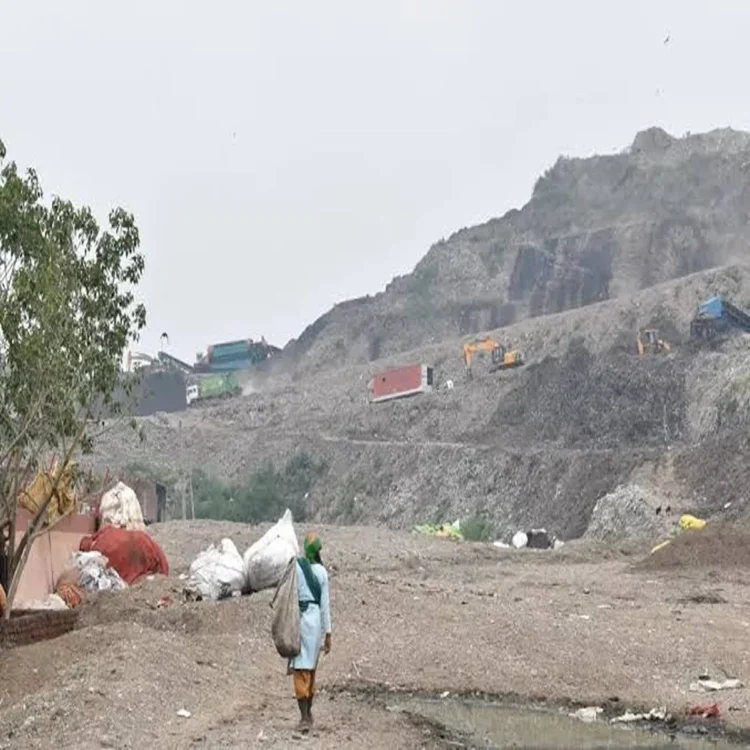
A 12-year-old girl, Shajia, walks barefoot outside her home near the Ghazipur landfill in east Delhi. She hopes to become a mathematics teacher, though her family worries that the difficult living conditions around the landfill may limit her opportunities. Residents say many children in the area have faced poor health from an early age, including physical weakness and respiratory discomfort.
Daily Life Near the Garbage Mountain
For families living close to the landfill, the smell of waste has become part of everyday life. Residents say the odour is particularly severe during summer and the monsoon, when changing winds carry it through nearby homes and lanes. Dust, flies and breathing problems are also frequently mentioned by people in the locality.
Savita, who has lived near the site for about 25 years, said the monsoon often makes the situation worse. According to her, strong winds during the rainy season spread the smell across the neighbourhood, making it difficult for residents to keep their homes free from the effects of the landfill.
She also said door-to-door waste collection in her area has not operated for nearly a year. Earlier, municipal vehicles collected household waste from residents, she said. Now, some families keep their garbage in bags on rooftops or balconies until they can dispose of it elsewhere.
Large Volume of Legacy Waste Still Remains
The Ghazipur landfill is one of Delhi’s three major legacy waste sites, along with Bhalswa and Okhla. The Municipal Corporation of Delhi is using biomining to process old waste at these locations. The method involves digging up waste and separating it through large rotating machines called trommels.
The process helps sort soil-like material, recyclable items and refuse-derived fuel that can be used or treated separately. It is a central part of the city’s plan to remove landfill mountains that have accumulated over several decades.
Despite progress, Ghazipur remains Delhi’s largest unfinished landfill remediation project. Official figures indicate that about 67 lakh metric tonnes of legacy waste are still present at the site. The scale of accumulated waste means Ghazipur is expected to require more time for completion than the Bhalswa and Okhla landfill projects.
Progress Reported at Bhalswa and Okhla
At Bhalswa, around 26 lakh metric tonnes of old waste are still awaiting processing. The biomining work there has reclaimed approximately 35 acres of land, while 24 trommel machines are being used to screen the waste.
Okhla has a smaller remaining waste load, with nearly 18 lakh metric tonnes yet to be processed. Authorities have reclaimed around 25 acres at that site, where 18 trommel machines are currently in operation.
Together, Bhalswa and Okhla still hold about 44 lakh metric tonnes of legacy waste. The figures show that although land reclamation has advanced at both sites, substantial work remains before the landfill areas can be fully cleared.
Fresh Waste Adds to the Pressure
Delhi generates close to 14,000 metric tonnes of municipal solid waste each day, adding pressure to the city’s waste-processing system. Rapid urban growth, changing consumption habits and limited segregation of household waste have made the task more difficult.
While the civic body has announced plans to expand waste-processing capacity, new waste continues to enter the system as old waste is removed through biomining. Residents near Ghazipur say the success of the programme should be judged not only by processing targets, but also by whether living conditions improve around the landfill.
Amit, a local shopkeeper who has lived in the area since 1976, said residents have long raised concerns about illness and respiratory problems among children. For families near the site, the removal of the landfill would mean cleaner air, fewer flies and a safer environment for children.