
UNSC Campaign – India Outlines Maritime Security and Anti-Terror Priorities at United Nations
UNSC Campaign – India has formally launched its campaign for a non-permanent seat on the United Nations Security Council (UNSC) for the 2028-29 term, with External Affairs Minister S. Jaishankar presenting the country’s key global priorities. Addressing diplomats, ambassadors and senior UN officials, he said India would work to ensure greater attention to maritime security, the safety of seafarers, and efforts to curb terror financing while promoting a rules-based international order.
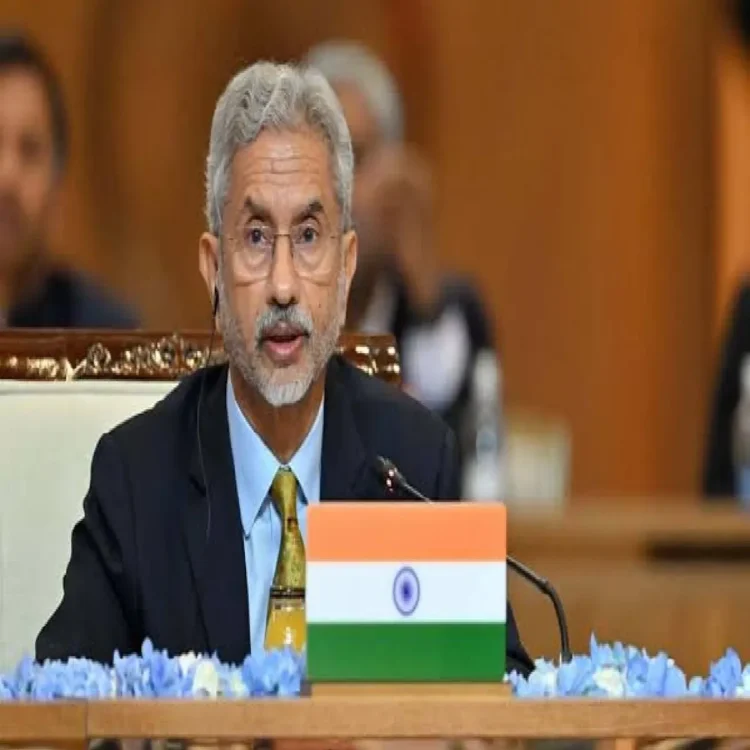
India Presents Vision for the Security Council
Speaking during the launch event, Jaishankar said India’s engagement with the United Nations is guided by the vision of “SHANTI” — Securing Holistic Advancement through Norms, Trust and Integrity. He explained that this framework reflects New Delhi’s approach to addressing contemporary global challenges while supporting international cooperation.
According to the minister, India’s agenda for the 2028-29 UNSC term includes representing the interests of the Global South, advocating reforms in multilateral institutions, strengthening future-ready peacekeeping operations, addressing security risks linked to the misuse of artificial intelligence, protecting maritime commons, and intensifying action against terror financing.
Maritime Security Among India’s Key Priorities
Jaishankar highlighted the growing importance of secure sea routes as global trade increasingly depends on uninterrupted maritime connectivity. He said all nations have a shared responsibility to uphold international law, particularly the United Nations Convention on the Law of the Sea (UNCLOS), to ensure safe and open navigation.
He also stressed the need for stronger international cooperation to tackle piracy and other maritime threats. Referring to recent developments in the Gulf region, the minister noted that the safety of seafarers has become an urgent concern amid ongoing regional instability.
India, he said, has consistently contributed to humanitarian assistance, disaster relief, search-and-rescue operations and capacity-building initiatives while sharing operational expertise with partner countries. He added that these concerns would remain central to India’s engagement at the Security Council.
Expanding India’s Maritime Role
Jaishankar pointed out that Indian naval and maritime forces continue to participate in anti-piracy, counter-narcotics and anti-human trafficking operations across several strategic waterways. These deployments cover areas including the Arabian Sea, Gulf of Aden, Malacca Strait, Indo-Pacific region and even the Gulf of Guinea.
India’s emphasis on maritime security comes at a time when tensions in West Asia have disrupted major shipping routes. The conflict involving Iran, Israel and the United States has raised concerns over the Strait of Hormuz, a critical global energy corridor. The situation has affected international supply chains, influenced fuel prices and increased risks for commercial shipping. Several Indian seafarers have been rescued during the crisis, while 11 Indian nationals have reportedly lost their lives amid the conflict.
Strong Push Against Terror Financing
Another major focus of India’s campaign is strengthening international efforts to disrupt financial networks supporting terrorism. Jaishankar said that while many countries have worked to counter terrorist activities, greater emphasis is now required to cut off funding sources that allow such organisations to operate.
He said India would support objective and evidence-based mechanisms for identifying and listing terrorist organisations through the United Nations framework. According to him, limiting financial resources available to extremist groups is essential for achieving lasting progress in global counter-terrorism efforts.
India Highlights Peacekeeping and Technology Vision
The minister also underlined India’s long-standing contribution to UN peacekeeping operations. With around 4,300 Indian personnel serving across 10 active UN peacekeeping missions, he said the country has significant experience in preparing peacekeeping forces to address evolving security challenges.
Jaishankar further said India supports a human-centric approach to artificial intelligence that balances technological innovation with responsible governance. He noted that India’s experience in expanding digital access globally also shapes its approach to AI discussions at international forums.
India will contest the Asia-Pacific Group seat for the 2028-29 UNSC term against Tajikistan in elections scheduled for June next year. The country previously served as a non-permanent member of the Security Council during the 2021-22 term, marking its eighth tenure in the 15-member body. Concluding his address, Jaishankar said India remains committed to dialogue, diplomacy and consensus-building while continuing to represent the interests of developing nations during periods of global uncertainty.