
Tuberculosis – Drone-Based Sample Delivery Speeds Up TB Diagnosis Across Rural India
Tuberculosis – The use of drones to transport tuberculosis diagnostic samples has shown remarkable improvements in reducing testing delays and lowering healthcare costs, according to a recent study conducted by the Indian Council of Medical Research (ICMR).
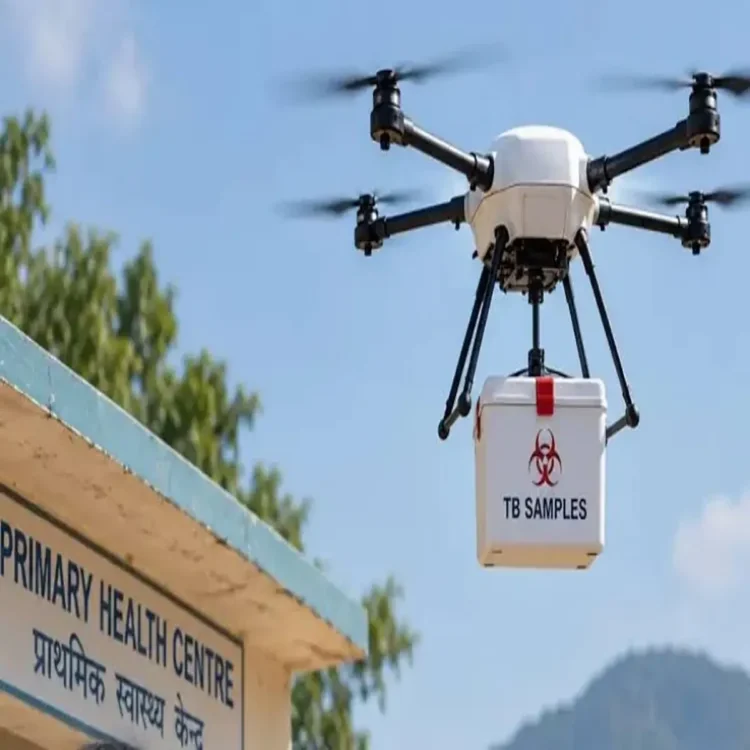
Study Highlights Faster Diagnosis
A new implementation study by the Indian Council of Medical Research has revealed that transporting tuberculosis (TB) samples through drones can dramatically improve the speed of diagnosis while making testing more accessible for people living in remote regions. Conducted under the i-DRONE initiative, the research found that the average time required to receive TB test results declined from 15 days to just five days after drone services were introduced.
The study was carried out in Telangana’s Yadadri-Bhuvanagiri district in partnership with AIIMS Bibinagar and the District TB Office as part of the National TB Elimination Programme (NTEP). Researchers assessed the impact of drone-enabled transportation by comparing it with the conventional system, where patients often had to travel significant distances to reach diagnostic laboratories.
Significant Reduction in Patient Expenses
Apart from reducing waiting time, the project also eased the financial burden on patients. According to the findings, the average out-of-pocket expense associated with obtaining a TB diagnosis dropped sharply from nearly ₹9,451 to approximately ₹91 after the drone-based model was implemented.
Researchers noted that the savings resulted mainly from lower travel expenses, reduced loss of daily wages and the availability of sputum collection services at nearby Primary Health Centres (PHCs) and sub-centres. The report further observed that the median out-of-pocket expenditure during the drone-supported phase was zero, indicating that many participants did not spend anything on travel for diagnostic services.
Local Collection Improved Accessibility
Instead of requiring patients to visit distant diagnostic facilities, the revised system allowed sputum samples to be collected at healthcare centres closer to their homes. These samples were then transported by drones to designated TB testing laboratories.
The operational model connected 11 Primary Health Centres, 60 sub-centres and four TB units through a hub-and-spoke network. This arrangement enabled faster movement of samples while reducing the inconvenience faced by patients residing in geographically isolated villages.
Officials Highlight Public Health Benefits
Commenting on the findings, ICMR Director General and Department of Health Research Secretary Dr. Rajiv Bahl said timely and affordable diagnosis remains an essential component of India’s efforts to eliminate tuberculosis. He stated that technological innovations such as drone-based logistics can help overcome geographical barriers while reducing the burden on patients, particularly in underserved communities.
He also noted that evidence generated through the i-DRONE programme could support future public health innovations and strengthen existing healthcare delivery systems across the country.
Healthcare Workers Report Positive Experience
Healthcare professionals involved in the project reported that drone-assisted transport improved operational efficiency and reduced delays in the diagnostic process. They also observed that local communities gradually accepted the technology after becoming familiar with its use.
The study included 840 participants and demonstrated that quicker sample transportation contributed to earlier confirmation of TB cases, allowing healthcare providers to make faster treatment decisions.
Challenges Identified for Wider Expansion
While the results were encouraging, researchers also identified several operational issues that need attention before expanding the programme on a larger scale. Weather-related disruptions, payload capacity of drones and the requirement for continuous training of personnel were among the key challenges highlighted during implementation.
The researchers emphasised that the findings are based on experience from a single district and provide valuable operational evidence for evaluating drone-enabled healthcare logistics. They suggested that similar studies across different regions and geographical conditions would help policymakers better understand the technology’s effectiveness before broader deployment.
The i-DRONE initiative continues to examine the use of drones for transporting vaccines, medicines, blood products, tissue samples and diagnostic specimens with the objective of improving healthcare access in difficult-to-reach parts of India