
TrafficManagement – Delhi Pushes Community-Led Plan to Improve Daily Road Movement
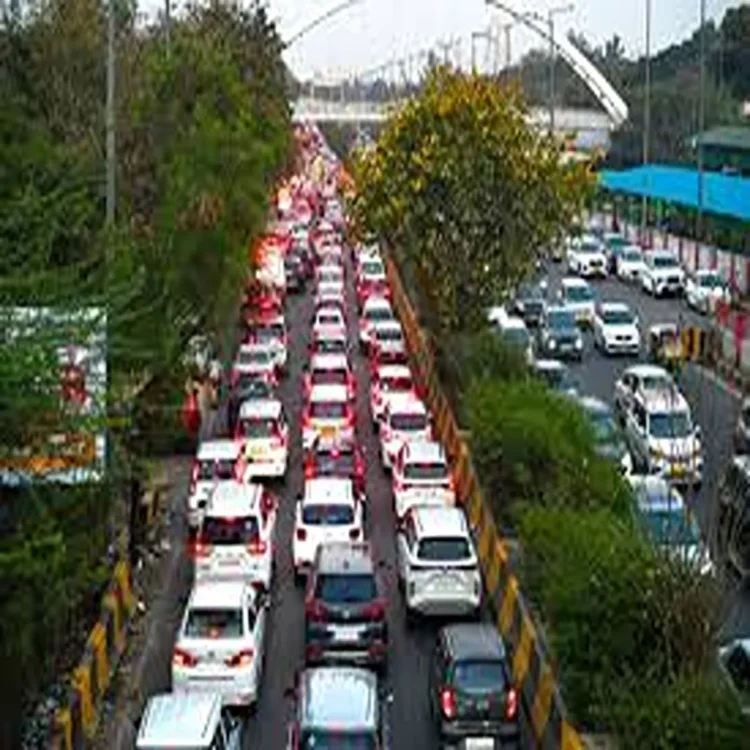
TrafficManagement – Delhi has begun implementing a fresh approach to traffic regulation through Project Sangam, an initiative introduced under the guidance of Lieutenant Governor Taranjit Singh Sandhu. The program is designed to move beyond conventional traffic policing by encouraging stronger cooperation between government departments, local communities, and citizens to solve everyday road congestion issues across the capital.
Community Participation at the Centre of the Initiative
Project Sangam, formally known as Systematic/Synergistic Action & Networked Governance for Area Mobility, was launched on April 3 with the objective of creating a more coordinated traffic management system. Instead of relying solely on enforcement actions, the initiative focuses on involving Resident Welfare Associations, Market Welfare Associations, and young volunteers in identifying and addressing local traffic concerns.
Officials said the model is intended to create better communication between traffic authorities, civic agencies, and residents. In just over six weeks, the project has reportedly improved coordination in several parts of Delhi where heavy congestion and irregular parking had become frequent concerns during peak hours.
Measures Introduced Across Key Congested Corridors
During a recent review meeting, the Lieutenant Governor was informed about several corrective measures introduced in busy traffic zones across the city. Authorities have focused on improving movement in areas that regularly witness long traffic queues and commuter delays.
One of the major interventions has been carried out along the UER-II corridor in the Dwarka zone. Traffic authorities have developed 13 free left-turn points to improve vehicle flow and reduce waiting time at intersections. In addition, plans for four new foot overbridges are being considered to improve pedestrian safety and reduce disruptions caused by road crossings.
Officials believe these changes could significantly improve connectivity in one of the city’s rapidly expanding residential and commercial stretches.
Action Around Airport and Residential Areas
Another major operation was conducted near Mehram Nagar, located close to Indira Gandhi International Airport. Authorities removed illegal roadside vending activities and cleared unauthorised parking spaces that were contributing to traffic congestion in the area.
Traffic police also issued a large number of challans during the enforcement drive. CCTV cameras and updated traffic signboards were installed to strengthen monitoring and guide motorists more effectively. Officials said the steps were aimed at ensuring smoother movement for airport-bound traffic and local commuters alike.
Anti-Encroachment Drives Expanded to Other Locations
The campaign has also been extended to multiple neighbourhoods across Delhi, including Narela, Ashok Vihar, West Patel Nagar, and Chandni Chowk. Authorities carried out anti-encroachment operations and introduced additional traffic management measures in these locations to address bottlenecks caused by roadside obstructions and unregulated parking.
Traffic officials stated that the involvement of local groups has helped agencies respond faster to recurring issues. Residents and market associations have reportedly assisted in identifying problem areas and encouraging voluntary compliance among commuters and shopkeepers.
Focus on Long-Term Urban Mobility Solutions
Project Sangam is being viewed as part of a broader attempt to modernise Delhi’s urban traffic system through collaborative governance. Instead of depending entirely on punitive measures, the initiative aims to create shared responsibility between authorities and the public.
Experts believe such partnerships can help improve long-term traffic discipline while reducing pressure on enforcement agencies. Authorities are expected to continue reviewing the programme’s impact in the coming months and may expand similar community-based mobility strategies to additional parts of the city if the current model proves effective.