
TempleHeritage – Court Verdict Rekindles Debate Over Dhar’s Bhojshala Legacy
TempleHeritage – The recent ruling by the Indore High Court on the long-standing Bhojshala dispute has been welcomed by the Vishva Hindu Parishad (VHP), with the organisation describing the judgment as a landmark development rooted in historical and legal evidence. VHP International President Alok Kumar said the court’s observations regarding the centuries-old structure in Dhar, Madhya Pradesh, reflected the findings of scientific studies and historical records presented during the proceedings.
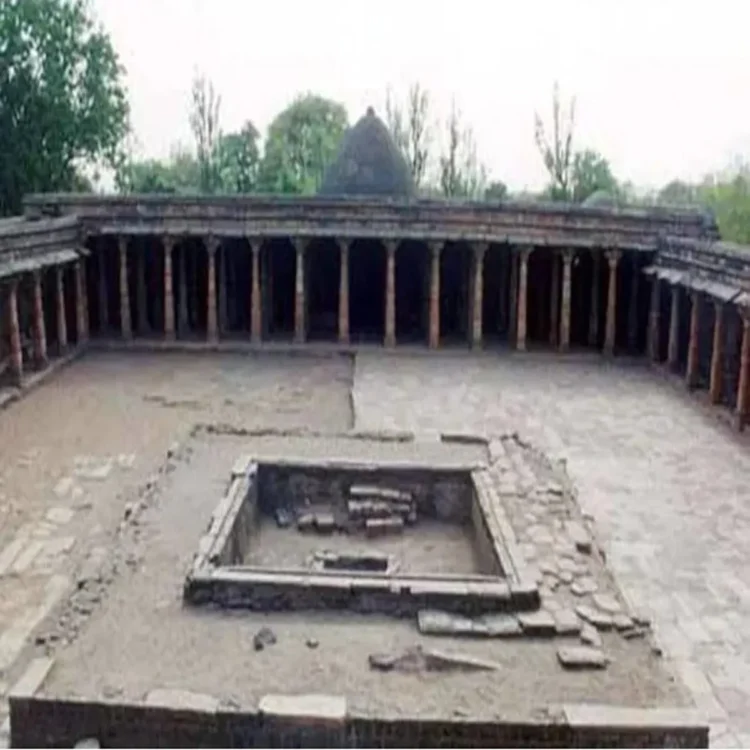
Court Ruling Receives Strong Support
Reacting to the verdict, Kumar said the judgment acknowledged the historical identity of Bhojshala as a Hindu temple. According to him, the court carefully examined the conclusions of the Archaeological Survey of India (ASI) survey along with arguments submitted by all parties before arriving at its decision.
He stated that the character of the site had remained linked to Hindu traditions over the years, including during the period around India’s Independence in 1947. Kumar described the decision as significant not only from a legal standpoint but also in terms of preserving historical continuity.
The Bhojshala complex has remained at the centre of legal and cultural discussions for years, with different communities asserting claims over the site. The latest court observations have once again brought attention to the structure’s historical background and religious importance.
Call for Revival of Ancient Learning Centre
Apart from religious worship, the VHP leader also urged authorities to focus on reviving the site’s academic and cultural heritage. Referring to the era of Raja Bhoj, Kumar noted that Bhojshala had once served as a major centre of Sanskrit education and spiritual learning.
He proposed the establishment of a university in Dhar dedicated to the study of ancient Indian knowledge systems. According to him, such an institution could include teachings related to the Vedas, Vedanta, and scriptures associated with Buddhist, Jain, and Sikh traditions.
Kumar said the initiative would help reconnect younger generations with India’s intellectual and cultural history. He added that both the government and society should work together to restore the educational significance once associated with the historic location.
Demand Raised for Return of Vagdevi Idol
A major point raised by Kumar during his remarks was the return of the Vagdevi idol, also identified with Goddess Saraswati, which is currently housed in a museum in the United Kingdom.
He argued that the idol should not be viewed merely as a historical object kept for display, but as a sacred deity worshipped by devotees. Kumar expressed hope that the Government of India would take diplomatic and cultural steps to facilitate the idol’s return to India.
According to him, reinstalling the idol at Bhojshala would carry spiritual and cultural importance for many people connected with the site. The issue of returning artefacts of Indian origin from foreign museums has gained wider attention in recent years, with several historical objects already repatriated to the country.
Appeal for Peace and Social Harmony
While supporting the verdict, Kumar also addressed concerns regarding communal harmony. He noted that the court had suggested the state government consider providing alternative land for a mosque within the same district.
He described the ruling as balanced and appealed to all communities to respond peacefully. Kumar said the matter should be approached with mutual understanding and spiritual calm so that social harmony is maintained.
The Bhojshala issue has often attracted public attention and political debate in Madhya Pradesh. Observers believe the court’s decision could influence future discussions related to heritage sites and religious claims across the country.
For now, the ruling has added a new chapter to the ongoing conversation around history, faith, archaeology, and cultural identity in India.