
Security – Srinagar Remains Under Heavy Guard Ahead of July 13 Martyrs’ Commemoration
Security – Authorities in Jammu and Kashmir enforced strict security measures across downtown Srinagar on Sunday, preventing political leaders from reaching the martyrs’ graveyard at the Naqshband Sahib shrine, where tributes are traditionally offered to those killed on July 13, 1931. Multiple layers of security, road closures, and barricades were put in place to stop gatherings at the historic site.
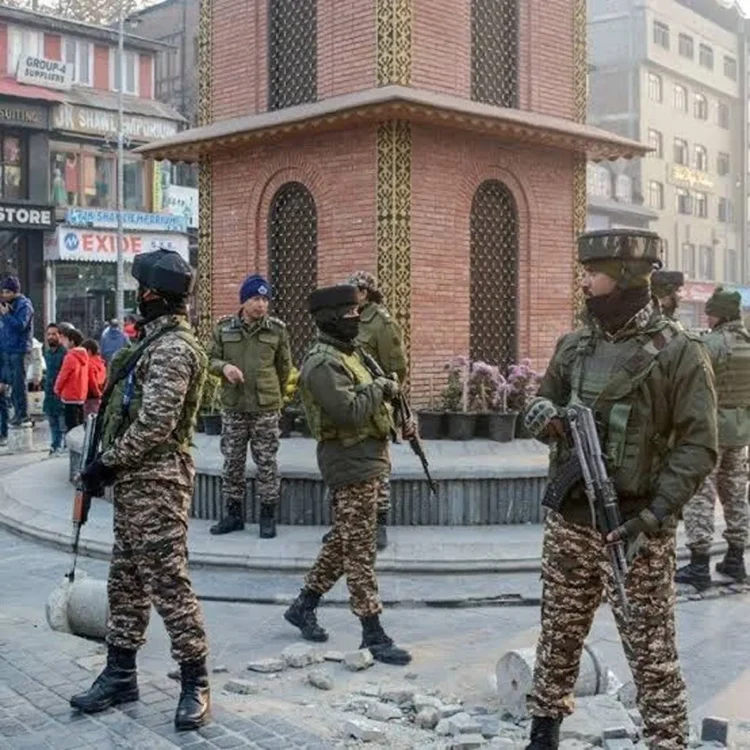
Security Deployment Around Memorial Site
Security personnel from the police and paramilitary forces were stationed in large numbers on roads leading to the graveyard in the Nowhatta area. Concertina wire, barricades, and armoured vehicles were deployed at key locations, while officers equipped with anti-riot gear monitored access routes to restrict movement and prevent political marches towards the memorial.
The arrangements effectively blocked entry to the graveyard throughout the day as authorities maintained heightened vigilance in sensitive areas of the city.
Minister Prevented From Entering Graveyard
Jammu and Kashmir Education Minister Sakina Itoo said she attempted to visit the martyrs’ graveyard early in the morning to pay her respects but was stopped by security personnel before reaching the site. In a message shared on social media, she stated that the heavy deployment of forces and extensive barricading prevented her from entering the memorial grounds.
She also shared a video showing security officials stopping her delegation from proceeding further. The minister was accompanied by leaders from the National Conference’s women’s wing during the visit.
National Conference Revises Programme
The ruling National Conference had announced a schedule to mark the anniversary, including a visit to the graveyard, Quran recitation, speeches by party leaders, and special prayers. However, after assessing the security arrangements, the party did not attempt to move towards the memorial.
Instead, party leaders indicated that the observance would be shifted to the National Conference headquarters in Srinagar, allowing commemorative events to continue without violating security restrictions.
Opposition Alleges House Detentions
The People’s Democratic Party claimed that several of its senior leaders were not allowed to leave their homes ahead of the commemoration. According to the party, spokesperson Mehboob Beg, Budgam MLA Aga Syed Muntazir, Srinagar district president Abdul Qayoom Bhat, and Baramulla district president Rafiq Ahmad Rather were among those allegedly confined.
The party described the restrictions as an infringement on democratic political activity and said peaceful remembrance should not face such limitations. Despite these claims, the PDP proceeded with its own commemorative programme at its headquarters in Srinagar, where party president Mehbooba Mufti and senior leaders paid floral tributes to the 1931 martyrs.
Historical Significance of July 13
July 13 has long held political and historical importance in Jammu and Kashmir. The day commemorates the deaths of 22 Kashmiri civilians who were killed by Dogra forces under Maharaja Hari Singh in 1931. Before the constitutional changes of August 2019, the date was officially observed as Martyrs’ Day in the former state of Jammu and Kashmir, with the head of the government traditionally leading a wreath-laying ceremony at the Naqshband Sahib graveyard.
The observance continued even during periods when the BJP and PDP jointly governed the region.
Changes After Article 370 Abrogation
Following the abrogation of Article 370 in August 2019, the administration removed July 13 from the list of gazetted holidays in 2020. Since the National Conference returned to power in October 2024, several Kashmir-based political parties have urged the government to restore the public holiday.
Although the holiday has not yet been reinstated, the National Conference continues to mark the date through party-led commemorative events. Security was also tightened in Srinagar’s Gupkar area, where Chief Minister Omar Abdullah, National Conference president Farooq Abdullah, and other senior leaders reside, reflecting the administration’s precautionary approach during this year’s observance.