
Security – Rajnath Singh Highlights Global Risks From Hormuz Disruptions
Security – India’s Defense Minister Rajnath Singh has cautioned that any disruption in the Strait of Hormuz is not a distant concern but a pressing issue with serious consequences for the country’s security and economic balance. His remarks come at a time when tensions in West Asia have led to a blockade of this crucial maritime route, raising global concerns.
Rising Global Risks and Strategic Concerns
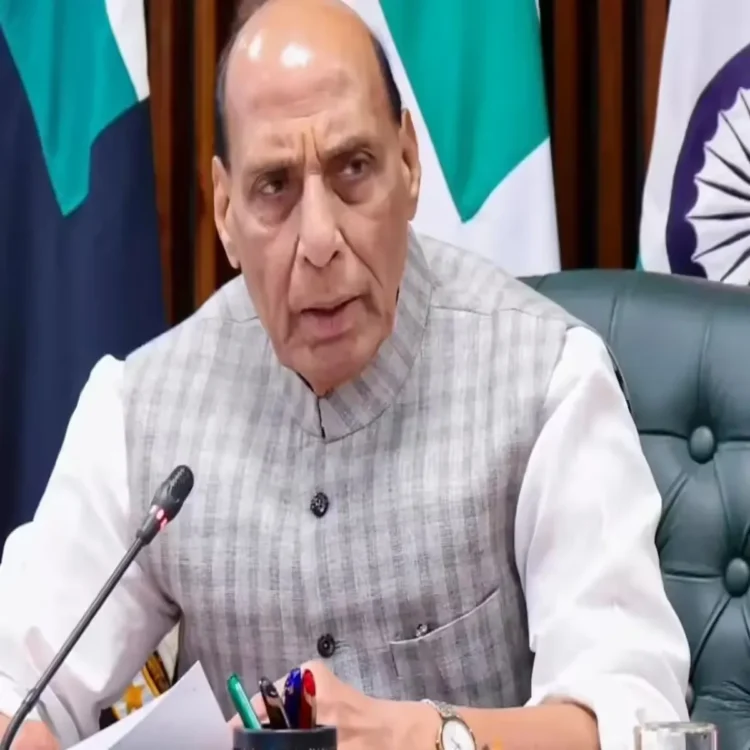
Speaking before the German Parliamentary Standing Committee on Defence and Security during his visit to Germany, Singh underlined that the current geopolitical environment is becoming increasingly unpredictable. He pointed out that modern security threats are evolving rapidly, driven by technological changes and deeper global interconnections.
According to him, traditional approaches are no longer sufficient. Nations must adapt quickly to changing realities and adopt flexible strategies to respond effectively. The ongoing conflict in West Asia, which has continued for several weeks, is one such example of how regional instability can quickly escalate into a broader global challenge.
Impact of Strait of Hormuz Disruptions on India
Singh emphasized that India’s dependence on energy imports from West Asia makes it particularly vulnerable to disruptions in the Strait of Hormuz. He noted that any blockage or instability in this vital shipping route directly affects India’s economic stability and energy security.
He explained that for a developing nation like India, such developments are not theoretical risks but immediate concerns that require careful monitoring and proactive planning. In response, the country has already adopted a coordinated strategy to address these emerging challenges.
Call for Stronger India-Germany Defence Cooperation
During his address, Singh also highlighted the importance of strengthening defence ties between India and Germany. He suggested that both countries have complementary strengths that can be leveraged for mutual benefit.
He acknowledged Germany’s strong industrial base and expertise in advanced technologies, particularly among its small and medium enterprises. At the same time, he pointed to India’s growing ecosystem of start-ups and private sector companies that are increasingly contributing to the defence sector.
This combination, he said, creates an opportunity for joint development, innovation, and production, rather than a simple buyer-seller relationship.
Strategic Partnership and Shared Values
Singh noted that both India and Germany are established democracies with resilient economies and shared values. He stressed that their partnership extends beyond defence cooperation and plays an important role in shaping global discussions on security and economic stability.
He also referred to the broader engagement between India and the European Union, noting a growing willingness within Europe to deepen strategic ties with India. This includes ongoing efforts to expand cooperation in defence and other critical sectors.
Aatmanirbhar Bharat as a Collaborative Vision
The Defence Minister clarified that India’s self-reliance initiative in defence is not intended to isolate the country but to encourage collaboration. He described it as an open invitation for global partners to participate in co-development and co-innovation.
He expressed confidence that India and Germany can work closely in this space, combining their respective strengths to build more resilient and advanced defence capabilities.
Global Implications of Regional Conflicts
Singh warned that today’s conflicts can no longer be viewed in isolation. He stressed that events in one region can have far-reaching effects on global supply chains, energy availability, food security, and overall economic stability.
He also highlighted the humanitarian consequences of such conflicts, noting that they often result in significant human suffering alongside economic disruption.
Diplomatic Engagements During Germany Visit
During his visit, Singh was accorded a ceremonial welcome in Berlin. His travel from Munich to the German capital was facilitated by a special aircraft of the German Air Force, accompanied by fighter jet escorts.
He also paid tribute to Rabindranath Tagore at Humboldt University, reflecting the longstanding cultural and intellectual ties between India and Germany.
Singh concluded by expressing optimism about the future of India-Germany relations, stating that their partnership is built on mutual respect and a shared commitment to stability and progress.