
Saffron – Kashmir Growers Benefit as Global Supply Dynamics Shift
Saffron – The saffron industry in Kashmir is witnessing renewed momentum as changing conditions in West Asia and a significant drop in saffron production in Iran have boosted interest in the region’s prized crop. Growers and traders say demand for Kashmiri saffron has increased noticeably this year, bringing fresh optimism to an industry that has faced production challenges in recent seasons.
Rising Demand Linked to Global Supply Changes
Industry representatives attribute the growing demand to disruptions in global saffron supply. Abdul Majeed Wani, president of the Jammu & Kashmir Saffron Growers Association, said buyers are increasingly turning to Kashmir as Iranian production has declined sharply this year.
According to growers’ estimates, Iran has recorded a reduction of around 140 tonnes in saffron output. As one of the world’s leading saffron producers, any major decline in Iranian production tends to influence international markets and create opportunities for alternative suppliers.
Kashmir’s Unique Saffron Heritage
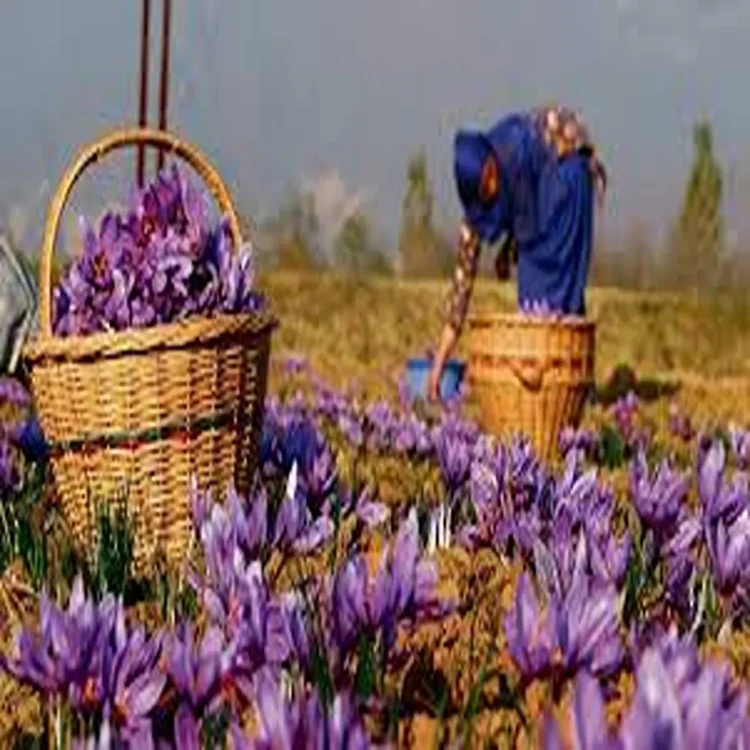
Kashmiri saffron, widely known for its rich aroma, distinct flavor, and natural coloring properties, is mainly cultivated in Pampore and surrounding areas of South Kashmir. The spice is derived from the crimson-red stigmas of purple saffron flowers, which are carefully harvested and dried through a labor-intensive process.
The crop requires highly specific environmental conditions, making its cultivation possible only in selected regions. Large parts of Pulwama district continue to serve as the center of saffron farming in Jammu and Kashmir.
Production Faces Climate Challenges
Despite stronger market demand, saffron growers continue to struggle with declining production levels. Official figures show that saffron output in the Kashmir Valley fell from 23.53 metric tonnes during 2023–24 to 19.58 metric tonnes in 2024–25.
Farmers point to changing weather patterns and insufficient irrigation facilities as major reasons for the decline. They explain that saffron cultivation depends heavily on timely rainfall between August and the harvesting period, which extends into late November.
Extended dry spells and lower-than-normal precipitation in recent years have affected flowering and crop yields. Growers maintain that regular rainfall during the crucial growth period is essential for achieving healthy production levels.
Market Prices Register Significant Increase
The rise in demand has also translated into stronger market prices. Traders report that saffron, which previously sold for nearly Rs 250 per gram, is now fetching close to Rs 350 per gram in many markets.
Similarly, wholesale prices have climbed from around Rs 2.5 lakh per kilogram to a range between Rs 3.20 lakh and Rs 3.70 lakh per kilogram. The improvement in prices has encouraged farmers, many of whom hope the positive trend will continue through upcoming seasons.
Export Markets Expand Opportunities
Export activity has also strengthened as international buyers seek reliable sources of premium-quality saffron. Kashmiri saffron is currently being shipped to several overseas destinations, including the United Arab Emirates, the United States, and the United Kingdom.
Traders believe evolving geopolitical developments and changing trade patterns involving Iran could further enhance the position of Kashmiri saffron in global markets, particularly across Gulf countries where demand remains strong.
Cultivation Area and Harvest Season
At present, approximately 3,700 hectares of land in Jammu and Kashmir are dedicated to saffron cultivation. The harvesting season generally runs from mid-October to late November.
During the flowering period, saffron blossoms are hand-picked in multiple rounds to ensure the delicate stigmas are collected at the right stage. The process remains highly labor-intensive, contributing to the spice’s premium value and reputation in domestic as well as international markets.