
Protest Site – Delhi High Court Questions Jantar Mantar’s Role as Venue
Protest Site –The Delhi High Court on Friday raised questions over the continued use of Jantar Mantar as a designated protest location in the national capital, asking the government why the site could not be closed altogether. The court observed that demonstrations at the venue should not create unnecessary disruption across Delhi.
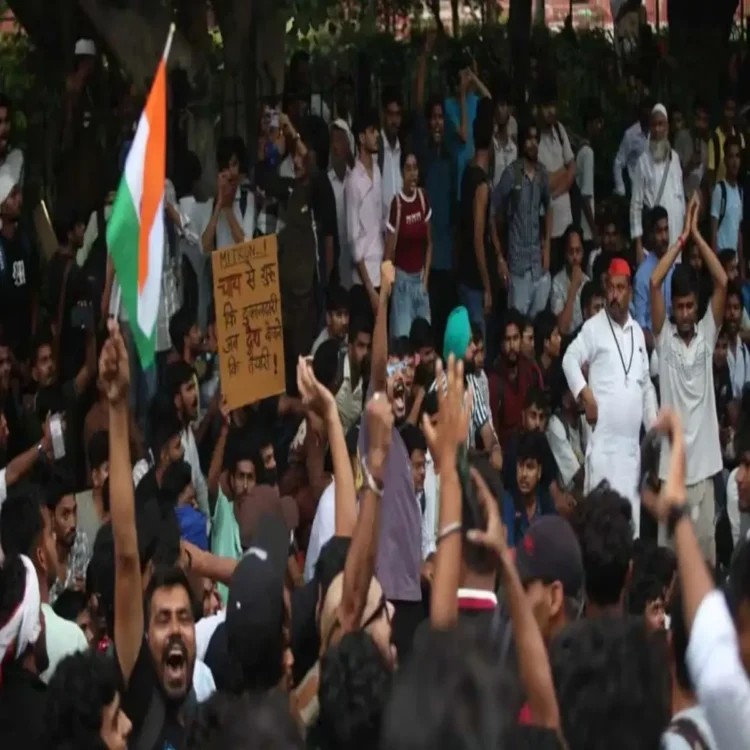
The remarks were made by Justice Amit Mahajan while hearing a petition submitted by the All India Dalit Christian Rights Protection Committee. The organisation has approached the court seeking directions to the Delhi Police on its request for permission to organise a protest at Jantar Mantar.
Court questions government over protest venue
During the hearing, Justice Mahajan asked Additional Solicitor General Chetan Sharma why the government was not considering discontinuing Jantar Mantar as a protest venue.
The judge indicated that, in his view, such activities should not take place within the city in a manner that affects the wider public. At the same time, he acknowledged that the final decision on the matter rests with the government.
The court’s observations came in the context of the petition seeking action from the Delhi Police on the proposed demonstration. The petitioner is seeking a decision on its request rather than directly asking the High Court to determine the broader policy surrounding protest locations in Delhi.
Supreme Court matter remains under consideration
Responding to the court’s questions, the Additional Solicitor General said the issue of Jantar Mantar’s status was already before the Supreme Court.
According to the government’s submission, the apex court is examining whether Jantar Mantar can continue to be treated as an officially designated place for protests. The issue could therefore have implications for the way demonstrations are permitted at the central Delhi location.
The Supreme Court’s consideration of the matter was also highlighted during the proceedings when the petitioner’s lawyer referred to the legal recognition of the right to peaceful protest.
Court refers to balance between protest and public interest
The petitioner’s counsel cited the Supreme Court’s ruling in the Shaheen Bagh matter, pointing out that the right to hold peaceful demonstrations has been recognised by the judiciary.
Justice Mahajan acknowledged the existence of that right but stressed that protests should not result in the city being placed under undue strain. His comments reflected the broader question of how authorities should balance the constitutional right to peaceful assembly with the interests of residents, commuters and other members of the public.
The court did not, during the hearing, issue a final ruling directing that Jantar Mantar be closed as a protest site. The government’s position and the proceedings before the Supreme Court remain relevant to the issue.
Section 144 in force near the area
During the hearing, the Additional Solicitor General also informed the court that prohibitory orders under Section 144 of the Code of Criminal Procedure were in force in the area.
The government cited the approaching Independence Day as a reason for the restrictions. Such security measures are commonly considered around major national events, particularly in sensitive areas of the capital.
The High Court’s observations came while considering the specific plea concerning permission for a proposed protest. The larger question of whether Jantar Mantar should remain an officially recognised demonstration site is presently before the Supreme Court.
The matter therefore involves two related issues: the immediate request for permission to hold the proposed protest and the broader legal and administrative question concerning the future use of Jantar Mantar as a designated protest venue in Delhi.