
Property – Delhi’s New Push to Legalise Unauthorised Colonies Gains Momentum
Property – The recent announcements by Manohar Lal Khattar on granting legal status to unauthorised colonies mark a significant shift in Delhi’s approach to urban governance. Presented as PM-UDAY 2.0, the initiative signals an attempt by the Centre, state, and municipal authorities to move beyond political assurances and focus on structured implementation.
A Long History of Unfulfilled Promises
For more than three decades, regularisation of unauthorised colonies has been a recurring political commitment in Delhi. In 2008, the government under Sheila Dikshit distributed provisional certificates to over 1,200 colonies ahead of elections. However, these certificates failed to provide residents with actual legal ownership.
Subsequent reviews, including observations by the Lokayukta, pointed out the absence of a clear framework to convert these promises into legal rights. Financial discrepancies were also highlighted in audits. Later, in 2015, Arvind Kejriwal pledged to complete the process within a year, but efforts largely remained limited to improving civic infrastructure rather than conferring ownership titles.
PM-UDAY 2.0 and Legal Ownership Rights
The original PM-UDAY scheme, launched in 2019 under Prime Minister Narendra Modi, laid the groundwork by identifying over 1,700 colonies for regularisation. The updated PM-UDAY 2.0 builds on that framework, though it focuses on a smaller number of colonies while placing stronger emphasis on granting legal ownership rights.
Once ownership is formally recognised, residents gain the ability to transfer or mortgage their properties legally. This change converts previously informal holdings into financial assets. Homeowners can approach banks for loans, which may improve access to credit and promote financial inclusion among communities that have long operated outside formal systems.
Infrastructure Challenges Remain a Concern
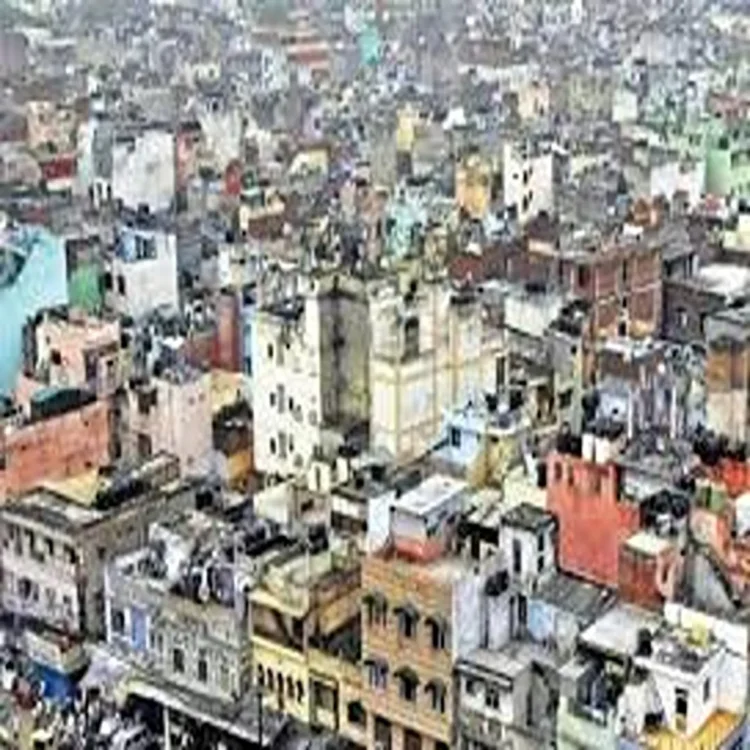
Despite its benefits, the initiative raises critical questions about the city’s preparedness. Many unauthorised colonies currently lack basic infrastructure. Narrow roads, insufficient drainage, incomplete sewer networks, and limited access for emergency services remain common issues.
Legal recognition alone does not resolve these structural challenges. Without parallel upgrades, the pressure on existing infrastructure could intensify as more people invest in and expand their properties.
Impact of Transit-Oriented Development Plans
One of the key aspects of PM-UDAY 2.0 is its link to transit-oriented development. This policy allows construction within a 500-metre radius of metro and rapid rail corridors. Combined with higher floor area ratios, it is expected to encourage vertical expansion and redevelopment.
However, this approach may lead to a sharp rise in population density. The policy mandates that a significant portion of development be dedicated to smaller housing units, which could attract more residents. Increased density will inevitably raise demand for water, electricity, healthcare, education, and waste management services.
Environmental and Resource Pressures
Delhi already faces serious environmental challenges, including declining groundwater levels and reliance on neighbouring states for water supply. Additional construction activity may contribute to dust pollution, further affecting air quality.
Higher population density also means increased sewage generation, which could strain treatment facilities and worsen river pollution if not managed effectively. These concerns highlight the need for careful planning alongside regularisation efforts.
Mobility and Safety Considerations
Transport infrastructure presents another layer of complexity. While transit-oriented development aims to reduce dependence on vehicles, many unauthorised colonies are not well connected to mass transit systems. Without improved connectivity, congestion and vehicular emissions could rise.
Safety is equally important. Densely built areas with narrow lanes can hinder emergency response, particularly during fires or natural disasters. Upgrading access roads, installing safety systems, and enforcing building regulations will be essential to reduce risks.
The Need for Integrated Urban Planning
Experts suggest that regularisation should go beyond legalising existing structures. It must be accompanied by investments in water supply, sewerage, roads, green spaces, and public services. Without these measures, the policy risks formalising already strained living conditions rather than improving them.
PM-UDAY 2.0 represents an important step toward providing legal and economic security to residents. However, its long-term success will depend on whether infrastructure development keeps pace with the newly formalised settlements. The real measure of this initiative will not just be ownership rights, but the creation of sustainable and liveable neighbourhoods across the city.