
Pollution – Delhi Tightens Fuel Access Rules, Thousands of Vehicles Denied Service
Pollution – In an effort to address worsening air pollution, authorities in Delhi have stepped up enforcement of the “No PUC, No Fuel” policy, resulting in a significant number of vehicles being refused fuel over a short period. Official figures indicate that more than 15,000 vehicles were denied refuelling between April 26 and April 29 due to the absence of a valid Pollution Under Control (PUC) certificate.
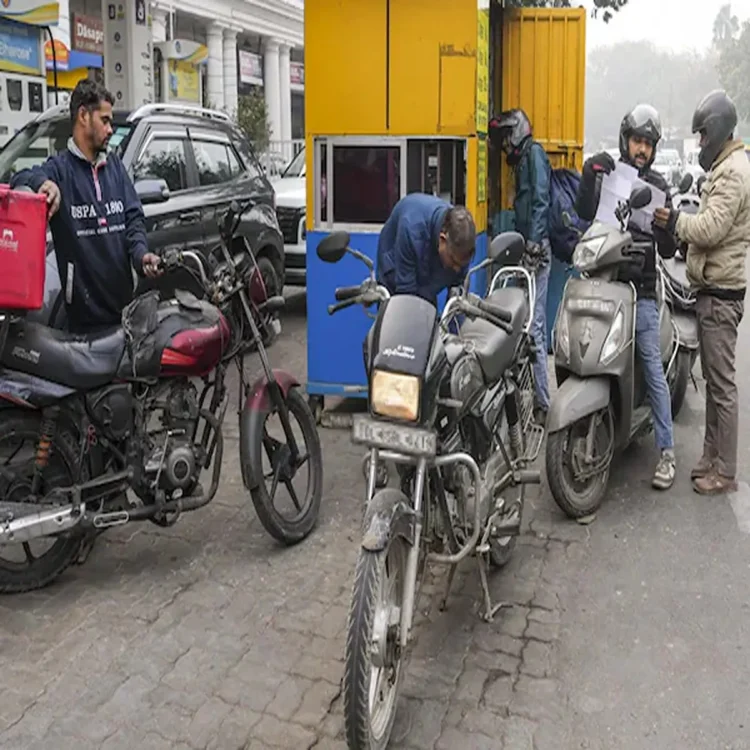
Strict monitoring at fuel stations
Fuel stations across the capital have begun closely checking vehicles for compliance with emission norms before dispensing petrol or diesel. The intensified monitoring follows renewed directions from the Delhi government to ensure that existing environmental regulations are implemented more effectively on the ground.
Officials reported that each day during the four-day period saw thousands of vehicles turned away. On April 26 alone, 3,525 vehicles were denied fuel. The number rose to 4,012 on April 27, followed by 4,235 on April 28 and 3,906 on April 29. These figures reflect inspections carried out at multiple fuel depots across Delhi, along with one facility in Noida.
Policy reinforcement after renewed directive
Although the “No PUC, No Fuel” rule was originally introduced in October 2025, authorities have recently renewed their focus on ensuring compliance. On April 22, the government reiterated that vehicles without a valid PUC certificate would not be allowed to refuel under any circumstances.
Chief Minister Rekha Gupta had earlier emphasized the need for stricter enforcement, noting that previous implementation had not been sufficient to bring about meaningful change in pollution levels. The latest crackdown appears to be a direct response to those concerns.
Legal framework behind the rule
The requirement for vehicles to carry a valid PUC certificate is outlined under Rule 115 (sub-rule 7) of the Central Motor Vehicles Rules, 1989. According to the regulation, every vehicle must obtain a PUC certificate after completing one year from the date of registration and must be able to present it when asked by authorities.
Despite the rule being in place for years, officials observed that a considerable number of vehicles continued to operate without proper certification. This gap in compliance has been identified as a contributing factor to the capital’s ongoing air quality challenges.
Focus on reducing vehicular emissions
Vehicular pollution remains one of the major contributors to Delhi’s air quality concerns. By ensuring that only vehicles meeting emission standards are allowed to refuel, authorities aim to gradually reduce the number of high-polluting vehicles on the roads.
Officials believe that strict enforcement at fuel stations acts as a practical checkpoint, encouraging vehicle owners to maintain valid documentation and adhere to emission norms. The recent data suggests that such measures are already having a visible impact, at least in terms of compliance checks.
Continued efforts expected in coming weeks
Government sources indicate that the enforcement drive will continue in the coming weeks, with further monitoring and inspections planned across more locations. Authorities are also expected to raise awareness among vehicle owners about the importance of maintaining valid PUC certificates.
The broader objective remains to improve air quality through consistent application of existing rules rather than introducing new regulations. By tightening enforcement, the administration hopes to achieve measurable improvements in pollution levels over time.
As the campaign progresses, vehicle owners are being advised to ensure that their emission certificates are up to date to avoid inconvenience at fuel stations.