
Politics – Rahul Gandhi Questions BJP Mandate Over Alleged Electoral Irregularities
Politics – Congress leader Rahul Gandhi intensified his criticism of the Bharatiya Janata Party on Wednesday, alleging that a significant number of BJP Members of Parliament entered the Lok Sabha through unfair electoral practices. In a sharp political attack shared on social media platform X, Gandhi claimed that several BJP victories were the result of what he described as “vote theft” and raised questions about the legitimacy of those mandates.
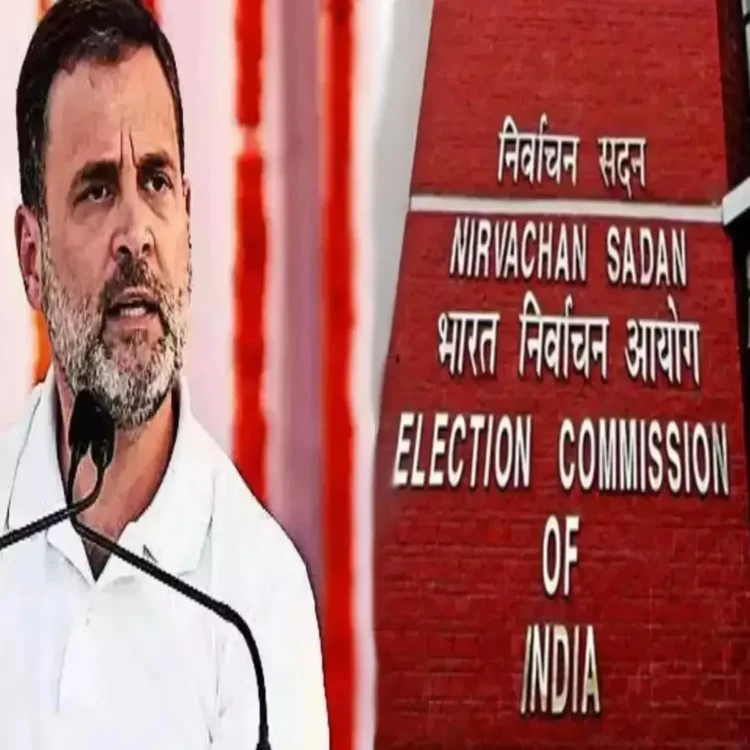
Gandhi Targets BJP Over Election Claims
The Leader of Opposition in the Lok Sabha stated that electoral manipulation was no longer limited to isolated constituencies but had become widespread enough to influence governments themselves. Referring to the BJP’s tally in the Lok Sabha, Gandhi claimed that nearly one out of every six BJP MPs had secured victory through questionable means.
Using terminology frequently associated with BJP rhetoric, Gandhi sarcastically asked whether such lawmakers should be described as “ghuspethiya,” a term commonly translated as infiltrators. His remarks marked another escalation in the ongoing political confrontation between the Congress party and the BJP over the fairness of elections and democratic institutions in the country.
Haryana Government Also Mentioned
Gandhi did not limit his criticism to parliamentary elections alone. He also referred to the political situation in Haryana, alleging that the state government itself lacked genuine democratic legitimacy. According to him, institutions responsible for overseeing elections and maintaining voter records were being manipulated to influence outcomes.
He accused authorities of interfering with voter lists and controlling the electoral process through institutions that, in his words, were functioning under political influence. Gandhi argued that these developments represented a deeper challenge to democratic transparency and public trust in elections.
Claim on BJP’s Electoral Strength
In his remarks, Gandhi further asserted that the BJP’s current parliamentary strength would not survive under what he called “free and fair” elections. He claimed that if elections were conducted without manipulation, the ruling party would struggle to cross even 140 seats in the Lok Sabha.
The statement comes at a time when opposition parties have increasingly raised concerns regarding electoral procedures, voter data management, and the functioning of institutions linked to the democratic process. BJP leaders, however, have repeatedly rejected such allegations and maintained that their electoral victories reflect public support across multiple states.
Earlier Remarks on Bengal and Assam Results
A day earlier, Gandhi had also reacted strongly to the assembly election outcomes in West Bengal and Assam. He described the BJP’s success in those states as a “theft” of the people’s mandate and warned that such developments posed a threat to Indian democracy.
The Congress leader argued that the situation should not be viewed through the narrow lens of party politics. He urged political leaders and workers across opposition parties to move beyond rivalry and focus on protecting democratic institutions.
Interestingly, Gandhi publicly defended the Trinamool Congress despite long-standing political competition between the Congress and Mamata Banerjee’s party in several regions. He criticized those celebrating the Trinamool Congress defeat and said the larger issue was the future of democratic values in India rather than the performance of any single political party.
BJP’s Electoral Success Continues
The BJP recently secured a major political victory by removing the Trinamool Congress from power in West Bengal. The party also retained Assam for a third consecutive term following the declaration of assembly election results earlier this week.
These victories have strengthened the BJP’s political position ahead of future electoral battles, while opposition parties continue to debate issues related to electoral transparency, institutional independence, and voter confidence.