
Politics – Owaisi Raises Concerns Over Religious Freedom and Public Discourse
Politics – AIMIM chief Asaduddin Owaisi on Friday accused sections of society and political circles of repeatedly turning religious practices such as Azaan and Namaz into subjects of controversy whenever major Islamic occasions approach. Speaking at an Eid Milap gathering, he argued that discussions around Muslim religious observances often intensify around festivals like Ramzan and Bakrid, creating unnecessary tensions. He maintained that the Muslim community would continue practicing its faith and would not abandon its religious traditions under any circumstances.
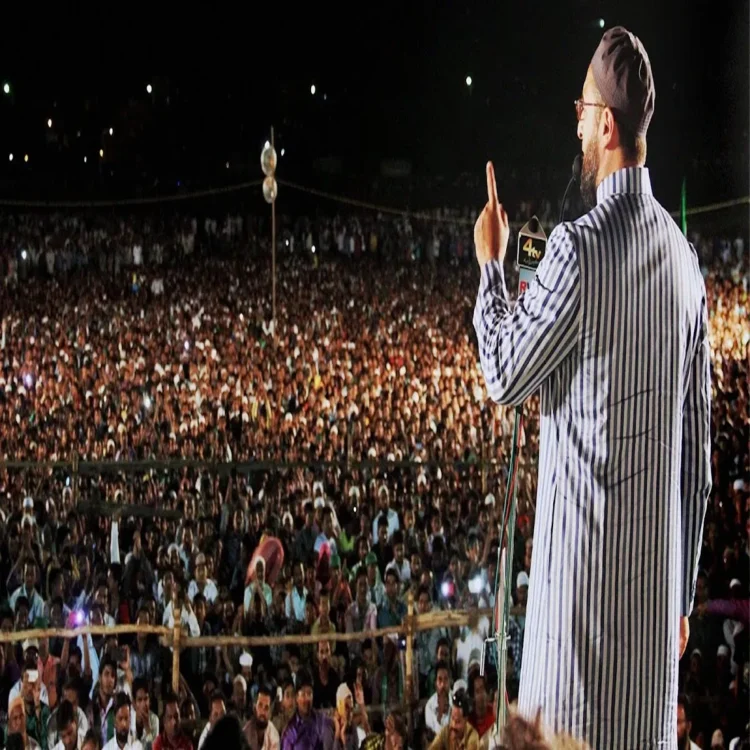
Remarks on Religious Practices and Historical Legacy
During his address, Owaisi referred to the historical contribution of Islamic scholars in India’s freedom movement. He recalled how several religious leaders used mosques as centers of resistance during British rule and issued calls supporting the struggle against colonial administration. According to him, the sacrifices made by such scholars should be remembered instead of questioning practices like Azaan and Namaz in contemporary times.
He also pointed out that religious events and processions from different faiths regularly take place on public roads across the country. Owaisi argued that while concerns are frequently raised when Muslims gather for prayers during Eid or Friday congregations, similar objections are rarely voiced regarding other religious activities conducted in public spaces.
Allegations of Unequal Treatment
The Hyderabad MP alleged that a double standard exists in public discussions related to religious expression. He claimed that while political speeches are widely accepted, objections are often raised when it comes to Islamic practices. Owaisi also questioned restrictions imposed on the sale of meat, eggs, and poultry during certain religious festivals, asking whether such measures are applied uniformly.
He further alleged that negative attitudes toward Muslims have contributed to efforts aimed at marginalizing sections of the community. Stressing the importance of equal citizenship, he said that constitutional rights must be protected for all individuals regardless of their faith.
Reference to Historical Incidents
Owaisi referred to incidents such as Hashimpura, Maliyana, Turkman Gate, and Nellie while discussing the experiences of Muslims in India. He stated that despite facing difficult periods in history, the community remained resilient. Emphasizing a sense of belonging, he said Indian Muslims consider the country their permanent home and have no intention of leaving.
Citing Article 25 of the Constitution, which guarantees freedom of religion, he argued that principles relating to public restrictions should be applied consistently across all communities. He maintained that equal standards are necessary to uphold constitutional values.
Response to Public Order Debate
His comments came shortly after Uttar Pradesh Chief Minister Yogi Adityanath stated that Namaz should be conducted in a regulated manner and suggested that prayers could be organized in shifts if necessary. The chief minister also emphasized that authorities would seek cooperation and ensure adherence to public order regulations.
Owaisi disagreed with what he described as excessive focus on issues related to Muslim religious practices, arguing that broader national concerns deserve greater attention.
Criticism of Media Coverage and Education Issues
The AIMIM leader also criticized television news coverage related to the NEET examination controversy. He argued that the difficulties faced by millions of students received less attention than debates surrounding Azaan, meat consumption, and Muslim-related topics.
He additionally questioned media narratives surrounding students who raised concerns over examination-related irregularities. According to Owaisi, individuals questioning authorities should not be labeled negatively simply for expressing concerns.
The NEET-UG 2026 examination was conducted on May 3 across thousands of centers in India and several locations overseas. Following reports of a question paper leak, authorities cancelled the examination and scheduled a fresh test for June 21.
Concerns Over Fuel Prices and Governance
Owaisi also targeted the central government over rising fuel costs, arguing that increasing petrol, diesel, and cooking gas prices are affecting ordinary citizens. He questioned why discussions on economic challenges often receive less public attention than religious controversies.
Referring to India’s oil imports, he suggested that benefits from favorable energy purchases should translate into relief for consumers. His remarks came amid recent fuel price revisions reported across the country.
Message on Power and Accountability
Toward the conclusion of his speech, Owaisi reflected on the rise and decline of past rulers, stating that political authority is temporary. Using historical examples, he urged those in power to govern responsibly and avoid what he described as oppressive actions.
He also questioned references to “infiltrators” in political debates and called for evidence-based discussions on such matters. Ending his address, Owaisi reiterated that governments and leaders change over time, while constitutional principles and public accountability remain essential pillars of democracy.