
Politics – Omar Abdullah Questions Decision Against Government Formation in Tamil Nadu
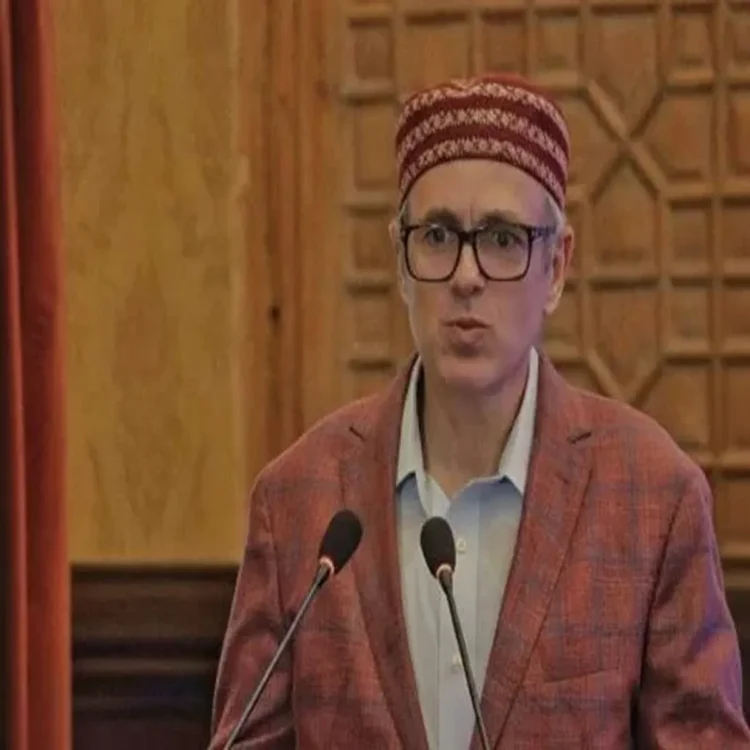
Politics – Jammu and Kashmir Chief Minister Omar Abdullah has raised objections to the refusal to allow the Vijay-led alliance to form the government in Tamil Nadu, arguing that constitutional principles support inviting the single largest party to prove its majority on the Assembly floor.
Governor Rejects Claim to Form Government
The political debate intensified after Tamil Nadu Governor Rajendra Vishwanath Arlekar declined the claim made by the Tamilaga Vettri Kazhagam to form the next government. The Governor stated that the party and its supporting allies did not have sufficient numbers to secure a majority in the 234-member Assembly.
TVK’s emergence has significantly altered Tamil Nadu’s political landscape by challenging the long-standing dominance of the DMK and AIADMK. However, the alliance currently remains below the required majority mark of 118 seats. The situation is expected to become more complicated after Vijay vacates one of the two Assembly seats he secured, reducing the alliance’s effective tally. With outside support from Congress and its five legislators, the bloc is still short of the majority figure.
Abdullah Refers to Supreme Court Judgments
Speaking to reporters, Omar Abdullah said constitutional practices and past Supreme Court observations clearly favour giving the largest party an opportunity to form the government first. According to him, elected representatives should be allowed to demonstrate their support within the Assembly rather than being denied the chance before a floor test takes place.
Abdullah also referred to the 13-day government led by former Prime Minister Atal Bihari Vajpayee in the 1990s. He pointed out that Vajpayee had been invited to form the government despite uncertainty over majority support and later resigned after failing to gather the necessary numbers in Parliament.
Demand for Opportunity to Prove Majority
The Jammu and Kashmir Chief Minister maintained that Vijay should similarly be invited to form the government and then face a trust vote in the Assembly. He said that if the alliance succeeds in proving its majority, it should continue in office, and if it fails, the government would naturally have to step down.
His comments have added momentum to the political discussion surrounding government formation procedures and the powers exercised by Governors during hung Assembly situations. The developments are being closely watched as they may influence broader debates over constitutional conventions in coalition politics.
Abdullah Targets BJP Over Jammu and Kashmir Remarks
During the interaction, Omar Abdullah also responded sharply to comments made by Leader of Opposition Sunil Sharma regarding the political situation in Jammu and Kashmir. Abdullah accused the Bharatiya Janata Party of trying to weaken the elected administration in the Union Territory.
He dismissed suggestions that a rebellion similar to Maharashtra’s political split could emerge within the National Conference. Abdullah insisted that party legislators remain united and rejected claims of internal instability. He further stated that the pending cabinet expansion was linked to the delay in restoration of statehood to Jammu and Kashmir rather than political uncertainty within his party.