
Parliament – Opposition and Government Set for Showdown Over Delimitation Bill
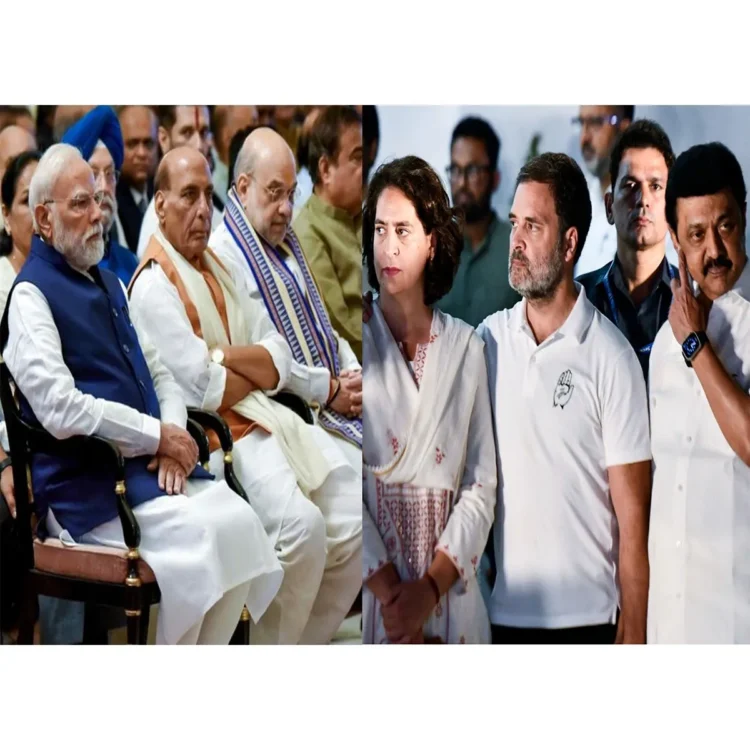
Parliament – A tense political atmosphere is expected as Parliament convenes for a special session starting Thursday, with sharp differences emerging between the government and Opposition over proposed constitutional changes linked to women’s reservation and delimitation. The debate is likely to dominate proceedings over the three-day session.
Amendments Linked to Women’s Reservation Plan
The Union government is preparing to introduce amendments to the Women’s Reservation Act, aiming to implement one-third reservation for women in the Lok Sabha and state assemblies by 2029. While most political parties have broadly supported the idea of women’s representation, disagreements have surfaced over how the policy will be executed.
The proposed changes are tied to delimitation provisions, which determine how parliamentary constituencies are redrawn. This linkage has become a major point of contention, turning what might have been a consensus-driven reform into a politically charged issue.
Delimitation Proposal Sparks Regional Concerns
At the centre of the debate is the Constitution (131st Amendment) Bill, 2026, which is scheduled to be introduced in the Lok Sabha. The Bill proposes redrawing constituencies based on the 2011 Census and increasing the total number of Lok Sabha seats to 850. The expansion is intended to facilitate the implementation of women’s reservation.
However, Opposition parties, particularly those from southern states, argue that using 2011 population data could disproportionately benefit northern states with higher population growth. They contend that states which have successfully managed population growth may lose their relative political influence.
Numbers Game Poses Challenge for Government
Passing the Bill will not be straightforward. The government needs a two-thirds majority in the Lok Sabha for the amendment to be approved. In the current House of 540 members, the ruling NDA holds 294 seats, while the Opposition accounts for 234 members.
If all members are present, at least 360 votes will be required to pass the legislation. This means the government must secure additional support beyond its existing numbers, making negotiations and alliances crucial in the coming days.
Opposition Unites Against Proposal
Following a meeting of leaders from various Opposition parties, there has been a clear decision to oppose the delimitation-related provisions. Senior leaders have expressed concern that the absence of updated data on backward communities in the 2011 Census could lead to an unfair implementation of women’s reservation.
They have also argued that shifting the basis of delimitation away from earlier census benchmarks could alter the balance of representation across states, raising questions about fairness and inclusivity.
Debate Over Federal Balance Intensifies
Critics of the proposal warn that even if the number of seats increases proportionally across states, the overall distribution may still disrupt the federal structure. They emphasize that in parliamentary politics, the absolute number of seats often carries more weight than proportional representation.
Leaders have voiced apprehension that smaller and southern states could see their influence reduced in national decision-making if the changes are implemented without addressing these concerns.
High-Stakes Session Ahead
With both sides firmly holding their positions, the special session is expected to witness intense debates and strategic manoeuvring. The outcome will not only determine the future of women’s reservation but could also reshape the political landscape by redefining representation in Parliament.
As discussions unfold, the focus will remain on whether a middle ground can be found or if the divisions will deepen further in the days ahead.