
Parenting – Mohan Bhagwat Highlights Need for Dialogue With India’s Questioning Youth
Parenting – India’s younger generation is increasingly driven by curiosity and expects thoughtful answers rather than unquestioned instructions, Rashtriya Swayamsevak Sangh (RSS) chief Mohan Bhagwat said while urging families to rebuild a culture of open communication. Addressing a gathering in New Delhi on Friday, he stressed that parents and elders should spend more time with children, respond patiently to their questions, and nurture relationships through affection and meaningful conversations.
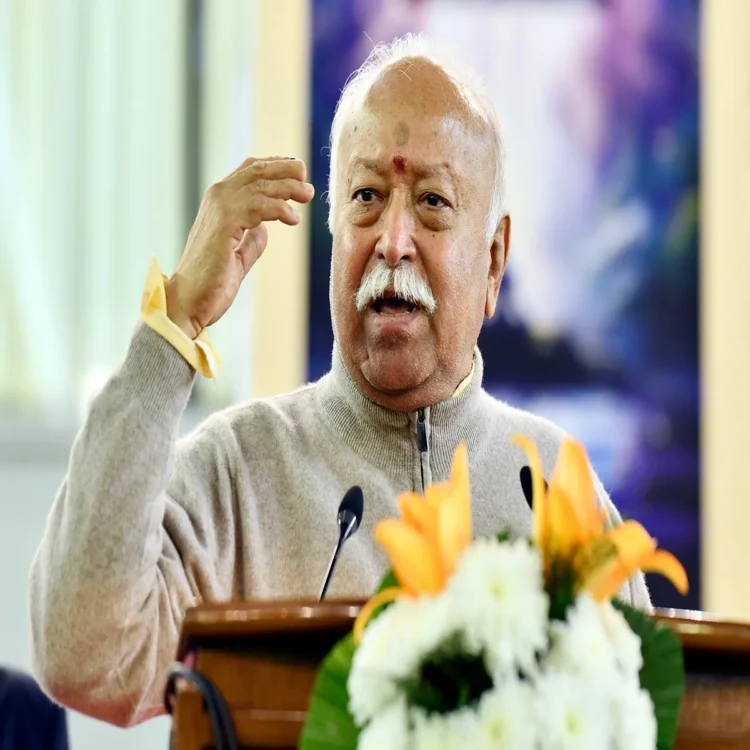
Bhagwat Calls for Greater Understanding Between Generations
Speaking at the concluding session of the Vishwa Mangalya Sabha’s National Enlightenment Meeting on the theme “Contemporary Motherhood” at the Ambedkar International Centre, Bhagwat reflected on how the relationship between generations has changed over time. He observed that earlier generations generally accepted guidance without questioning, whereas today’s youth seek explanations and a deeper understanding of ideas.
According to him, this shift requires elders to adapt their approach by communicating more openly, encouraging discussions, and remaining emotionally connected with younger family members. He also expressed concern that regular conversations within households have reduced over the years, making it important to consciously restore dialogue in family life.
Motherhood Described as the Foundation of Human Life
During his address, Bhagwat described motherhood as essential to the creation, nurturing, and continuity of human life. Referring to it as the cornerstone of civilisation, he said mothers play an irreplaceable role in shaping individuals from the earliest stages of life.
He remarked that speaking about motherhood as a man might appear unusual because the experience naturally belongs to women. However, he noted that the Vishwa Mangalya Sabha had already conducted extensive discussions on the subject. Bhagwat also referred to the writings and thoughts of prominent Indian personalities, including Swami Vivekananda, Mahatma Gandhi, and Rabindranath Tagore, who had emphasised the significance of motherhood in society.
Parents Encouraged to Lead Through Actions
Bhagwat underlined that a mother serves as a child’s first teacher and remains a lasting source of emotional support. While human beings possess the ability to think independently, he said mothers play a vital role in guiding those thoughts toward positive values and responsible decision-making.
He encouraged parents to answer children’s questions with patience while continuing to expand their own knowledge. He also pointed out that children often learn more by observing the behaviour of adults than through verbal instructions alone, making personal conduct an important part of parenting.
Family Values and Cultural Confidence Emphasised
The RSS chief also highlighted the importance of preserving strong family structures and maintaining confidence in India’s cultural traditions. He cautioned against misconceptions surrounding Indian heritage and said the country’s civilisational foundations continue to remain relevant.
Bhagwat stated that India’s long-standing philosophy of unity amid diversity has helped strengthen society over generations. Rather than adopting changing lifestyles without careful consideration, he urged people to reinforce family values, social institutions, and cultural understanding while moving forward with confidence.
National Meeting Focused on Contemporary Motherhood
The two-day National Enlightenment Meeting, organised by the Vishwa Mangalya Sabha on July 23 and 24 under the theme “Nation Building through Motherhood,” brought together nearly 280 women from different parts of the country. The discussions focused on the evolving role of mothers, changing social conditions, and the importance of preserving India’s family system.
Organisers said the concluding session witnessed the participation of more than 900 women leaders and distinguished guests. Overall, between 2,000 and 2,500 women registered for the dialogue, reflecting broad interest in discussions surrounding motherhood, family values, and nation-building.