
Paper Leak – Supreme Court Petition Seeks Stronger Investigation and Faster Action Against Exam Fraud
Paper Leak – Concerns over repeated examination paper leaks have prompted a fresh appeal before the Supreme Court, with a petition calling for a stronger legal framework, faster investigations, and stricter punishment to protect the credibility of public examinations and the interests of millions of candidates.
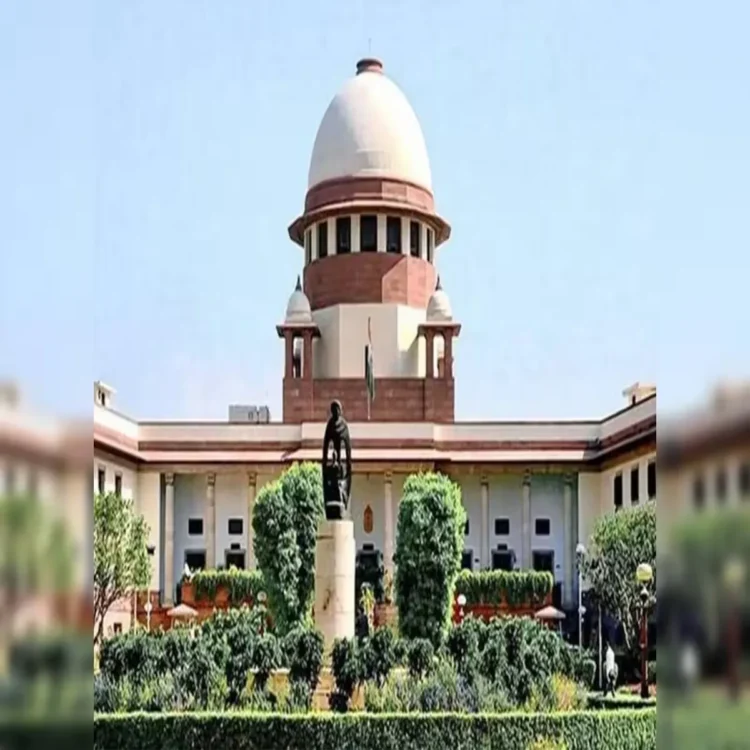
The Supreme Court has received a Public Interest Litigation (PIL) requesting comprehensive reforms in the way paper leak cases are investigated and prosecuted across India. Filed by advocate Ashwini Kumar Upadhyay under Article 32 of the Constitution, the petition argues that recurring examination leaks have weakened public trust in recruitment and academic examinations while putting the future of countless students at risk. It also claims that despite the implementation of the Public Examinations (Prevention of Unfair Means) Act, 2024, such incidents continue to occur because the existing legal framework does not provide an effective system for investigation.
Demand for a Standard Investigation Framework
The petition urges the Centre and state governments to introduce a uniform investigation process that would apply to every paper leak case from the moment it is reported until the completion of the trial. According to the plea, this Special Investigation Procedure should define clear guidelines for evidence collection, digital record preservation, coordination among investigating agencies, prosecution, and court proceedings. It also recommends setting objective standards for deciding when examinations should be cancelled and ensuring proper safeguards for students affected by such incidents.
Concerns Over Weak Enforcement
The petitioner argues that the current law mainly focuses on defining offences and prescribing penalties but does not establish a fixed timeline for investigations or court proceedings. It further points out the absence of mandatory digital evidence preservation, financial investigations into organised networks, and mechanisms to identify and seize assets obtained through examination fraud. As a result, the petition claims that only lower-level participants are often arrested while those allegedly directing organised paper leak operations escape legal action.
Proposal to Target Financial Gains
Another major request in the PIL is to strengthen financial investigations against those accused of running organised paper leak syndicates. The plea asks authorities to identify and assess the assets of accused persons and their family members wherever legally applicable. It also recommends invoking provisions of laws such as the Prevention of Corruption Act, the Prevention of Money Laundering Act, the Benami Transactions law, and the Black Money Act to trace and confiscate assets believed to have been generated through examination-related fraud.
Impact on Students and Constitutional Rights
The petition states that repeated paper leak incidents affect constitutional guarantees related to equality, fair opportunity in education and public employment, and the right to life with dignity under Articles 14, 16, and 21 of the Constitution. It highlights that many students spend years preparing for competitive examinations while investing significant amounts in coaching, study materials, travel, and accommodation. When examinations are cancelled because of leaks, candidates are forced to repeat the process, leading to financial losses, emotional stress, and uncertainty regarding their educational and career prospects.
Reference to International Practices
To support its arguments, the petition refers to examination systems followed in countries including the United Kingdom, China, and South Korea. It states that these nations have established structured mechanisms covering mandatory reporting, coordinated investigations, evidence preservation, and institutional accountability. According to the plea, India should adopt a more comprehensive investigative model rather than relying only on criminal penalties after offences have taken place.
Additional Recommendations Before the Court
Apart from seeking a structured investigation system, the petition requests that punishments awarded in paper leak cases should run consecutively instead of concurrently to strengthen the deterrent effect of the law. As an alternative, it has asked the Supreme Court to direct the Law Commission to study international practices and recommend reforms within three months.
The petitioner has also sought a review of the legal approach toward certain deception detection techniques. While acknowledging that narco-analysis may continue to remain restricted, the plea requests the Court to reconsider the existing prohibition on the use of polygraph and Brain Electrical Activation Profile (BEAP) tests, arguing that these methods could assist investigators in identifying individuals allegedly responsible for organised examination fraud.