
Monsoon – Widespread Rains Revive Kharif Farming Prospects Across Andhra Pradesh
Monsoon – After a prolonged wait for seasonal rains, farmers across Andhra Pradesh have finally received much-needed relief as the Southwest Monsoon gained strength and spread across large parts of the state. Extensive rainfall over the past few days has covered nearly four-fifths of Andhra Pradesh, encouraging agricultural activities and improving expectations for the ongoing Kharif cropping season.
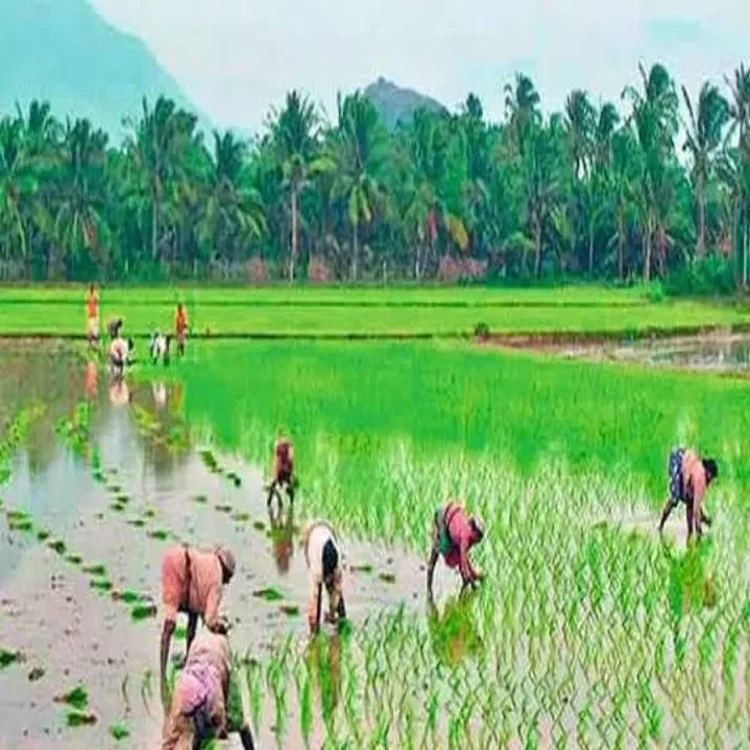
Rainfall Covers Most Regions of the State
According to official records, rainfall was reported in 18 districts on Sunday, stretching from the north coastal belt to several areas of Rayalaseema. Anakapalli district witnessed the highest precipitation, with Yelamanchili receiving 103.6 mm of rainfall. Other locations that recorded significant showers included Kakinada with 57.9 mm, Visakhapatnam with 53.2 mm, Bondapalle in Vizianagaram district with 48.2 mm, Prathipadu with 38.8 mm, Bhimadole in Eluru district with 38.4 mm, and Sompeta in Srikakulam district with 35 mm.
Moderate rainfall was also reported from parts of Rayalaseema. Chittoor received 22.4 mm of rain, while Srisailam recorded 5.2 mm, adding to the overall improvement in weather conditions across the region.
IMD Predicts Continued Rain Activity
The India Meteorological Department has indicated that rain-bearing conditions are likely to persist across most districts during the next 24 hours. Heavy rainfall is expected at isolated locations in districts such as Anakapalli, Kakinada, Palnadu, Prakasam and Visakhapatnam.
Weather experts believe the continued monsoon activity could further strengthen soil moisture levels, creating favourable conditions for sowing and early crop growth.
Farmers Gain Confidence After Uncertain Start
The arrival of widespread rainfall has brought optimism to the farming community. Many cultivators had delayed field operations due to concerns about inadequate rainfall and the possible impact of El Nino-related weather patterns. Agricultural officials had earlier advised farmers to postpone sowing until stable weather conditions emerged.
With sufficient rainfall now being recorded across large areas, farmers are gradually beginning cultivation work. The improved weather outlook has restored confidence among growers who were facing uncertainty over crop planning and seasonal investments.
Irrigation Support Strengthens Agricultural Outlook
To support Kharif cultivation, the state government has already initiated the release of irrigation water into the Godavari Delta system. Water supply to the Krishna Delta is scheduled to begin from July 1, providing additional assurance to farmers dependent on canal irrigation.
Officials expect the combination of monsoon rainfall and planned water releases to improve crop establishment across key agricultural zones.
Reservoir Storage Shows Positive Improvement
Water reserves across Andhra Pradesh have also registered encouraging growth. Data from the Andhra Pradesh Water Resources Information and Management System shows that major and medium reservoirs currently hold 429.89 TMC of water, representing nearly 39 percent of their combined storage capacity of 1,105.85 TMC. During the same period last year, reservoir storage stood at 412.29 TMC.
The Krishna basin reservoirs presently contain 236.55 TMC, while reservoirs in the Godavari basin hold 19.70 TMC. Water storage in the Pennar basin has reached 137.35 TMC.
Among major projects, Nagarjuna Sagar currently stores 141.91 TMC, while Srisailam Reservoir contains 42.15 TMC. Pulichintala holds 33.36 TMC and the Prakasam Barrage stores 2.81 TMC. Storage levels in medium reservoirs such as Gorakallu Balancing Reservoir, Gajuladinne Project and Buggavagu Reservoir have also remained stable.
Upstream Reservoirs Add to Water Security
Reservoirs located upstream in neighbouring states, which contribute to river inflows into Andhra Pradesh, collectively hold 174.29 TMC of water. Storage levels remain favourable in key projects including Almatti and Narayanpur in Karnataka, Jurala, Sri Ram Sagar and Sri Pada Yellampalli in Telangana, and Maharashtra’s Ujjaini Reservoir.
With monsoon conditions becoming more active and water storage steadily improving, officials remain hopeful of sufficient irrigation availability throughout the Kharif season. The combination of timely rainfall and growing reservoir reserves is expected to support agricultural production and provide significant relief to farmers across the state.