
MedicalEducation – Vaishno Devi Medical Institute Seeks Fresh Approval for MBBS Course
MedicalEducation – Nearly two months after losing its recognition, the Shri Mata Vaishno Devi Institute of Medical Excellence (SMVDIME) in Reasi district of Jammu and Kashmir has submitted a fresh application to the National Medical Commission seeking approval to begin its MBBS programme again. The institute has requested permission to admit 50 students starting from the 2026–27 academic session.
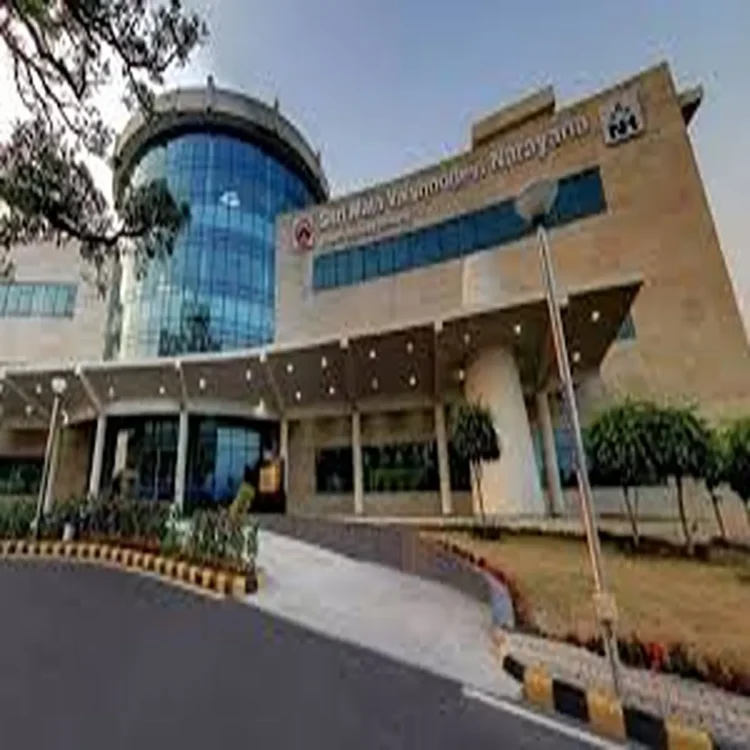
Institute Applies Again for Medical Course Permission
Officials associated with the institute confirmed that all required documents and formalities have been completed and the application was filed with the medical regulator in February. The institute is seeking a new Letter of Permission that would allow it to restart the undergraduate medical programme that had earlier been cleared for the 2025–26 academic year.
According to a faculty member familiar with the development, the institution has also paid the mandatory inspection and processing fee required by the National Medical Commission, which typically ranges between five lakh and ten lakh rupees. The payment is part of the formal evaluation process carried out before granting approval for medical courses.
The medical college is funded and administered by the Shri Mata Vaishno Devi Shrine Board, the body responsible for managing the famous Vaishno Devi shrine and related institutions.
Background of Derecognition Decision
The fresh application follows the regulator’s decision earlier this year to cancel the institute’s permission to run its MBBS programme. On January 8, the National Medical Commission withdrew the Letter of Permission that had been issued in September 2025 for a batch of 50 MBBS seats.
The commission cited shortcomings in meeting certain required standards during the review process. While the detailed observations were not publicly elaborated in full, the decision effectively prevented the institute from continuing the programme for the academic year.
The development came at a time when the institute had already drawn public attention due to controversy surrounding admissions to its first MBBS batch.
Admission Controversy Surrounding First Batch
The admission of students from different religious communities became a subject of debate after the composition of the first batch was revealed. Out of the 50 students admitted, 42 were Muslim and one was Sikh.
Some Hindu organisations raised objections and staged protests, arguing that the institution is funded through donations made by Hindu devotees at the Vaishno Devi shrine. They claimed that admissions should reflect the religious character of the institution.
However, there was no official announcement from the institute suggesting that admissions were restricted by religion. The issue nonetheless triggered discussion in the region about admission policies at institutions funded by religious trusts.
Uncertainty Over Future Admission Policy
With the institute now seeking fresh recognition, it remains unclear whether any changes will be introduced in the admission framework if the programme is restored.
Sources associated with the college indicated that discussions on possible adjustments to the admission process have not yet been finalised. At present, there is no clarity on whether any quota system or revised policy will be introduced in the future.
The admission structure may become clearer only after the regulatory process is completed and the National Medical Commission reviews the institute’s compliance with required academic and infrastructure standards.
Preparations Underway for NMC Inspection
Meanwhile, the institute has begun preparing for a possible inspection by the medical regulator. Such inspections are a routine part of the approval process before granting permission for a medical course.
Faculty members and administrative staff have reportedly been instructed to ensure that all academic, clinical and infrastructure requirements meet the prescribed standards. The inspection is expected to take place sometime between April and May.
As per National Medical Commission procedures, an assessment team consisting of four inspectors typically visits the campus. During the visit, they evaluate teaching facilities, hospital services, laboratories, faculty strength, and other infrastructure needed for medical education.
The findings of this inspection will play a crucial role in determining whether the institute will receive approval to admit students again from the 2026–27 academic session.