
LabourWelfare – Delhi Government Announces New Benefits for Workers on May Day
LabourWelfare – Delhi Chief Minister Rekha Gupta marked International Workers’ Day on May 1 by unveiling a range of new measures aimed at improving the lives of labourers across the city. The announcements focused on healthcare access, financial relief, and social support systems designed specifically for construction workers and their families.
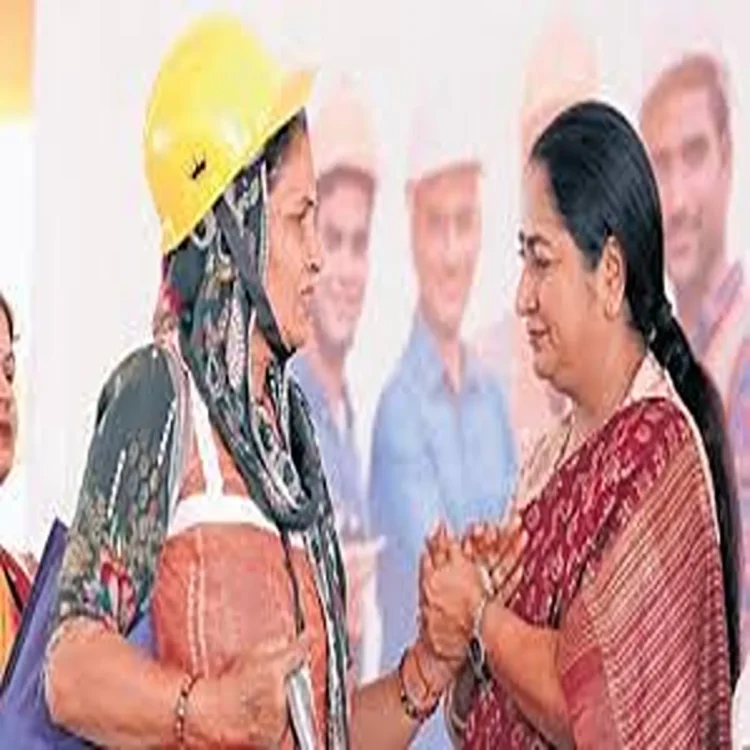
Focus on Ground-Level Implementation
During her visit to a construction site at Sant Nirankari Hospital in Dhirpur, Gupta interacted directly with workers and emphasized that her administration’s priority lies in effective delivery rather than mere policy announcements. She stated that ensuring dignity, safety, and fair opportunities for workers remains central to the government’s approach.
According to the chief minister, labour welfare is closely linked to national progress. She highlighted that strengthening workers’ rights and improving their living conditions are essential for sustainable development.
Distribution of Safety and Education Kits
As part of the initiative, safety kits were handed out to around 1,000 construction workers. These kits included essential protective items such as helmets, gloves, masks, and reflective jackets to promote safer working conditions at construction sites.
In addition, educational kits were provided to 100 children of registered workers studying in government schools. These kits contained school bags, books, and stationery to support their academic needs and encourage continued education among workers’ families.
Financial Relief and Marriage Assistance
The government also introduced measures to ease financial pressure on workers. Registration and renewal fees for building and construction workers have been waived, reducing the cost of accessing welfare schemes.
Another key announcement was the launch of a Collective Marriage Scheme. Under this program, eligible couples will receive financial assistance, while the government will cover essential arrangements such as food, venue, and logistics. The scheme aims to support families who may struggle with the expenses associated with traditional wedding ceremonies.
Modern Labour Facilities and Mobile Services
To improve access to basic services, the government plans to establish upgraded labour chowks along with dedicated Shramik Seva Kendras. These centers will offer facilities such as drinking water, seating areas, sanitation, first aid, and employment assistance.
Mobile service vans will also be introduced to deliver services directly to workers at their locations. These vans are expected to play a key role in ensuring that benefits reach workers who may not be able to visit centralized facilities.
Skill Development and Employment Opportunities
A large-scale skill development program has also been launched under the Recognition of Prior Learning framework. The initiative aims to train approximately 35,000 workers each year, helping them enhance their existing skills and improve employability.
Training sessions will be conducted at the district level through authorized agencies. Workers will receive instruction in trades such as masonry assistance, electrical work, painting, carpentry, and bar bending. The program is designed to create better job prospects and increase earning potential.
Strengthening Social Security Network
Gupta also referred to ongoing efforts at the national level, noting that digital platforms like the e-Shram portal have already provided benefits to millions of workers across the country. She added that the Delhi government intends to strengthen this framework further through a single-window system that simplifies access to multiple schemes.
Additional initiatives include improved minimum wages, affordable meal programs through Atal canteens, expanded healthcare services via Ayushman Arogya Mandirs, and mobile health units at labour hubs.
The announcements reflect a broader effort to build a more inclusive support system for workers, combining financial aid, healthcare, skill development, and improved working conditions into a unified strategy.