
Kashmir – Resistance Movement Draws Fresh Criticism of Pakistan’s Policies
Kashmir – The head of the Balochistan Liberation Front (BLF), Dr Allah Nazar Baloch, has voiced strong criticism of Pakistan’s approach toward Pakistan-occupied Jammu and Kashmir (PoJK), saying the growing wave of resistance in the region highlights the inability of force-based policies to suppress public demands indefinitely. His remarks were reported by The Balochistan Post.
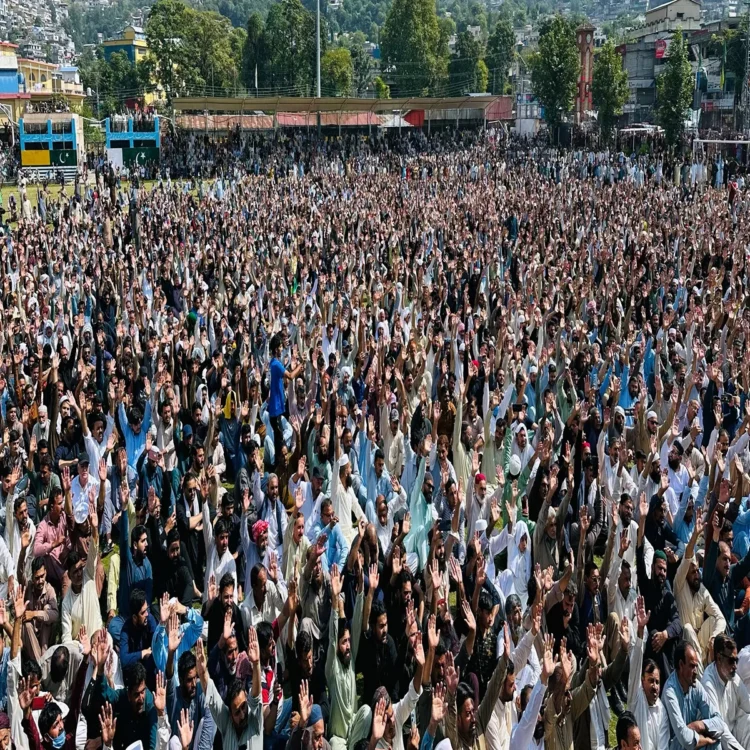
Kashmir Movement Reflects Demand for Rights
Speaking on the developments in the region, Dr Baloch said that the ongoing movement among Kashmiris represents a continued demand for political rights, self-governance, and the ability to determine their own future. He argued that despite repeated attempts to control dissent through restrictive measures, public calls for greater political and economic freedoms have continued to gain momentum.
According to his statements, efforts aimed at limiting opposition voices have not succeeded in weakening demands for representation and basic democratic rights. He maintained that popular movements often endure when communities believe their concerns are not being adequately addressed.
Questions Raised Over Governance Structure
Dr Baloch also challenged Pakistan’s description of the region commonly referred to as “Azad Kashmir.” He claimed that although the territory is presented as autonomous, significant authority remains concentrated outside the region. According to him, many important administrative and political decisions are influenced by officials based in Islamabad rather than by representatives elected directly by local residents.
He further alleged that the current system does not provide sufficient decision-making power to the people of the territory. In his view, governance arrangements have contributed to long-standing concerns regarding political representation and regional autonomy.
Criticism of Federal Policies
The BLF leader additionally argued that Pakistan’s federal framework has historically favored larger provinces while limiting the influence of smaller nationalities and regions. He claimed that actions taken against protesters and political activists in Kashmir demonstrate challenges faced by authorities in responding to demands for increased self-rule.
Dr Baloch stated that movements seeking greater political participation often emerge when communities believe their aspirations are not reflected in existing power structures. He suggested that such demands cannot be permanently contained through coercive measures.
Support for Self-Determination Movements
During his remarks, Dr Baloch emphasized that people seeking political autonomy and sovereignty should have the right to pursue their aspirations through peaceful and democratic means. He described resistance against what he termed external control as a legitimate expression of political identity and self-determination.
He also linked the situation in Kashmir to broader struggles for political rights in various regions, portraying these movements as part of a larger effort to secure greater representation and freedom from centralized authority.
Call for Solidarity Among Communities
The BLF chief extended support to Kashmiris, Pashtuns, and Sindhis, stating that their political concerns deserve wider international attention. He urged communities facing similar challenges to cooperate and support one another in advancing their respective causes.
According to The Balochistan Post, Dr Baloch said the Baloch people consider themselves connected to other groups seeking greater political rights and autonomy. He stressed the importance of solidarity among communities that share concerns regarding governance, representation, and self-determination.