
Kanchi Peetham – Sandhu Highlights Institution’s Role in National Integration
Kanchi Peetham – Lieutenant-Governor Taranjit Singh Sandhu has described the Sri Kanchi Kamakoti Peetham as a continuing civilisational institution that has safeguarded ancient learning traditions for more than 2,500 years while contributing to national unity.
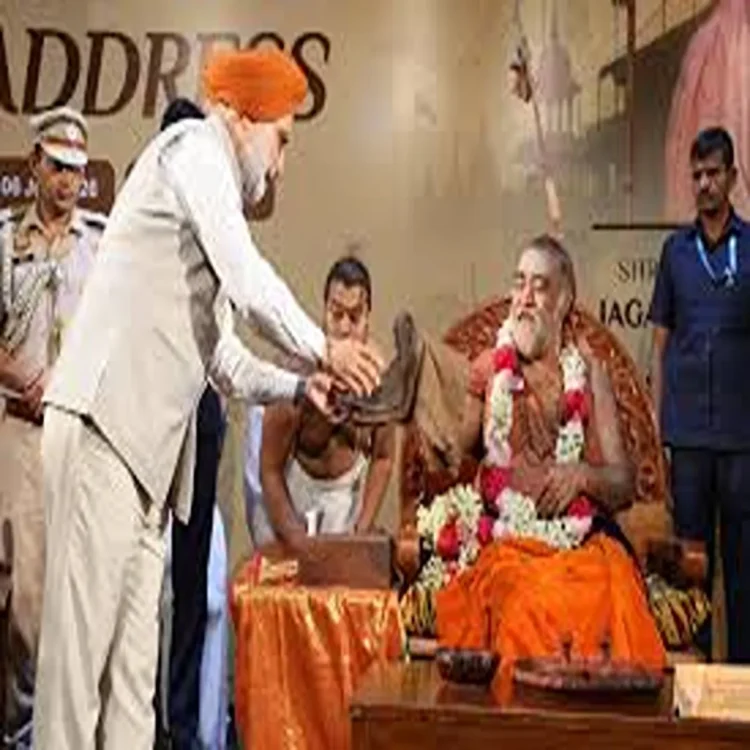
He made the remarks during an India Foundation programme held at the India Habitat Centre in New Delhi on Monday. The event was attended by Shankaracharya Shankara Vijayendra Saraswati, head of the Sri Kanchi Kamakoti Peetham, and India Foundation president Ram Madhav.
Institution’s long spiritual and scholarly legacy
Sandhu said the Kanchi Peetham represents an uninterrupted tradition of spiritual leadership and knowledge that has remained relevant across generations. The Peetham, located in Kanchipuram, is traditionally associated with Jagadguru Adi Shankaracharya.
According to Sandhu, the institution’s legacy rests on three major areas: Veda, Vidya and Vaidya. These pillars reflect its work in preserving Vedic scholarship, supporting education and extending charitable healthcare services.
He noted that the Peetham has maintained a lineage of 71 Acharyas, which he said demonstrates the continuity of its religious and intellectual traditions over centuries.
Focus on education and knowledge preservation
The Lieutenant-Governor referred to the Peetham’s educational initiatives, including Pathashalas and institutions such as Sri Chandrashekharendra Saraswati Vishwa Mahavidyalaya. He said these centres have helped carry forward traditional learning while also engaging with contemporary education.
Sandhu also highlighted efforts to preserve historical manuscripts through digitisation. He said such initiatives are important for protecting India’s intellectual heritage and making rare knowledge resources accessible to future generations.
The revival and preservation of traditional temple architecture was another area mentioned during the programme. Sandhu said heritage conservation plays a significant role in maintaining the cultural identity of communities across the country.
Outreach in Northeast and Jammu and Kashmir
Speaking about national integration, Sandhu said the Kanchi Peetham has expanded its spiritual and social outreach beyond its traditional base. He referred to its engagements in the Northeast and Jammu and Kashmir, where the institution has worked to build cultural connections and encourage a shared sense of national belonging.
He said the work of such institutions goes beyond religious practice and can contribute to dialogue, social service and cultural understanding among people from different regions.
The Lieutenant-Governor added that the preservation of civilisational values requires participation from all sections of society, particularly younger generations.
Youth participation in India’s future
In a post on X, Sandhu said the interaction had reinforced the idea that passing on civilisational values is a collective responsibility. He stated that young people have an important role in shaping the future of Bharat while remaining connected to the country’s cultural foundations.
He said India’s youth can draw from its historical traditions while contributing to innovation, public service and national development.
Delhi’s role in the Viksit Bharat journey
Sandhu said New Delhi, as the national capital, brings together people, traditions and communities from every part of India. He added that institutions such as the Kanchi Peetham continue to offer inspiration as the country works towards the goal of Viksit Bharat.
He said the city’s diverse social and cultural character makes it an important space for conversations on heritage, unity and development. Such exchanges, he added, can help connect India’s long civilisational journey with its aspirations for the future.