
Justice – Supreme Court Questions Exclusion of Parsi Women After Interfaith Marriage
Justice – The Supreme Court on Tuesday raised serious concerns over the long-standing practice of excluding Parsi Zoroastrian women from the community after they marry outside the faith, describing the custom as discriminatory during oral observations made in court.
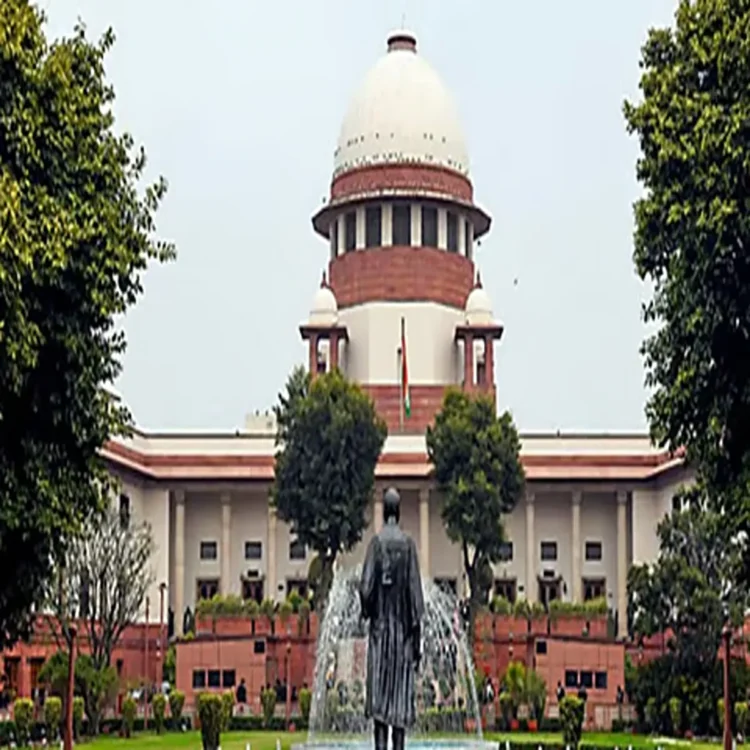
The remarks came while the court was hearing submissions linked to a petition filed by a Parsi Zoroastrian woman who claimed she was denied acceptance within the community after marrying a Hindu man. Senior Advocate Darius Khambata, appearing on her behalf, argued that the exclusionary practice has no real foundation in religious doctrine and instead emerged from social customs developed over time.
Court Questions Unequal Treatment of Women
During the hearing, Justice B.V. Nagarathna questioned whether such exclusion was imposed only on women who entered interfaith marriages. Khambata responded that the restriction was indeed applied selectively to women and not to men belonging to the same faith.
He told the bench that the petitioner continues to believe in and follow the Zoroastrian religion despite her marriage outside the community. According to him, marriage cannot be treated as a reason to strip an individual of religious identity or community participation.
Khambata further argued that Zoroastrianism has historically been viewed as a progressive religion and that there is little support in religious texts for the exclusion being enforced today. He described the practice as a “man-made” social imposition rather than a requirement rooted in faith.
Supreme Court Raises Constitutional Concerns
The bench observed that the practice appeared to violate principles of equality because the same standard was not applied to Parsi men who marry outside the religion. The court noted that if a man retains his religious identity after marrying outside the community, the same principle should logically extend to women as well.
Justice Nagarathna remarked that the right to conscience and religious belief is protected under the Constitution and cannot easily be removed through marriage. The court indicated that applying different standards to men and women could have broader legal and constitutional implications beyond the Parsi Zoroastrian community alone.
The bench also pointed to existing community practices where children born to a Parsi father are generally accepted within the Zoroastrian faith. This, the court noted, suggests that religion is treated as something acquired by birth. If that principle is accepted for children and male members of the community, similar recognition should be available to women after marriage as well.
Debate Over Religious Rights and Individual Freedom
Khambata argued before the court that the constitutional protections granted to religious denominations under Article 26 cannot override an individual’s fundamental right to freely practice and profess religion under Article 25.
According to the submissions, denying a woman access to her faith community solely because she married outside the religion raises questions about gender equality and personal liberty under the Constitution.
The matter has drawn wider attention because it touches upon the balance between religious customs and constitutional rights in India. Legal experts believe the case could influence future debates involving personal laws, gender-based discrimination, and the scope of religious freedom guaranteed under the Constitution.
The Supreme Court has not delivered a final ruling in the matter yet, but its oral observations during the hearing signaled significant concern over practices that treat male and female members of a religious community differently.