
Investigation – Supreme Court Reviews Disputed Audio in Manipur Violence Case
Investigation – The Supreme Court was told on Monday that an audio recording allegedly linking former Manipur Chief Minister N Biren Singh to the 2023 ethnic unrest may have been altered, making it difficult to determine its authenticity with certainty.
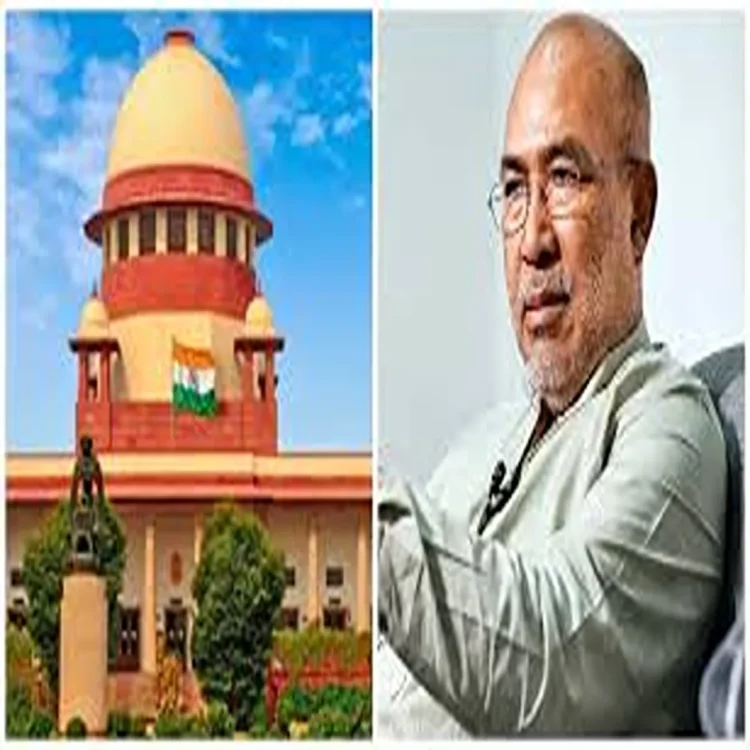
Court Examines Plea on Leaked Recordings
A bench comprising Justices Sanjay Kumar and Vinod Chandran was hearing a petition filed by the Kuki Organisation for Human Rights Trust (KOHRT). The group has sought a court-monitored probe into audio clips that were reportedly shared by a whistleblower and are said to implicate Singh in the violence that affected the state in 2023.
Appearing on behalf of the petitioner, advocate Prashant Bhushan argued that the matter has come up before the court multiple times. He noted that the state’s legal representatives had been present during each hearing, indicating that authorities were aware of the case and its details.
Petition Highlights Full Recording Submission
Bhushan informed the court that the petition included a complete transcript of a 48-minute conversation along with the audio files themselves. According to him, the materials were made available to the relevant authorities in full, leaving little ambiguity about the content submitted for examination.
KOHRT has maintained that the recordings, allegedly obtained from an anonymous source, include conversations that suggest involvement of senior officials, including the former Chief Minister, in the events that led to the ethnic conflict in Manipur.
Forensic Report Flags Tampering Concerns
During earlier proceedings, the National Forensic Sciences University (NFSU) in Gandhinagar had examined the recordings. The institution reported that the audio files appeared to have been tampered with, raising doubts about their reliability as evidence.
The forensic team stated that due to signs of editing or manipulation, it could not provide a definitive opinion on whether the voices in the recordings matched those of the individuals alleged to be involved. This limitation significantly affects the evidentiary value of the clips.
Scientific Limitations Affect Voice Analysis
In a subsequent update submitted to the court in November 2025, NFSU reiterated its earlier findings. It said the audio material was not suitable for scientific voice comparison due to inconsistencies and signs of alteration.
Experts explained that even minor edits in an audio file can compromise its integrity, making it difficult to carry out accurate forensic analysis. Without a clear and unaltered recording, establishing voice identity becomes unreliable.
Ongoing Legal and Investigative Questions
The case continues to raise important questions about the role of digital evidence in sensitive investigations. While the petitioner has pushed for an independent inquiry under court supervision, the concerns raised by forensic experts have complicated the matter.
The Supreme Court is expected to consider the limitations highlighted by the forensic examination while deciding the next course of action. The outcome may also influence how similar cases involving digital evidence are handled in the future.
As the proceedings continue, the focus remains on ensuring that any conclusions drawn are based on credible and verifiable material. The court has yet to make a final determination on the plea or the status of the recordings.