
Infrastructure – Government Charts Expansion of High-Speed Rail Across India
Infrastructure – India is moving ahead with plans to significantly expand its high-speed rail network beyond the country’s first bullet train corridor, which is currently being developed between Mumbai and Ahmedabad. As part of a broader transportation strategy, the central government has identified several additional routes that could eventually form a nationwide network connecting key commercial, industrial and technology centers.
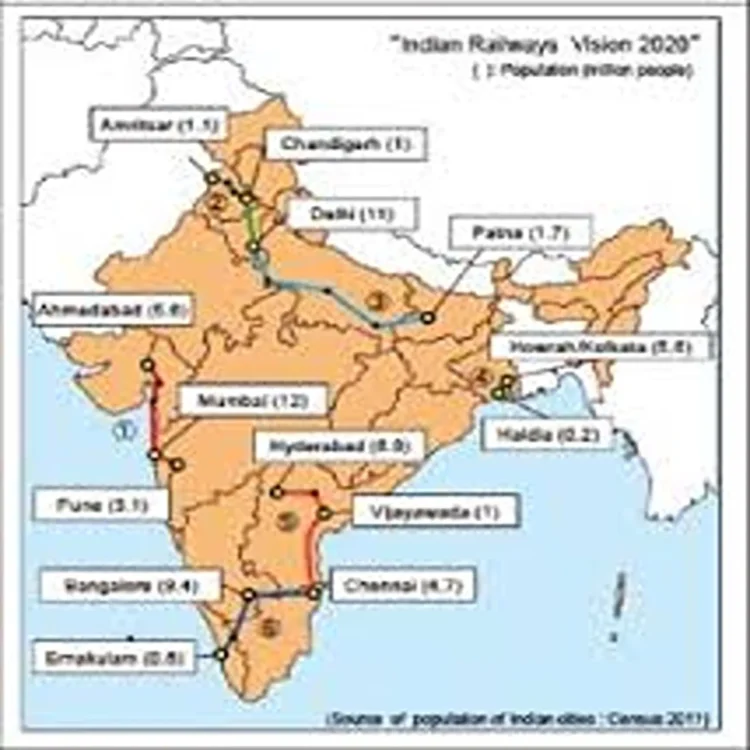
The proposed expansion reflects the government’s long-term vision of modernizing rail travel and reducing travel times between major cities. While the Mumbai–Ahmedabad corridor remains the flagship project, authorities are already examining future routes that could transform intercity transportation across different regions of the country.
Seven New High-Speed Rail Corridors Identified
According to the proposed plan, seven additional bullet train routes have been shortlisted for future development. These include Mumbai–Pune, Pune–Hyderabad, Hyderabad–Bengaluru, Hyderabad–Chennai, Chennai–Bengaluru, Delhi–Varanasi and Varanasi–Siliguri.
The selected corridors connect several of India’s most important economic zones and population centers. Many of these cities serve as major hubs for information technology, manufacturing, trade, tourism and business activities, making them strategic locations for high-speed rail connectivity.
Extensive Preparatory Process Ahead
Although the routes have been identified, the projects remain in the planning phase. Officials have not announced construction schedules for any of the newly proposed corridors. Before physical work can begin, each project will be required to pass through multiple stages, including feasibility assessments, regulatory clearances, financial planning and land acquisition procedures.
Large-scale infrastructure projects of this nature typically involve detailed technical evaluations to determine route alignment, passenger demand, environmental considerations and funding requirements. These processes are expected to take considerable time before final approvals are granted.
Focus on Faster Intercity Travel
One of the primary objectives of the proposed network is to dramatically cut travel times between major destinations. Government estimates indicate that future high-speed services could make travel significantly quicker than conventional rail options currently available.
The Mumbai–Ahmedabad bullet train is expected to complete its journey in approximately 1 hour and 57 minutes. Meanwhile, the proposed Mumbai–Pune route could reduce travel time to around 48 minutes.
Similarly, a high-speed connection between Bengaluru and Chennai is projected to take about 73 minutes, while travel between Bengaluru and Hyderabad could be completed in approximately 2 hours and 10 minutes. The Pune–Hyderabad corridor is estimated to require around 2 hours and 8 minutes.
Northern and Eastern Routes Also Planned
The government’s plans are not limited to western and southern India. Northern and eastern regions are also expected to benefit from future high-speed rail connectivity.
Under the proposed network, travel between Delhi and Lucknow could be completed in roughly 2 hours. The Delhi–Varanasi corridor is expected to reduce journey times to approximately 3 hours and 15 minutes. Another major proposal envisions a high-speed connection between Delhi and Siliguri, with an estimated travel duration of around 6 hours.
Long-Term Vision for National Connectivity
The expansion plans highlight India’s ambition to build a modern rail transportation system capable of supporting future economic growth and increasing passenger mobility. While substantial groundwork remains before construction can begin on the newly proposed routes, the identified corridors indicate the direction of the country’s long-term infrastructure strategy.
If implemented, the network could reshape long-distance travel by providing faster, more efficient links between some of India’s most important urban centers and economic regions.