
Hydrogen Train – Expansion Hinges on Resources as Railway Minister Updates Parliament
Hydrogen Train – The Centre has provided Parliament with fresh updates on the hydrogen-powered train project, kidney transplant waiting lists and action against hospitals under the Ayushman Bharat scheme. The disclosures were made through written replies in the Lok Sabha and Rajya Sabha on Friday.
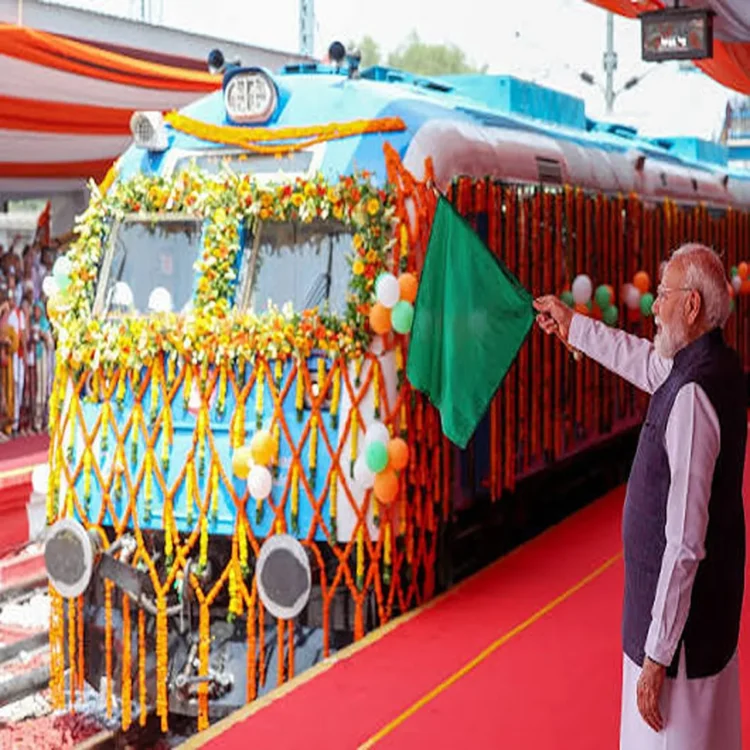
Hydrogen Train Runs Nearly 2,500 Km on Pilot Route
Railway Minister Ashwini Vaishnaw said the future expansion of hydrogen-powered trains to additional routes will be considered only after assessing the availability of resources, operational requirements and technical feasibility.
The hydrogen train was introduced on the Jind-Sonipat section in Haryana on a pilot basis to demonstrate the practical use of hydrogen-based technology in railway operations. According to the minister, the train began commercial service on July 17, 2026.
By August 3, the train had travelled 2,492 kilometres in commercial operation on the 89-km Jind-Sonipat route. Vaishnaw said Indian Railways developed the train as a pilot project aimed at demonstrating hydrogen-powered train technology and evaluating its use within the railway network.
The government has not announced a wider rollout schedule. Any decision to introduce similar trains on other routes will depend on several factors, including resources and operational feasibility.
Over 73,000 Patients Waiting for Kidney Transplants
More than 73,000 patients are currently waiting for kidney transplants in India, highlighting the continuing demand for organ donation and transplantation services across the country.
Minister of State for Health and Family Welfare Prataprao Jadhav told the Lok Sabha that 73,646 patients were on the kidney transplant waiting list as of July 27. The government also reported that more than 200 people died in 2025 while waiting for a kidney transplant.
Delhi recorded the highest number of such deaths last year, with 132 patients losing their lives while waiting for a transplant. The national registry data shows that the capital has recorded the highest number of deaths among kidney transplant waiting-list patients since 2021.
In Delhi, 176 people died while waiting for a kidney transplant in 2021. The number stood at 118 in 2022 and increased to 159 in 2023. The figures underline the continuing gap between the number of patients needing kidney transplants and the availability of suitable organs.
Action Taken Against Hospitals Under Ayushman Bharat
The government has also disclosed details of action taken against hospitals found violating rules under the Ayushman Bharat-Pradhan Mantri Jan Arogya Yojana, or AB-PM-JAY.
Health Minister J P Nadda informed the Lok Sabha that 2,000 hospitals had been de-empanelled and another 1,200 suspended by states and Union Territories for violations of scheme guidelines as of May 31 this year.
The government said enforcement action has also included criminal cases and financial penalties. A total of 29 FIRs have been registered in connection with violations, while penalties worth Rs 328.49 crore have been imposed.
AB-PM-JAY is the government’s flagship publicly funded health assurance programme and provides eligible beneficiaries access to cashless hospital treatment. The action against hospitals is aimed at enforcing compliance with the scheme’s guidelines and protecting beneficiaries from improper practices.
The government’s disclosures on the three issues provide an overview of ongoing developments in railway technology, organ transplantation and the monitoring of public healthcare services.