
Housing – Modi Launches Major Government Housing Redevelopment Projects in Delhi
Housing – Prime Minister Narendra Modi on Sunday inaugurated 2,722 newly constructed residential units and initiated the foundation for another 6,632 flats in Delhi as part of a large-scale redevelopment effort under the General Pool Residential Accommodation (GPRA) scheme. The projects are included in a broader development package valued at approximately Rs 15,200 crore aimed at improving housing and infrastructure facilities for central government employees in the national capital.
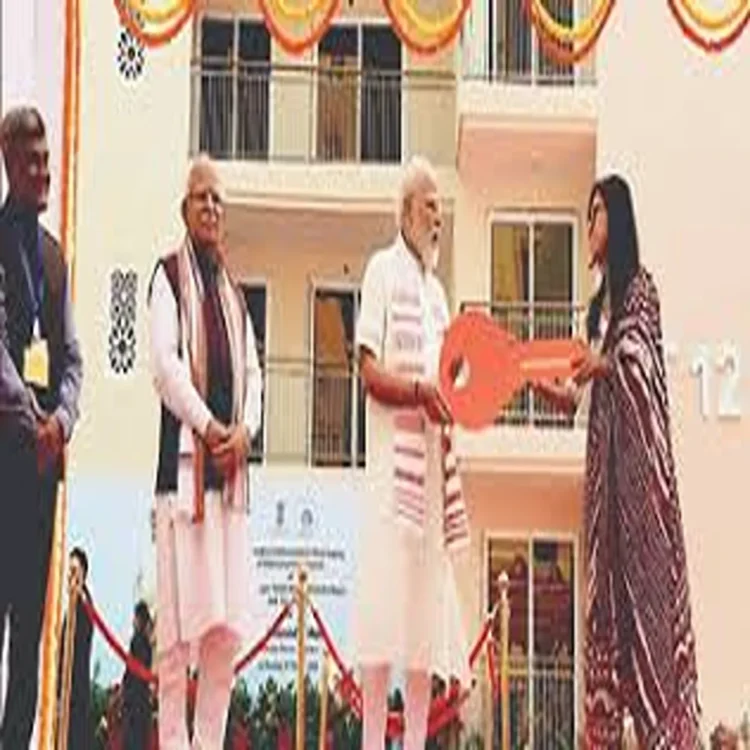
Major Push to Upgrade Government Housing Infrastructure
The redevelopment programme is designed to modernize several ageing government housing colonies in Delhi that were built decades ago and have gradually deteriorated. Many of these residential quarters no longer meet current safety standards or living requirements, making redevelopment necessary.
Through this initiative, the government is focusing on replacing outdated structures with modern residential complexes equipped with improved facilities and better urban infrastructure. The project also aims to enhance living standards for government employees by providing safer and more efficient housing environments.
Seven Key Government Colonies Under Redevelopment
The large-scale redevelopment plan covers seven major government residential colonies spread across nearly 537 acres in Delhi. These include Sarojini Nagar, Netaji Nagar, Nauroji Nagar, Kasturba Nagar, Thyagraj Nagar, Sriniwaspuri, and Mohammadpur.
Most of these housing colonies were originally developed several decades ago and consist mainly of low-rise residential buildings. Over time, many structures have become outdated, requiring extensive repairs or replacement. Government assessments indicated that a significant number of these quarters had deteriorated to the point where continued occupancy posed safety concerns.
Structural Safety Concerns Triggered Redevelopment
Officials involved in the project stated that nearly 40 percent of the existing residential units across these colonies had been classified as uninhabitable due to structural deterioration. Aging infrastructure, outdated building design, and the lack of modern facilities prompted the decision to undertake a comprehensive redevelopment.
Replacing these buildings with newly designed residential complexes is expected to significantly improve both safety and living conditions for residents while optimizing land use in central areas of the city.
Addressing Housing Shortage for Government Employees
One of the primary goals of the GPRA redevelopment initiative is to reduce the shortage of housing available for central government employees posted in Delhi. According to government estimates, there has been a gap of more than 20,000 residential units for employees requiring official accommodation.
The redevelopment strategy involves replacing old low-density buildings with modern high-rise residential towers. This approach allows the government to increase the number of available housing units while utilizing land more efficiently.
Once completed, the project is expected to deliver more than 21,000 newly built residential units for government personnel. The upgraded complexes will also include improved civic infrastructure such as better roads, green areas, parking facilities, and modern public utilities.
Self-Financing Model for Large-Scale Redevelopment
A notable aspect of the redevelopment plan is the use of a self-financing model. Instead of relying on direct funding from the public treasury, the government has adopted a financing mechanism that allows the project to sustain itself through strategic land use.
Under this model, approximately 69.41 acres of land—around 12.9 percent of the total redevelopment area—will be allocated for commercial and residential development. Revenue generated from this monetised land is expected to cover a substantial portion of the redevelopment costs.
Officials say this approach helps ensure that large-scale urban renewal can take place without placing additional financial pressure on public funds.
Modern Infrastructure Planned for Redeveloped Colonies
Beyond residential buildings, the redevelopment plan also includes improvements to urban infrastructure across the affected colonies. This involves upgrading roads, drainage systems, green spaces, and public amenities to match the needs of a modern urban environment.
Urban planners involved in the project say the redesigned colonies will feature better connectivity, improved public spaces, and enhanced services that align with contemporary city planning standards.
The initiative forms part of broader efforts to modernize government housing infrastructure in Delhi while addressing the long-standing demand for adequate residential accommodation for central government staff.