
Heritage – Delhi Gymkhana’s Future Debate Revives Questions Around Legacy and Identity
Heritage – There are certain places in a city that appear untouched by the rush of changing decades. Delhi Gymkhana Club has long been one of them. Tucked within the capital’s historic administrative district, the club has represented familiarity and routine for generations of members. From quiet afternoon lunches to conversations stretching into late evenings, the institution has held a unique place in Delhi’s social landscape.
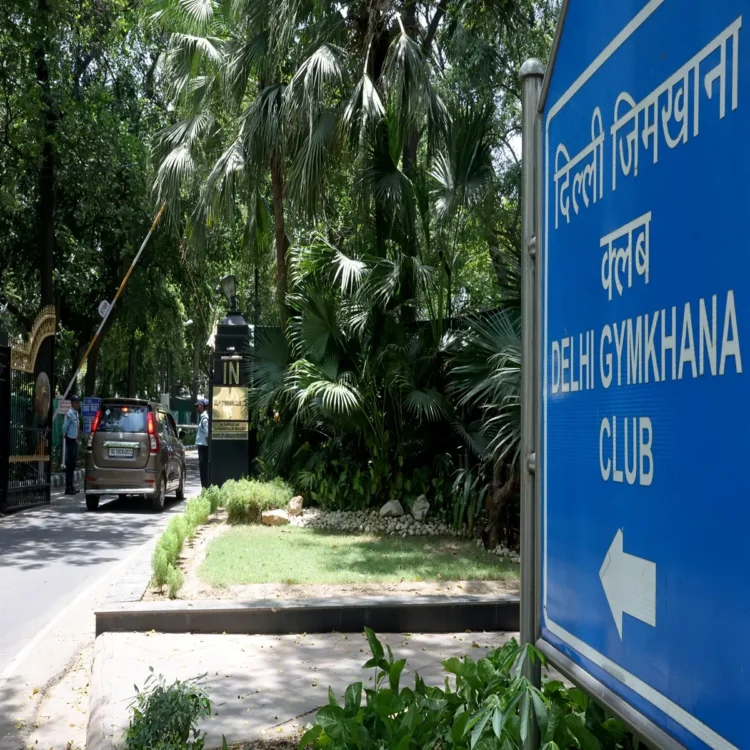
For many families associated with the club, memories are closely linked to its dining halls, gardens and long-standing traditions. Signature dishes such as mutton cutlets, chicken sandwiches, fish fingers and caramel custard became part of family rituals rather than simply menu items. Their continued popularity came not from novelty but from consistency, offering visitors a sense of comfort tied to earlier decades.
A Club Shaped by Colonial Delhi
The recent uncertainty over Delhi Gymkhana’s future has therefore triggered strong reactions across the city. Authorities have reportedly asked the club to vacate the 27.3-acre property it occupies in central Delhi, bringing renewed attention to one of the capital’s oldest elite institutions.
Originally established in 1913 as the Imperial Delhi Gymkhana Club, the organisation developed alongside the construction of New Delhi after the British administration shifted the capital from Kolkata. It first operated from Civil Lines before relocating to Safdarjung Road in 1928. The current clubhouse was later designed by British architect Robert Tor Russell, who is also known for planning Connaught Place.
Legacy and Questions of Exclusivity
Yet the discussion surrounding Gymkhana extends far beyond architecture or nostalgia. The club was founded during colonial rule as an exclusive social space for British officials and members of the imperial establishment. After Independence, the institution continued under Indian administration, but many critics argue that the structures of privilege attached to it remained largely intact.
For years, elite clubs in major Indian cities have faced scrutiny over issues of access and exclusivity. Membership at such institutions is often considered difficult to obtain, while social codes within these spaces can feel distant from everyday urban life. As a result, reactions to the present situation have remained divided.
Some people see the possibility of closure as the decline of an institution that symbolised privilege for decades. Others, however, view it as the potential loss of a place deeply woven into personal histories.
Families Recall Generations of Memories
Among those expressing concern are long-time members who associate the club with family life across multiple generations. Smita Tripathi, a journalist living in central Delhi, described the institution as a major part of her upbringing. Her father became a member in the 1980s, and she recalls spending childhood weekends at the club before later bringing her own children there.
Her perspective reflects the emotional complexity surrounding institutions like Gymkhana. While criticism of exclusivity continues, many members also see the club as a rare space of continuity in a rapidly transforming city.
Historians and urban scholars have often noted that cities evolve through layers of memory left behind by different generations. Delhi Gymkhana, despite its contradictions, became one such layer within the capital’s history. The club witnessed political transitions, changing social circles and decades of personal celebrations tied to everyday routines.
The Workers Behind the Institution
Beyond its members, concern is also growing for the employees whose livelihoods depend on the institution. Waiters, kitchen staff, gardeners and attendants have spent years maintaining the club’s daily operations, often becoming familiar faces to generations of visitors.
Many employees built careers around routines that remained unchanged for decades. Some became known for remembering regular dining orders, while others quietly maintained the club’s grounds and kitchens through changing seasons and administrations. For these workers, uncertainty surrounding the club’s future carries consequences far beyond questions of membership or prestige.
A Debate Larger Than One Institution
The debate over Delhi Gymkhana now reflects broader conversations about heritage, privilege and urban identity in modern India. Supporters argue that historic institutions contribute to the cultural fabric of cities and should be preserved carefully. Critics counter that symbols of exclusivity must also face public scrutiny in a changing society.
For Delhi, the issue represents more than the future of a single club. It raises questions about how cities remember their past while adapting to contemporary realities. Whether Gymkhana survives in its present form or not, its story continues to highlight the complicated relationship between memory, history and belonging in one of India’s oldest urban centres.