
Market – Indian Stocks End Lower as IT Drags Indices While EV Shares Advance
Market – Indian equity markets ended on a weaker note on Tuesday as selling pressure in information technology stocks outweighed gains in several other sectors. Despite the decline in the benchmark indices, electric vehicle-related companies attracted strong investor interest after the Delhi government introduced a fresh policy designed to encourage EV adoption and support cleaner urban mobility.
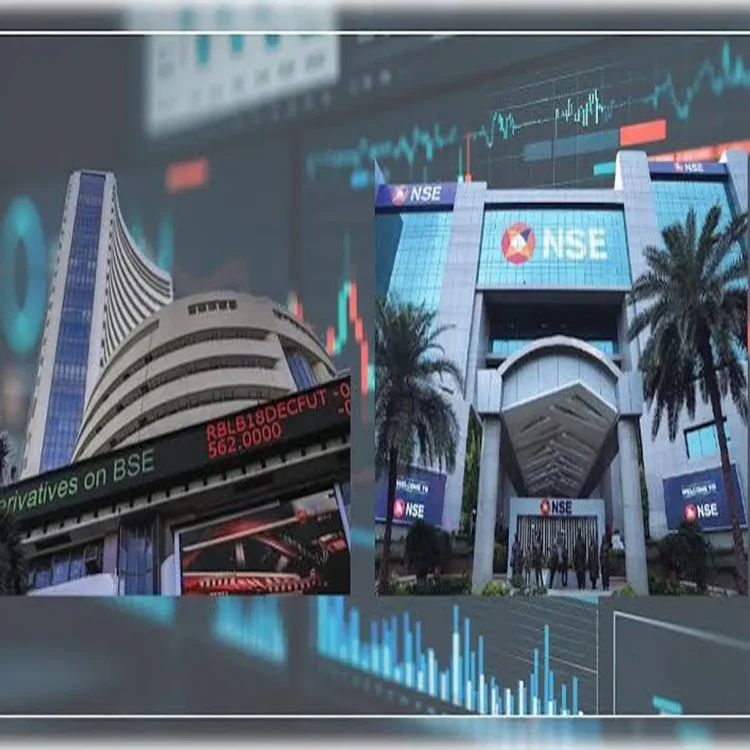
IT Stocks Weigh on Benchmark Indices
The NSE Nifty 50 finished the session at 23,865.75, falling 80.50 points, or 0.34 percent, slipping below the 24,000 level. The BSE Sensex also closed in negative territory, losing 249.70 points, or 0.33 percent, to settle at 76,478.67. Weakness across leading IT companies remained the primary reason behind the decline, offsetting gains seen in several other market segments.
Broader Market Continues to Show Strength
Although the benchmark indices ended lower, the broader market displayed resilience. The Nifty Smallcap 100 index climbed 1.02 percent, while the Nifty Midcap 100 added 0.37 percent, indicating continued buying interest in mid-sized and smaller companies despite cautious sentiment in large-cap stocks.
Delhi EV Policy Drives Rally in Electric Vehicle Stocks
Shares of electric vehicle manufacturers outperformed the broader market after the Delhi government announced a revised EV policy focused on increasing electric vehicle adoption and improving air quality in the national capital.
Ola Electric emerged among the strongest gainers, rising 8.37 percent to close at Rs 43.76 per share. Ather Energy also witnessed healthy buying, advancing 5.24 percent to end the session at Rs 1,140.55. Investors responded positively to expectations that the new policy could strengthen long-term demand for electric mobility solutions.
Mixed Performance Across Automobile Companies
Traditional automobile manufacturers delivered mixed results during the trading session. Hero MotoCorp ended 0.30 percent lower, Bharat Forge declined 0.96 percent, while Eicher Motors registered the sharpest fall among major auto stocks, dropping 4.38 percent. In contrast, Tata Motors gained 1.87 percent and Bosch posted a modest increase of 0.29 percent.
Healthcare, Realty and Chemicals Lead Sectoral Gains
Among sector-specific indices, Nifty Midsmall Healthcare recorded the strongest performance with a gain of 1.45 percent. Nifty Chemicals advanced 1.42 percent, followed by Nifty Realty, which added 1.31 percent. Consumer Durables also remained in positive territory with an increase of 1.16 percent, reflecting selective buying across domestic-focused sectors.
Top Gainers and Losers on Dalal Street
On the BSE, Maruti, Titan, Bajaj Finance, Eternal, Adani Ports, Bharti Airtel, IndiGo, Trent and NTPC finished among the day’s notable gainers. On the losing side, Infosys, ITC, HCL Tech, TCS and Tata Steel faced sustained selling pressure. The Nifty IT index declined by more than 2 percent, making it the weakest-performing sector during the session.
Rupee Weakens as Dollar Demand Remains Firm
The Indian rupee settled at 94.66 against the US dollar, compared with its previous close of 94.54. Even with Tuesday’s decline, the domestic currency recorded its first quarter-on-quarter gain since March 2025.
According to Dilip Parmar, Research Analyst at HDFC Securities, the rupee remained under pressure for a third consecutive trading session due to sustained demand for the US dollar from corporates and continued safe-haven buying of the greenback. He said the USD/INR pair faces immediate resistance near 95.10, while 94.40 remains an important support level.
Analysts See Consolidation Rather Than Trend Change
Market analyst Vipin Dixena said the Nifty’s close below 24,000 reflects cautious investor sentiment driven by profit booking and sector-specific selling rather than a major shift in the market trend. He added that the recent strength in electric vehicle stocks, despite broader market weakness, suggests investors continue to maintain confidence in the sector’s long-term growth prospects. According to him, the overall market remains in a consolidation phase, with sentiment likely to stabilise over the next few trading sessions.