
Heatwave – Delhi Traffic Police Introduces Cooling Gear for Road Personnel
Heatwave – Delhi Police has rolled out a series of protective measures for traffic personnel working outdoors as the national capital continues to face severe heatwave conditions. Officers stationed at busy intersections are now being equipped with cooling devices, hydration supplies, and emergency health support to reduce the risk of heat-related illnesses during long duty hours.
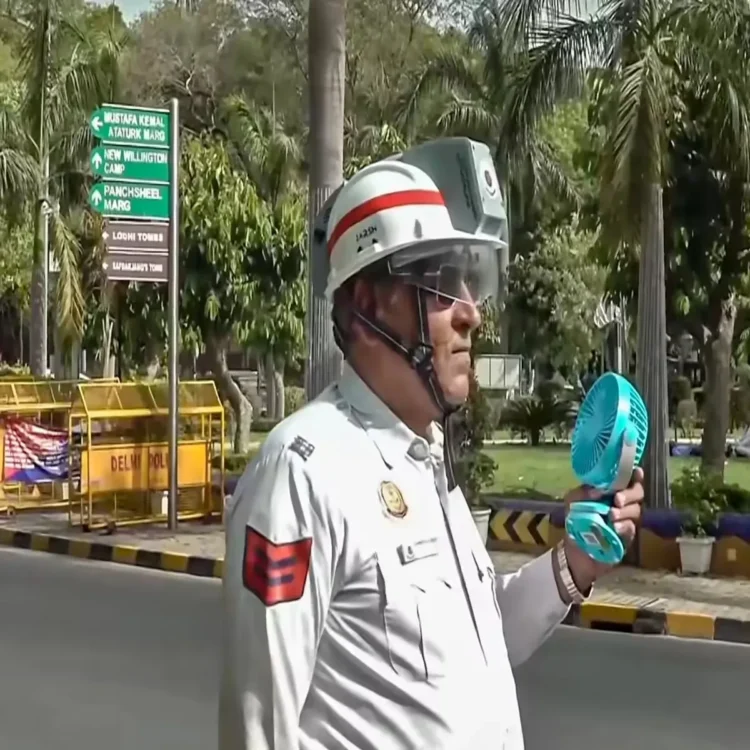
Cooling Equipment Introduced for Traffic Personnel
In response to soaring temperatures across Delhi, the Traffic Police has started distributing air-conditioned helmets and portable cooling fans to officers deployed on roads throughout the city. The initiative is aimed at improving working conditions for personnel who spend extended hours controlling traffic under direct sunlight.
According to police officials, 10 AC helmets and 10 portable cooling fans have initially been provided on a trial basis. Authorities said the devices are currently being monitored to assess their effectiveness, durability, and maintenance requirements before any wider rollout is considered.
The AC helmets are designed to circulate cool air around the wearer’s head, offering relief from the intense outdoor heat. Officials believe the equipment may help personnel remain physically comfortable and alert during peak afternoon hours.
Hydration Support Expanded Across Traffic Circles
Apart from cooling equipment, the department has also strengthened hydration arrangements for field staff. Each traffic circle has reportedly received nearly 2,000 water bottles with a capacity of 750 ml, along with around 900 ORS sachets intended to prevent dehydration and fatigue.
Senior police officers stated that 20-litre drinking water dispensers have also been installed at several duty points to ensure uninterrupted access to clean water during shifts. These measures have been introduced as temperatures continue to rise sharply across the capital.
Authorities said maintaining the health and fitness of personnel remains a priority, particularly during extreme weather conditions when outdoor duties become more physically demanding.
Food Vans and Health Precautions in Operation
Officials further confirmed that dedicated food and water supply vans are regularly moving through different traffic locations across Delhi. These mobile units are tasked with ensuring that officers receive timely hydration and support whenever required.
Traffic personnel have additionally been advised to take short breaks whenever possible and increase their water intake throughout the day. Supervisors are reportedly monitoring field conditions closely to reduce the possibility of heat exhaustion among staff members.
One traffic policeman currently using the AC helmet said the device offers noticeable comfort during duty hours. He explained that the cooling airflow inside the helmet helps reduce discomfort caused by direct heat exposure. The officer also mentioned that the lightweight design allows it to be worn continuously for several hours without difficulty.
Trial Phase Under Observation
Another official associated with the project said the department is carefully evaluating the long-term practicality of the equipment. Factors such as battery performance, maintenance costs, and operational efficiency are being reviewed before additional units are purchased.
The Delhi Police initiative comes at a time when several parts of northern India are witnessing unusually high daytime temperatures. Experts have repeatedly warned that prolonged exposure to extreme heat can create serious health risks for outdoor workers, including dehydration, heatstroke, and exhaustion.
Delhi Records Sharp Rise in Power Demand
Alongside rising temperatures, Delhi has also seen a major increase in electricity consumption. Data from the State Load Dispatch Centre showed that the city’s peak power demand crossed the 8,000 MW mark four times within six days during May 2026.
On May 25, Delhi’s electricity demand reportedly touched 8,439 MW, highlighting the growing pressure on the power infrastructure amid widespread use of air conditioners and cooling appliances during the ongoing heatwave.