
Governance – Annamalai Criticises Stalin Over Delimitation Concerns Ahead Session
Governance – A fresh political exchange has emerged between the Bharatiya Janata Party (BJP) and the Tamil Nadu government, with BJP leader K. Annamalai strongly criticising Chief Minister M.K. Stalin over his recent comments on the proposed delimitation exercise. The disagreement comes just days before a scheduled special session of Parliament, where key legislative matters are expected to be discussed.
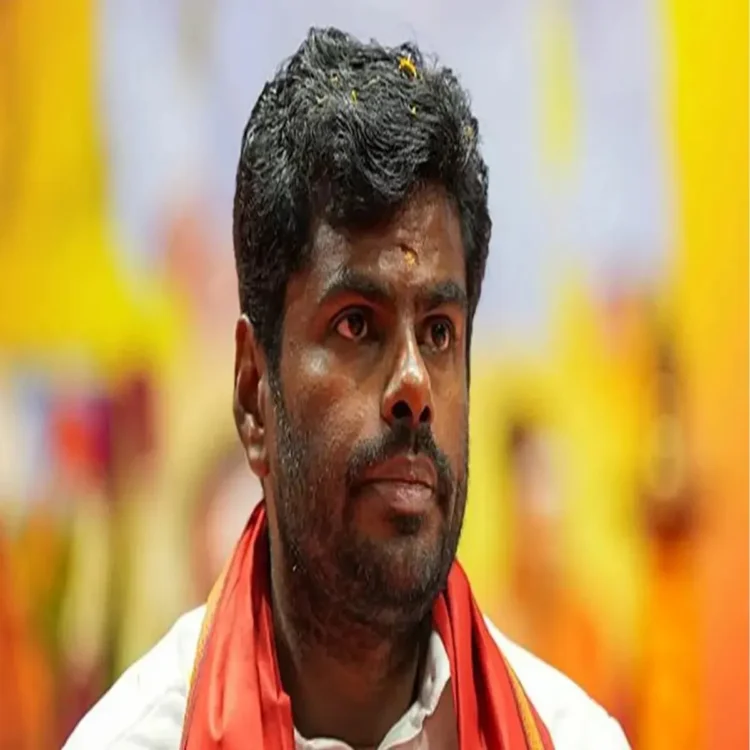
Dispute Over Delimitation Remarks
Annamalai on Tuesday described Stalin’s statements as unnecessary and accusatory, suggesting that the Chief Minister’s remarks were intended to create anxiety among citizens. He maintained that the central government remains committed to a consultative approach and will consider the interests of all regions before making any decisions.
The BJP leader argued that raising alarm over the issue without clarity could mislead the public. According to him, the Union government has consistently emphasized inclusivity in addressing sensitive topics like delimitation, which involves redrawing parliamentary constituencies based on demographic changes.
Context of the Upcoming Parliamentary Session
The exchange has gained significance in the backdrop of a special session of Parliament set to begin on April 16. During this session, lawmakers are expected to deliberate on amendments related to the Nari Shakti Vandan Adhiniyam, 2023, along with a proposed Delimitation Bill. These measures are seen as steps toward implementing one-third reservation for women in Parliament.
Annamalai highlighted that the women’s reservation issue had remained unresolved for decades before recent efforts brought it forward. He credited the central leadership with building consensus across political parties to pass the legislation in both Houses.
Stalin’s Concerns About Regional Impact
Earlier, Stalin had expressed apprehension that the delimitation process could disproportionately affect southern states, particularly those that have effectively implemented population control measures. In a video message, he cautioned that such states should not be penalised for following national guidelines on population management.
He also indicated that Tamil Nadu might consider a large-scale protest if its interests were negatively impacted. Additionally, the Chief Minister questioned the timing of the parliamentary session, noting its proximity to Assembly elections in Tamil Nadu and West Bengal scheduled for April 23.
Stalin argued that any move perceived as unfair could undermine regional balance and representation, and stressed that his government would actively defend the state’s interests if necessary.
BJP Response and Clarifications
Responding to these concerns, Annamalai dismissed the idea that delimitation would be solely based on population figures. He stated that earlier assurances from Union leaders had clarified that any increase in representation would follow a proportional approach, ensuring that no state would face disadvantages.
He further criticised Stalin’s tone, calling it inappropriate and suggesting that it could deepen divisions rather than encourage constructive dialogue. According to Annamalai, the central government’s efforts have focused on unity and collaboration, particularly in advancing long-pending reforms like women’s reservation.
The BJP leader also questioned the political intent behind Stalin’s remarks, asserting that such statements risk undermining public trust and constitutional responsibility.
Broader Political Implications
The disagreement reflects a wider debate on how India should balance representation across regions while accounting for demographic changes. Southern states have often raised concerns that their progress in controlling population growth might reduce their parliamentary influence if delimitation is based strictly on population metrics.
As discussions move forward in Parliament, the issue is expected to draw significant attention from multiple political stakeholders. The outcome of these deliberations could have long-term implications for federal balance and electoral representation in the country.
With both sides firmly stating their positions, the coming days are likely to see further political exchanges as the nation prepares for an important legislative session.