
FuelCrisis – Andhra Pradesh Faces Third Day of Fuel Shortage Disruptions
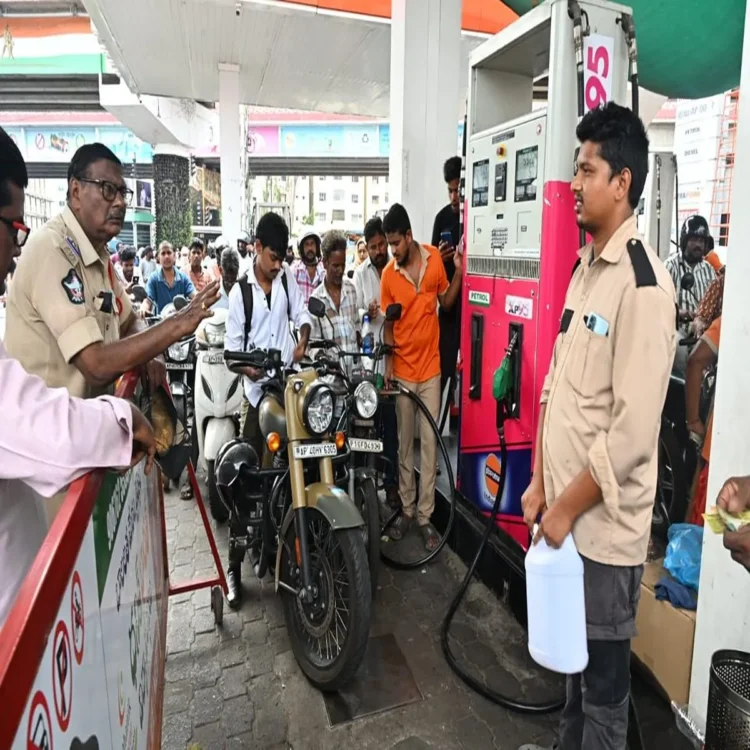
FuelCrisis – Fuel availability remained strained across Andhra Pradesh for a third straight day, as residents in several cities continued to face long waiting times at petrol stations. In major urban centres such as Vijayawada and Tirupati, vehicles lined up for kilometres while several fuel outlets displayed “No Stock” notices. Despite repeated assurances from authorities that the situation was under control, public anxiety and increased demand kept pressure on supply chains.
Panic Buying and Misinformation Add to Pressure
Officials attributed the surge in demand largely to panic buying, driven in part by unverified information circulating on social media. Concerns about a possible fuel price increase further contributed to the rush at petrol pumps. Local administrations, including district collectors and police officials, held meetings urging citizens to avoid unnecessary purchases and rely on official updates instead of rumours.
Oil Companies Increase Dispatches Amid Rising Demand
According to State Civil Supplies Commissioner K Kanna Babu, all major oil companies had stepped up fuel dispatches from their depots. Hindustan Petroleum Corporation Limited (HPCL) began additional shipments on Sunday, followed by Indian Oil Corporation Limited (IOCL) and Bharat Petroleum Corporation Limited (BPCL) on Monday. However, consumption remained significantly above normal levels.
He noted that fuel sales were approximately 25 percent higher than average. The number of dry fuel outlets initially rose sharply but showed slight improvement by Monday evening. While 660 stations reported shortages earlier in the day, the figure dropped to around 600 later, indicating gradual recovery.
Traders Cite Supply Miscalculation as Key Issue
Ravi Gopala Krishna, president of the Andhra Pradesh Federation of Petroleum Traders, acknowledged that supply had increased substantially but suggested that the crisis stemmed from earlier miscalculations by oil companies. He indicated that attempts to regulate fuel distribution last week may have unintentionally disrupted supply patterns, though he did not provide specific details.
He expressed optimism that normal conditions would likely return by Tuesday evening as additional stock continued to reach retail outlets.
Government Intensifies Monitoring and Logistics Efforts
Chief Minister N Chandrababu Naidu directed officials to maintain close monitoring of the situation until stability is fully restored. During review meetings conducted via teleconference from Amaravati and Visakhapatnam, he instructed authorities to ensure continuous fuel transportation, including overnight dispatches.
To streamline operations, each fuel consignment was accompanied by revenue and police personnel to prevent delays or disruptions. Officials reported that on Monday alone, over 2,600 fuel loads were scheduled for distribution, with a majority already delivered by evening. These shipments included substantial volumes of both petrol and diesel supplied by the three major oil companies.
Gradual Improvement Reported in Several Districts
Authorities indicated that supply conditions showed signs of improvement compared to the previous day, particularly in districts such as Anakapalle, East Godavari, Guntur, Krishna, Bapatla, Palnadu, Nandyal, Anantapur, and Markapuram. By Monday evening, sales figures reflected steady distribution, with thousands of kilolitres of fuel already supplied to consumers.
Rationing Measures Implemented to Ensure Fair Access
Civil Supplies Minister Nadendla Manohar chaired a review meeting with senior officials and emphasized the need for controlled distribution. He stated that ration-based fuel sales were helping reduce long queues and prevent hoarding.
To ensure equitable access, limits were introduced on fuel purchases. Heavy vehicles were restricted to fuel worth Rs 2,000, while cars and jeeps could purchase up to Rs 1,000. Two-wheelers and auto-rickshaws were capped at Rs 500. Officials were deployed at fuel stations to enforce these measures and coordinate with police to maintain order.
Focus on Agriculture and Essential Services
The minister also stressed the importance of uninterrupted fuel supply for key sectors such as agriculture and aquaculture, which play a significant role in the state’s economy. He directed authorities to ensure that farmers and related industries do not face disruptions due to the ongoing situation.
Public Reassurance and Ongoing Monitoring
Authorities noted that public concern was gradually easing as supply improved and queues shortened. Regular media briefings were being conducted to keep citizens informed and counter misinformation. Officials reiterated their commitment to restoring normal conditions swiftly while ensuring that essential services and daily life remain unaffected.