
Environment – India Launches Him-CONNECT to Drive Himalayan Solutions
Environment – India took a significant step toward strengthening sustainable development in the Himalayan region as Union Environment Minister Bhupendra Yadav unveiled a new platform designed to turn scientific research into practical outcomes. The initiative, introduced at a major international summit in New Delhi, aims to connect research institutions with communities and businesses working on the ground.
Platform to Translate Research into Action
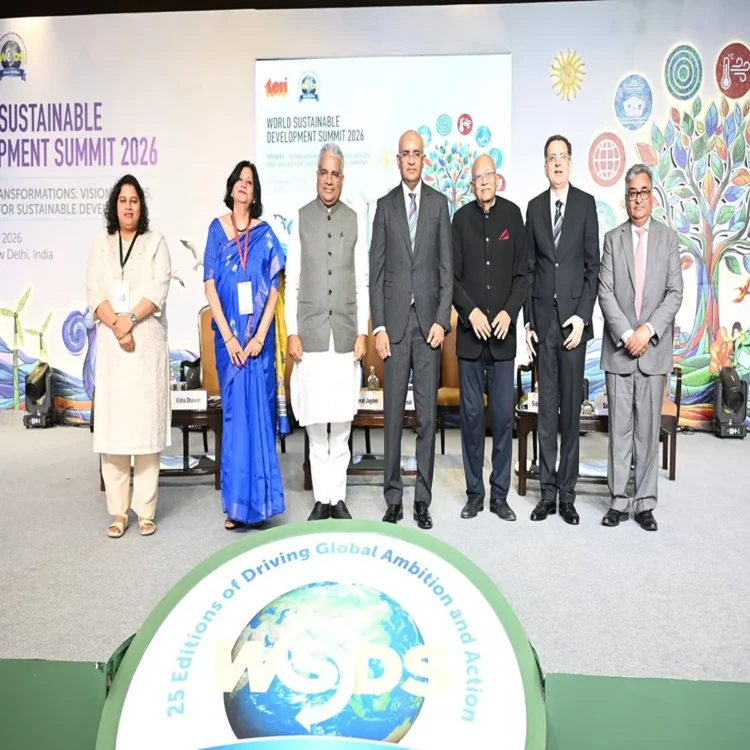
The new platform, named Him-CONNECT, was formally launched during the silver jubilee edition of the World Sustainable Development Summit hosted by The Energy and Resources Institute in the capital. According to Yadav, the initiative has been created to ensure that findings under the National Mission on Himalayan Studies do not remain confined to academic reports but are converted into workable, scalable solutions.
Addressing participants at the summit, the minister explained that Him-CONNECT seeks to close the long-standing gap between scientific research and real-world implementation. By bringing together researchers, start-ups, entrepreneurs, investors, development agencies and policymakers, the platform is intended to encourage collaboration and accelerate the adoption of innovative solutions in the Himalayan region.
Participation from Across Himalayan States
The initiative features participation from 30 exhibitors representing projects and programmes across 13 Himalayan states and Union Territories. These participants are showcasing solutions that focus on ecological balance, community livelihoods and climate resilience in mountain ecosystems.
The Himalayan region, known for its fragile environment and growing vulnerability to climate change, has increasingly been at the centre of national policy discussions. Government officials noted that targeted innovation and coordinated action are critical to protecting the region’s biodiversity while supporting economic development for local communities.
Community-Centred Sustainability Efforts
On the same occasion, The Energy and Resources Institute also announced the formation of the Himalayan Coalition to support the next phase of its “Lighting a Billion Lives” programme. The second phase of the programme will focus on inclusive and community-driven development models, particularly in remote and underserved areas.
Yadav highlighted that Him-CONNECT aligns with India’s broader sustainability roadmap, which emphasises public participation alongside technological advancement. He referred to Mission LiFE, or Lifestyle for Environment, as a central pillar of this strategy, stressing that meaningful environmental change requires shifts in daily habits and consumption patterns in addition to policy reforms.
Call for Global Climate Cooperation
Reaffirming India’s stance on international climate action, the minister said the country is prepared to collaborate with governments, institutions and communities worldwide to promote a sustainable and equitable future. However, he expressed concern over what he described as insufficient adaptation finance from developed nations and uneven progress in achieving the Sustainable Development Goals.
He observed that the challenge is not a lack of scientific understanding but rather the need for greater speed, scale and coordination in implementation. Transparent and predictable financial mechanisms, he added, are essential to converting climate commitments into measurable progress.
Yadav also underscored the importance of parallel movement between climate ambition and climate finance, stating that clear goals must be matched by reliable support systems.
India’s Climate Commitments Reiterated
The minister reiterated India’s established climate targets, including achieving 500 gigawatts of non-fossil fuel energy capacity by 2030 and reducing the emission intensity of GDP by 45 percent from 2005 levels. He also reaffirmed the country’s long-term objective of reaching net zero emissions by 2070.
In addition, he pointed to the advancement of the National Green Hydrogen Mission and the development of climate-resilient infrastructure as key components of India’s energy transition strategy.
Earlier, Prime Minister Narendra Modi, in a message delivered at the summit, commended the organisers for their continued focus on sustainable development goals. In his note, read out by TERI Director General Dr Vibha Dhawan, the Prime Minister stressed that climate action must prioritise the needs of vulnerable and disadvantaged populations.
He also highlighted that nations in the Global South face a disproportionate share of climate impacts while still striving for economic development. Ensuring climate justice, he noted, remains essential as countries pursue growth alongside environmental responsibility.