
Environment – Chhattisgarh Forest Economy Reveals Massive Ecological Contribution
Environment – Chhattisgarh’s forests are playing a far greater role in the state’s economy than previously estimated, according to a detailed study conducted by The Energy and Resources Institute (TERI). The report highlights that the state’s forest ecosystem contributes nearly Rs 1.41 lakh crore every year through a wide range of ecological services, significantly surpassing the value generated from timber and logging activities alone.
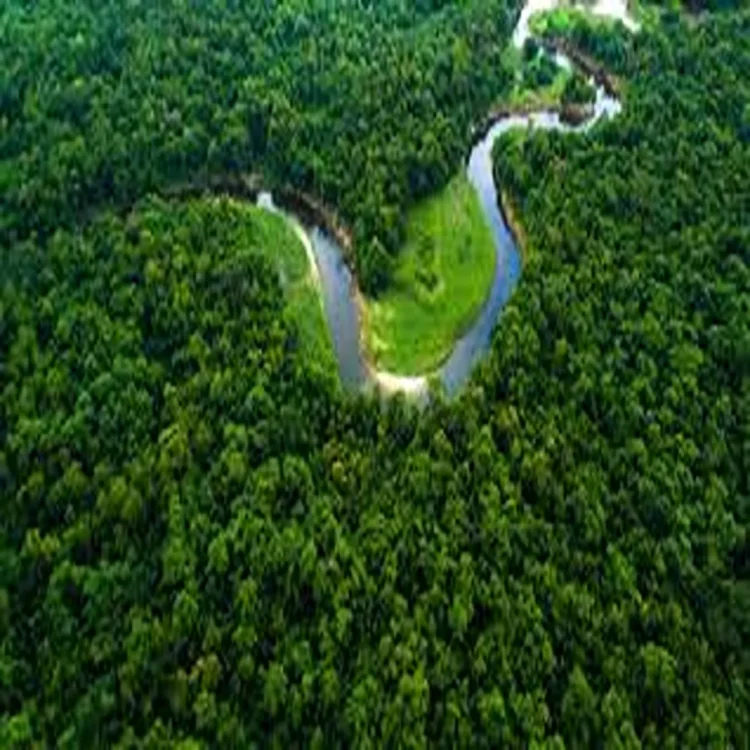
Forest Ecosystems Supporting State Economy
The study found that forests account for more than 11 percent of Chhattisgarh’s economy when environmental services such as water conservation, climate regulation, biodiversity protection, and soil preservation are included in the calculation. Earlier estimates had largely focused on direct commercial outputs like timber, bamboo, and fuelwood, which represented only about 3.46 percent of the economy.
With nearly 44 percent of the state covered by forests, Chhattisgarh remains one of India’s most forest-rich regions. Around 1.27 crore people either live within forested areas or depend on them for their livelihoods. Researchers said the findings underline the economic importance of preserving natural ecosystems, especially for rural and tribal communities that rely heavily on forest resources.
The report also stressed that forests act as invisible infrastructure by maintaining ecological balance and supporting long-term environmental sustainability. Experts involved in the study noted that these natural systems provide benefits that are often ignored in conventional economic assessments.
Rare Buddhist Idol Returning to Raipur Museum
In another significant development for the state’s cultural heritage, a rare bronze idol of Lord Avalokiteshvara is being brought back to India after being recovered in the United States. The ancient sculpture, which was stolen from the Mahant Ghasidas Memorial Museum in Raipur several years ago, is considered an important symbol of Chhattisgarh’s Buddhist legacy and traditional craftsmanship.
The idol is estimated to be worth nearly Rs 19 crore in the international art market. Officials confirmed that efforts are underway to reinstall the artefact at its original location in the Raipur museum once the repatriation process is completed.
The return of the sculpture forms part of a larger initiative under which the United States recently handed over 657 historical artefacts to India. The collection, valued at approximately 14 million US dollars, includes several culturally important objects linked to India’s ancient heritage.
State authorities described the recovery as an important achievement for the protection of historical treasures and the fight against illegal trafficking of antiquities.
Heatwave Triggers Wildlife Crisis in Korba District
Meanwhile, extreme weather conditions in Chhattisgarh’s Korba district have caused severe damage to local wildlife populations. Hundreds of bats reportedly died due to intense heat and hot winds sweeping through the Pali region during the ongoing heatwave.
Temperatures in the area have crossed 43 degrees Celsius as the annual Nautapa period, traditionally considered the hottest phase of summer, begins. Wildlife observers and local residents reported seeing bats collapsing from trees near Naukoniya Pond, an area known for hosting large groups of migratory bats between February and March each year.
The prolonged exposure to high temperatures and thermal stress is believed to have caused the deaths. Environmental experts warned that rising temperatures and recurring heatwaves are increasingly affecting fragile ecosystems and wildlife habitats across several parts of central India.
Residents in nearby villages expressed concern over the changing climate conditions and their impact on local biodiversity. Officials are monitoring the situation and assessing possible measures to reduce stress on wildlife during extreme summer conditions.