
Enforcement – Supreme Court to Hear ED Plea on Bengal Raid Dispute
Enforcement – The Supreme Court is set to examine a petition filed by the Enforcement Directorate regarding alleged obstruction during search operations in Kolkata.
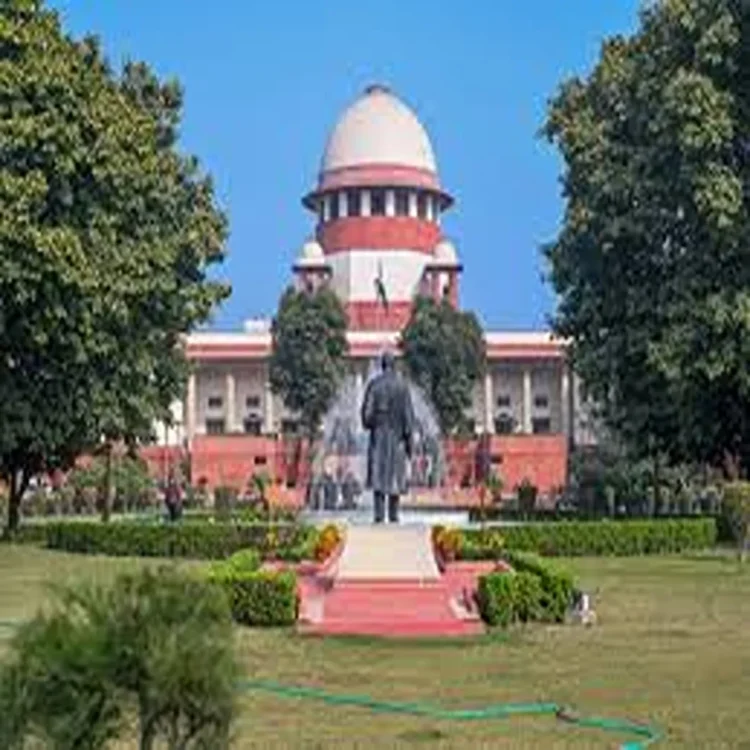
The Supreme Court of India will on Wednesday take up a petition moved by the Enforcement Directorate (ED), which has accused West Bengal Chief Minister Mamata Banerjee of interfering with its search operations earlier this year. The matter is scheduled before a bench comprising Justices Prashant Kumar Mishra and N. V. Anjaria, as per the court’s official listing for March 18.
ED Raises Allegations of Obstruction During Searches
The federal agency has approached the apex court seeking directions to initiate criminal proceedings against the Chief Minister, along with the state’s Director General of Police and the Kolkata Police Commissioner. The ED claims its officials were obstructed while conducting simultaneous searches at the office of Indian Political Action Committee (I-PAC) and at the residence of its co-founder, Pratik Jain, in Kolkata.
During earlier proceedings, the agency asserted that its officers faced serious resistance while carrying out their duties in West Bengal. Representing the ED, Additional Solicitor General S. V. Raju rejected arguments that the agency was misusing its authority. He maintained that rather than being accused of overreach, the agency itself had come under pressure during its operations.
Court Had Earlier Granted Time for Pleadings
At the previous hearing, the bench led by Justice Mishra allowed additional time for both sides to complete their submissions. The case was subsequently listed for further consideration on March 18.
The ED’s petition forms part of a broader legal dispute surrounding its investigation into alleged financial irregularities, with the agency insisting that its officials were prevented from performing lawful duties.
Mamata Banerjee Denies Interference Claims
In response, Chief Minister Mamata Banerjee has firmly denied all allegations. In her affidavit submitted before the court, she stated that her presence at the locations was limited and had a specific purpose. According to her, she visited the premises only to secure sensitive and proprietary data belonging to her party, the All India Trinamool Congress (AITC).
Banerjee said she reached the locations on January 8 after receiving information that confidential political material was being accessed during the ED’s searches. She described the data as crucial for the party’s preparations ahead of the upcoming West Bengal Assembly elections.
Claim of Cooperative Conduct at Search Sites
The affidavit further stated that the Chief Minister had requested permission from ED officials present at the sites to retrieve certain devices and documents. According to her submission, the officials did not object and allowed her to take specific materials.
After collecting the data, she reportedly left the premises without causing any disruption. The affidavit also pointed to official records of the search proceedings, stating that they indicate the operations continued smoothly and without incident after her departure.
Questions Raised Over ED’s Timing and Procedure
Banerjee has also questioned the timing of the ED’s actions, suggesting that the searches were conducted at a politically sensitive moment, ahead of the 2026 Assembly elections. Her affidavit alleges that the agency acted after a long period of inactivity and chose a time when I-PAC was in possession of key internal documents, including a potential candidate list.
Additionally, the response raises concerns over procedural compliance under the Prevention of Money Laundering Act (PMLA). It argues that the ED failed to provide audio or video recordings of the search operations, which, according to her, creates doubts about the transparency of the process.
Dispute Over Access to Political Data
A central point in the Chief Minister’s defence is that neither her party nor its representatives are accused in the case being investigated. She has argued that the ED therefore had no authority to access or examine internal party data.
The Supreme Court’s upcoming hearing is expected to address these competing claims and determine whether any legal violations occurred during the search operations.