
Elephant – Rare High-Altitude Sighting in Uttarakhand Raises Wildlife Movement Concerns
Elephant – An unexpected elephant sighting in the upper reaches of Uttarakhand has prompted wildlife experts to closely examine changes in animal movement across the state’s forest landscapes.
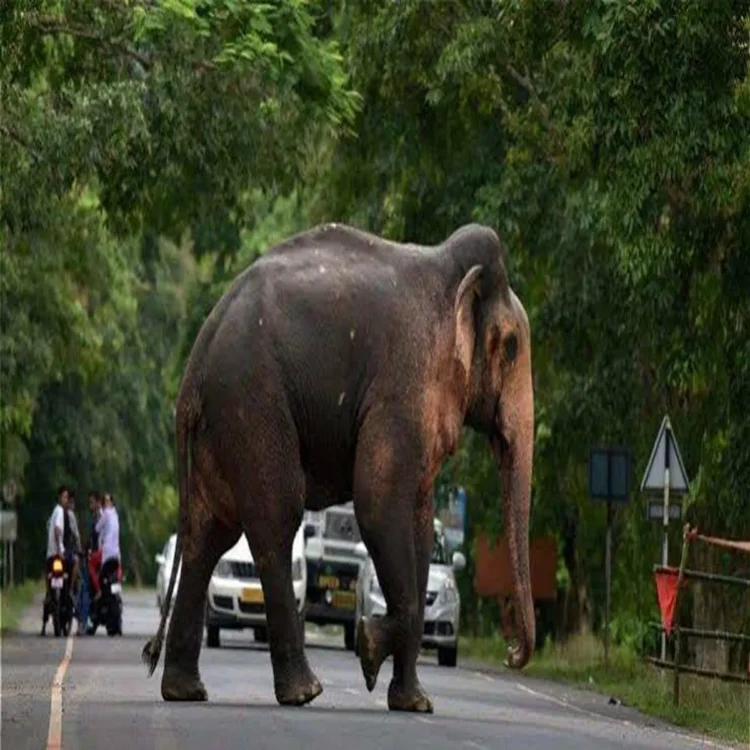
An adult elephant has been seen at an elevation of nearly 2,900 metres in Uttarakhand’s Pauri Garhwal district, marking an unusual wildlife event that has attracted the attention of conservationists and forest officials. The animal was reportedly spotted near Bhawansi village, close to Paukhal in the Dugadda development block, an area where elephant presence has rarely been recorded. Residents said the elephant has been roaming through nearby forests and agricultural fields for the past two days, increasing concerns about possible crop losses and risks to local communities.
Unusual Location Draws Attention of Experts
The reported sighting occurred at an altitude of approximately 2,982 metres, significantly higher than the elevations where elephants are commonly found in the state. Uttarakhand is home to one of India’s largest wild elephant populations, but their movement has traditionally been concentrated in the plains and foothill regions, including Haridwar, the Rajaji National Park landscape, the Corbett region and adjoining forest divisions. The appearance of a full-grown elephant in the hill region has therefore been viewed as an uncommon development.
Possible Route Through Forest Corridors
According to senior wildlife scientist Dr. Dinesh Chandra Bhatt, local residents from Bhawansi, Jaigaon and Bhatgaon Bagi informed authorities about the presence of the elephant. He explained that the location lies close to the Hinwal River, which eventually joins the Ganga near Garud Chatti.
Based on the surrounding geography, Dr. Bhatt believes the elephant may have travelled uphill from the Haridwar Forest Division or the Rajaji landscape while following natural terrain and forest patches. However, he noted that further field observations would be required before confirming the exact route taken by the animal.
Growing Challenges for Hill Communities
Experts have expressed concern that if elephants begin extending their range into higher-altitude villages, the pressure on rural communities could increase considerably. Farmers in many hill districts already face frequent crop and livestock losses due to encounters with leopards, bears, wild boars and monkeys.
The arrival of elephants in these areas could create an additional challenge for residents, particularly during the farming season when agricultural fields are most vulnerable to wildlife movement.
Habitat Changes May Be Influencing Movement
Wildlife specialists say several factors could explain the unusual appearance of the elephant at such a high altitude. These include increasing pressure on existing habitats, changes in food availability, shifting weather conditions and disturbances to traditional elephant corridors.
Researchers have cautioned against reaching immediate conclusions, stressing that systematic monitoring and scientific assessment will be necessary to determine whether this is an isolated incident or part of a broader change in elephant movement patterns.
Elephant Population and Conflict Statistics
The latest All India Synchronised Elephant Estimation Report places India’s wild elephant population at 22,446. Karnataka continues to have the country’s largest elephant population with 6,013 animals, followed by Assam, Tamil Nadu and Kerala. Uttarakhand is estimated to support around 1,792 wild elephants.
Forest department records also indicate that 542 elephant deaths were reported in Uttarakhand between 2001 and June this year. Of these, 168 resulted from unnatural causes, including electrocution, train collisions, road accidents and poaching. Another 103 elephants died in conflicts with other elephants, while 278 deaths were attributed to natural causes.
Human-elephant conflict remains a significant concern in the state, with official figures showing that 151 people have lost their lives over the past 15 years due to encounters involving wild elephants.