
Elections – West Bengal Campaign Closes After Intense Political Showdown
Elections – The high-energy election campaign for the first phase of West Bengal’s assembly polls concluded on Tuesday evening, leaving behind a charged political atmosphere marked by fierce exchanges between top leaders. As campaigning ended at 6 pm ahead of the April 23 voting, both major camps intensified their rhetoric, setting the stage for a closely watched contest.
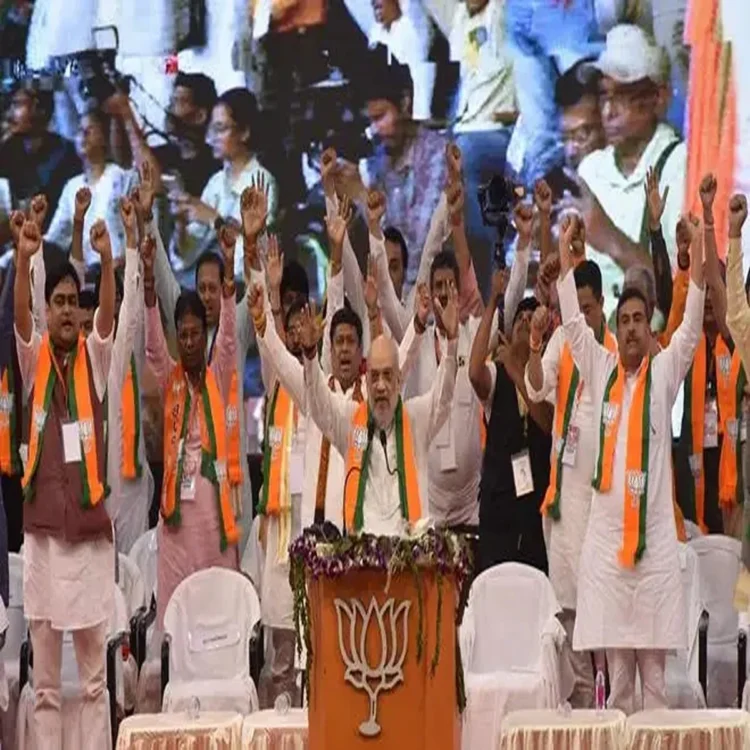
Massive Electoral Exercise Across Key Regions
The opening phase of polling will cover 152 assembly seats, including 54 in north Bengal, while the remaining constituencies are spread across districts such as Murshidabad, East and West Midnapore, Jhargram, Purulia, Bankura, West Bardhaman, and Birbhum. A total of 1,478 candidates are in the fray, with voting to be conducted at more than 45,000 booths. Authorities have arranged extensive monitoring measures, including dual-camera webcasting at polling stations to ensure transparency.
Campaign Dominated by Sharp Political Exchanges
The run-up to polling witnessed an intense face-off between senior leaders, particularly between Union Home Minister Amit Shah and Chief Minister Mamata Banerjee. Both sides launched strong verbal attacks, focusing on governance, development, and leadership credibility. The campaign narrative frequently revolved around allegations and counter-allegations, reflecting the high stakes involved in the election.
Key Issues Shape Political Narrative
Several contentious issues dominated public discourse during the campaign. Opposition leaders raised concerns about alleged irregularities in voter lists, infiltration, and law-and-order challenges. Allegations related to crimes against women and corruption cases, including financial scandals and recruitment controversies, also featured prominently. At the same time, accusations of religious polarization added another dimension to the already complex political landscape.
Shah Targets Leadership and Promises Change
In his final rallies, Amit Shah adopted an aggressive tone, particularly during an address in East Midnapore. He criticized the state leadership and made strong remarks about the future political direction of West Bengal. Shah also spoke about employment and development, claiming that a change in government would bring new opportunities for the state.
In Darjeeling, he addressed long-standing regional concerns, especially the Gorkha issue. Without directly endorsing statehood demands, he assured that a lasting political solution would be pursued. He also promised withdrawal of cases against certain groups, contingent on a change in government.
Banerjee Counters with Allegations and Challenges
Chief Minister Mamata Banerjee responded with equal intensity during her campaign appearances in North 24-Parganas and East Midnapore. She questioned the large-scale deployment of central forces, suggesting that their presence could influence the electoral process. According to her, such arrangements were unprecedented and raised concerns about fairness.
Banerjee also countered allegations made against her administration by presenting her own accusations against the opposition. She referred to alleged irregularities in industrial areas, claiming that certain individuals were involved in financial misconduct. Her speeches also included criticism of national leadership, challenging claims made by her political rivals.
High Stakes as Voting Day Approaches
With campaigning now over, attention shifts to the polling process, which is expected to be closely monitored given the heightened political tensions. The combination of large-scale security deployment and advanced surveillance systems reflects the authorities’ focus on maintaining order.
The outcome of this phase is likely to have significant implications for the broader electoral battle in the state, where both sides have invested considerable effort and political capital.