
Elections – Assam Assembly Voting Begins With Moderate Early Turnout Trends
Elections – Early voting patterns in Assam showed a steady but moderate turnout during the first few hours of polling on Thursday, with officials expecting numbers to rise as the day advances.
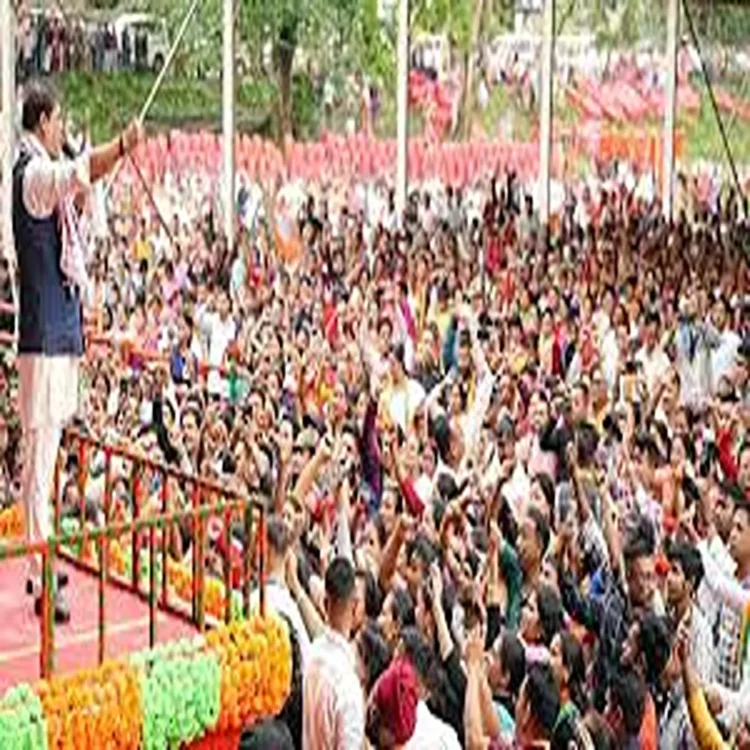
Early Voting Patterns Across Key Constituencies
Initial data from election authorities indicated that several constituencies reported similar levels of participation during the morning hours. In Bongaigaon district, Abhayapuri recorded a turnout of 18.75 percent, while Srijangram followed with 18.07 percent. The Bongaigaon constituency itself registered 17.8 percent voting in the early phase.
In Upper Assam, Demow saw a turnout of 18.28 percent, closely matched by Nazira at 18.24 percent. Sivasagar slightly surpassed these figures, reporting 18.52 percent participation during the same period. Officials monitoring the process noted that such numbers are typical for early hours, with a gradual increase expected as more voters arrive at polling stations later in the day.
Statewide Polling Underway
Voting is being conducted across all constituencies in Assam, covering a vast network of polling stations. Authorities have deployed necessary arrangements to ensure a smooth and orderly process. With the day progressing, election officials anticipate a steady rise in voter turnout across both urban and rural regions.
High-Stakes Political Contest
This election has drawn significant attention due to the competitive political landscape. The contest is largely seen as a direct battle between the BJP-led National Democratic Alliance and the opposition alliance led by the Congress. The ruling party, under Chief Minister Himanta Biswa Sarma, is seeking to secure a third consecutive term in office.
On the other hand, the Congress is working to regain its footing in the state after losing power in 2016. The outcome is expected to play a crucial role in shaping Assam’s political direction in the coming years.
Candidates and Key Political Figures
A total of 722 candidates are contesting in this election, representing a wide range of political parties and independent groups. Among the prominent candidates are Chief Minister Himanta Biswa Sarma, state Congress president Gaurav Gogoi, Leader of Opposition Debabrata Saikia, AIUDF chief Badruddin Ajmal, Raijor Dal leader Akhil Gogoi, and AJP president Lurinjyoti Gogoi.
Their participation highlights the importance of this election, with several high-profile leaders directly seeking public mandate.
Scale of the Electoral Process
Polling is taking place at 31,490 stations spread across 35 districts, reflecting the scale and complexity of the exercise. The electorate includes approximately 2.50 crore eligible voters, among them nearly 1.25 crore women voters and 318 individuals from the third gender category.
The large and diverse voter base underscores the importance of inclusive participation in the democratic process.
Party-Wise Participation
Among political parties, the Congress has fielded the highest number of candidates at 99, followed by the BJP with 90 candidates. The AIUDF is contesting 30 seats, while NDA allies Asom Gana Parishad and Bodoland People’s Front have fielded 26 and 11 candidates respectively.
Other parties in the fray include Raijor Dal, Assam Jatiya Parishad, CPI(M), APHLC, AAP, UPPL, Trinamool Congress, and JMM. Additionally, 258 independent candidates are also contesting, adding further diversity to the electoral contest.
Constituencies With Varying Competition Levels
Certain constituencies have witnessed intense competition, with Algapur-Katlicherra and Karimganj South each seeing 15 candidates in the fray. In contrast, nine constituencies, including Rangia, Jagiroad, Hojai, Naduar, Jonai, Doomdooma, Mahmora, Teok, and Lakhipur, are witnessing direct contests between only two candidates.
Representation of Women Candidates
Out of the total candidates, 59 are women. The Congress has fielded the highest number of female candidates at 14, followed by the BJP with seven. This reflects a gradual but notable effort to increase women’s representation in the state’s political landscape.
As polling continues throughout the day, attention remains focused on voter participation levels and the broader implications of the results. The final outcome will determine not only the composition of the next government but also the future trajectory of governance in Assam.