
ElectionRevision – Athawale Defends Voter Roll Verification Amid Opposition Questions
ElectionRevision – Union Minister Ramdas Athawale on Monday rejected allegations surrounding the Special Intensive Revision (SIR) exercise, saying the voter verification drive was carried out to improve the accuracy of electoral rolls and not to influence election results.
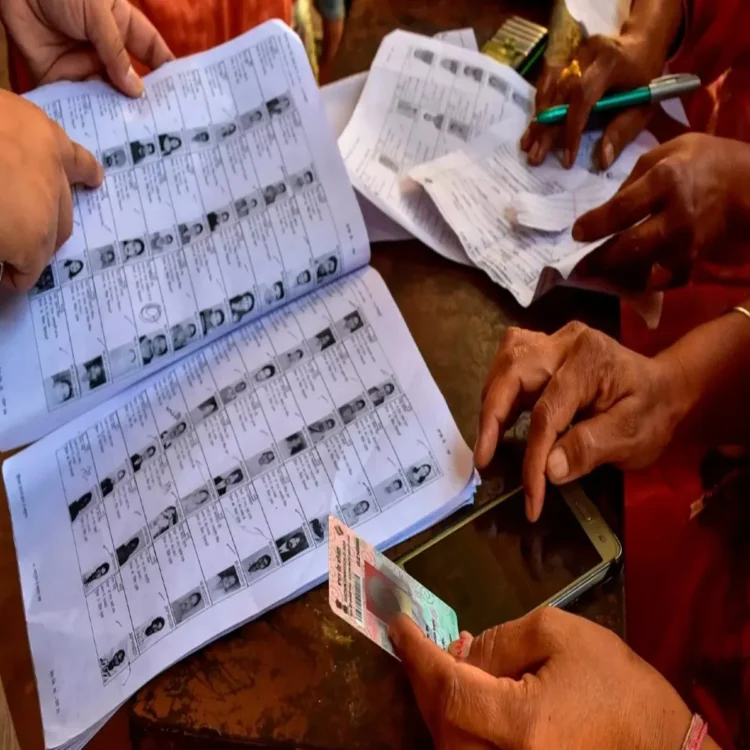
The remarks came after Congress MP Shashi Tharoor questioned the impact of the revision process on elections in West Bengal and Kerala. Athawale, while speaking to reporters, said accusations alone should not be treated as proof of wrongdoing and insisted that the exercise was conducted for administrative and electoral transparency purposes.
Minister Explains Purpose of Voter Verification
According to Athawale, the revision drive aimed to identify outdated and duplicate entries in voter lists. He stated that names of deceased individuals had remained on electoral rolls in several places and needed to be removed to maintain accurate records.
He also pointed out that duplicate registrations were another concern during the verification process. In some instances, the same individual was allegedly found registered in multiple constituencies or locations, making the revision exercise necessary.
Athawale further said authorities noticed irregularities linked to residential addresses. While it is common for large families to share one address, he claimed there were cases where unusually high numbers of voters were registered at a single location. Such discrepancies, he argued, required detailed scrutiny to ensure the integrity of the electoral database.
BJP Leader Rejects Manipulation Allegations
Defending the credibility of the election process, Athawale dismissed claims that the SIR exercise was used to alter voting outcomes. He maintained that the revision was part of a legitimate administrative effort and not connected to political interference.
He also referred to the electoral performance of political parties in West Bengal, saying that despite criticism from opposition leaders, the Trinamool Congress still secured substantial public support. At the same time, he described the Bharatiya Janata Party’s strong seat tally as a significant political achievement.
Athawale credited Prime Minister Narendra Modi’s leadership and public appeal for the National Democratic Alliance’s performance. He additionally rejected allegations regarding electronic voting machines, stating that the machines operated correctly during the election process.
Shashi Tharoor Raises Concerns Over Removed Names
Earlier in the day, Congress MP Shashi Tharoor raised concerns over the scale of voter deletions during the Special Intensive Revision process. Speaking at the ‘India, That is Bharat’ roundtable at the Stanford India Conference, Tharoor claimed that nearly 91 lakh names had been removed from electoral rolls.
According to him, around 34 lakh individuals later approached authorities, asserting that they were legitimate voters whose names had been deleted despite their eligibility. Tharoor argued that election rules require each appeal to be examined separately, making the verification process lengthy and complicated.
He said only a limited number of appeals had reportedly been resolved before polling took place, leaving millions of cases pending. As a result, several individuals who claimed to be genuine voters were allegedly unable to cast their ballots during the elections.
Debate Over Electoral Transparency Continues
The issue has once again highlighted the broader debate over voter list management and electoral transparency in India. Opposition parties have repeatedly demanded greater clarity regarding the deletion and restoration of voter names, while the government and election authorities maintain that revision exercises are essential for maintaining credible electoral records.
Political analysts believe such disputes are likely to remain part of public discussion ahead of future elections, especially in states where contests are closely fought. The differing views from both the ruling alliance and opposition parties reflect the continuing political sensitivity surrounding voter registration and verification procedures.