
ElectionCommission – Supreme Court to Review TMC Plea on Counting Staff
ElectionCommission – The Supreme Court is scheduled to hear a petition filed by the Trinamool Congress (TMC) on Saturday, challenging a recent decision of the Calcutta High Court regarding the appointment of counting personnel for the West Bengal Assembly elections. The case focuses on the Election Commission of India’s (ECI) move to deploy Central government and public sector employees as counting supervisors and assistants.
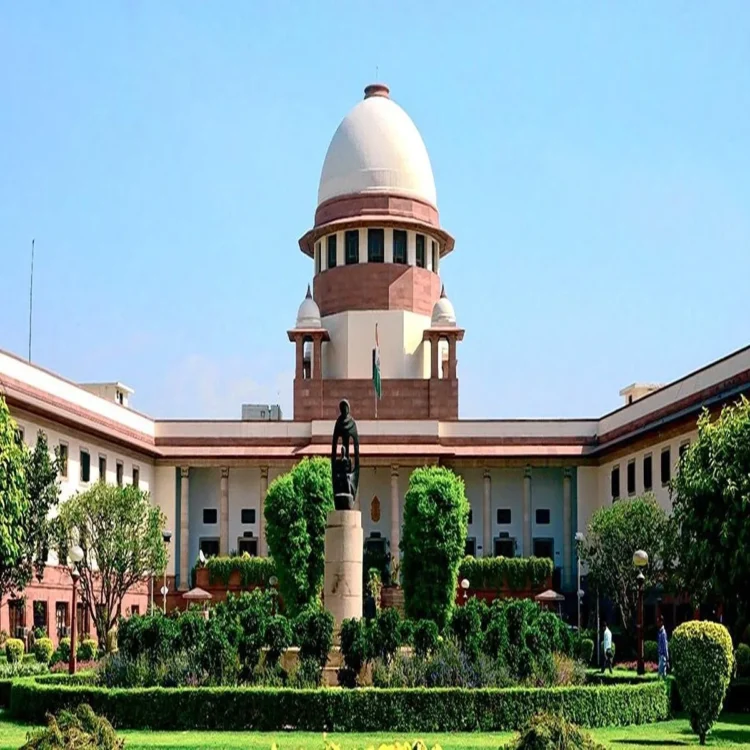
Apex Court to Hear Fresh Petition
According to the official cause list, a bench comprising Justices P.S. Narasimha and Joymalya Bagchi will take up the matter. The ruling party from West Bengal approached the apex court shortly after the High Court dismissed its earlier plea. Reports suggest that TMC’s legal representatives also sought urgent listing of the case before the Chief Justice of India.
High Court Upheld Election Commission’s Authority
The controversy stems from a Calcutta High Court ruling delivered a day earlier, which backed the ECI’s decision in full. A single-judge bench of Justice Krishna Rao concluded that the Commission acted within its legal powers in appointing counting personnel from Central government and Central public sector undertakings.
The court observed that there was no violation of law in preferring Central employees over state government staff for counting duties. It emphasized that the ECI holds discretionary authority in such administrative matters related to elections.
Role of Electoral Guidelines Highlighted
In its judgment, the High Court referred to provisions in the handbook for Returning Officers. Specifically, it noted that existing guidelines allow counting supervisors and assistants to be selected from either state or Central government services, as well as comparable institutions.
The court further clarified that the communication issued by West Bengal’s Additional Chief Electoral Officer was intended to strengthen transparency and ensure smooth conduct of vote counting. It treated this directive as part of the broader electoral process.
Concerns Over Neutrality Rejected
One of the central arguments raised by the TMC was that Central government employees might not remain neutral, given their administrative link to the Union government led by the Bharatiya Janata Party. The party expressed concern that such officials could potentially influence the counting process.
However, the High Court dismissed these apprehensions, stating that they lacked sufficient basis. It pointed out that multiple layers of oversight already exist during counting. These include micro-observers—who are also typically drawn from Central services—along with candidate-appointed counting agents and other officials present at each table.
Safeguards and Legal Remedies Noted
The court underscored that adequate checks and balances are built into the counting system. It also reminded the petitioner that any alleged irregularities could be challenged after the declaration of results through an election petition.
Referring to provisions under the Representation of the People Act, 1951, the judgment stated that candidates retain the right to contest election outcomes if they can demonstrate malpractice or manipulation during counting.
TMC’s Legal Standpoint
The TMC’s petition had questioned a specific directive requiring at least one counting official at each table to be from the Central government or a public sector undertaking. Senior advocate Kalyan Bandopadhyay, representing the party, argued that this instruction exceeded the Election Commission’s jurisdiction.
He further contended that while the deployment of Central personnel as micro-observers is standard practice, extending the same requirement to counting supervisors and assistants was arbitrary and not uniformly applied across states.
Case Gains National Attention
With the matter now before the Supreme Court, the outcome is expected to clarify the extent of the Election Commission’s authority in appointing counting staff. It may also address broader concerns regarding neutrality and procedural fairness in election management.
The hearing is likely to have implications not only for West Bengal but also for future electoral practices across the country.