
West Bengal: Election Commission Tightens Oversight on Voter List Hearings in
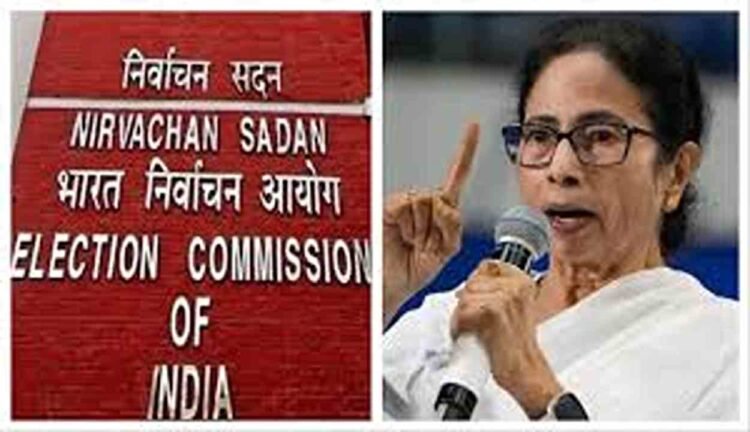
West Bengal: The Election Commission of India has taken a strict stance after reports emerged that unlisted identity documents were being accepted as valid during hearings related to claims and objections on the draft voters’ list in West Bengal. In response to these developments, the commission has instructed special roll observers and micro-observers to submit daily reports on any such irregularities, reinforcing transparency and procedural discipline in the ongoing revision process.
Enhanced Monitoring During Hearing Sessions
According to officials from the office of the Chief Electoral Officer, the Election Commission has laid down a detailed and structured reporting mechanism to address instances where unauthorized or unapproved documents are accepted. This move is aimed at ensuring that only officially notified identity proofs are considered during verification, thereby maintaining the integrity of the electoral rolls.
Role of Micro-Observers in Raising Objections
Under the revised guidelines, if a micro-observer present at any hearing table disagrees with the decision taken by the electoral registration officer or assistant electoral registration officer regarding document validity, the observer must first formally record the objection. This objection should include a clear explanation and must be submitted directly to the concerned officer during the hearing itself.
Escalation Process Through Supervisory Channels
If the objections raised by micro-observers are ignored or dismissed without valid justification, the matter is required to be escalated to the special roll observers. These observers will then independently review the disputed cases. Once reviewed, such cases will be flagged to the respective district magistrates and district electoral officers for further examination and corrective action if needed.
Final Review by Election Authorities
Special roll observers are also mandated to evaluate the decisions taken by district-level authorities. In situations where disagreements persist, these differences must be formally communicated to the Election Commission through the Chief Electoral Officer’s office. This multi-layered oversight mechanism is designed to prevent arbitrary decisions and ensure accountability at every administrative level.
Clarification on Identity Documents
The Election Commission has reiterated its earlier clarification regarding the use of examination-related documents as proof of identity. Admit cards of the Madhyamik examination conducted by the West Bengal Board of Secondary Education are not to be accepted as standalone identity documents. Such admit cards are valid only when submitted together with the corresponding pass certificate, reinforcing the commission’s emphasis on document authenticity.
Possible Extension of Revision Deadlines
Officials have also indicated that there is a possibility of extending the deadlines for completing hearings on claims and objections, as well as the subsequent publication of the final voters’ list. While the current deadline for concluding hearings stands at February 7, the exact duration of any potential extension has not yet been finalized.
Importance of the Special Intensive Revision
The ongoing Special Intensive Revision process plays a crucial role in ensuring that the voters’ list remains accurate, inclusive, and free from discrepancies. With increased scrutiny and stricter reporting requirements, the Election Commission aims to uphold electoral fairness and prevent misuse of identity verification procedures.
Strengthening Electoral Integrity
These measures highlight the Election Commission’s commitment to safeguarding democratic processes. By empowering observers, clarifying documentation rules, and introducing layered supervision, the commission seeks to ensure that every eligible voter is correctly represented in the electoral rolls, while preventing unauthorized entries or exclusions.