
Education Reform – Amit Shah Backs Fast-Track Courts to Combat Exam Paper Leak Cases
Education Reform – The Union government has reaffirmed that safeguarding the future of young people remains one of its highest priorities, with Union Home Minister Amit Shah expressing strong support for Prime Minister Narendra Modi’s decision to establish fast-track courts for cases related to examination paper leaks. According to Shah, the move is aimed at ensuring swift justice and discouraging those responsible for undermining the country’s education system.
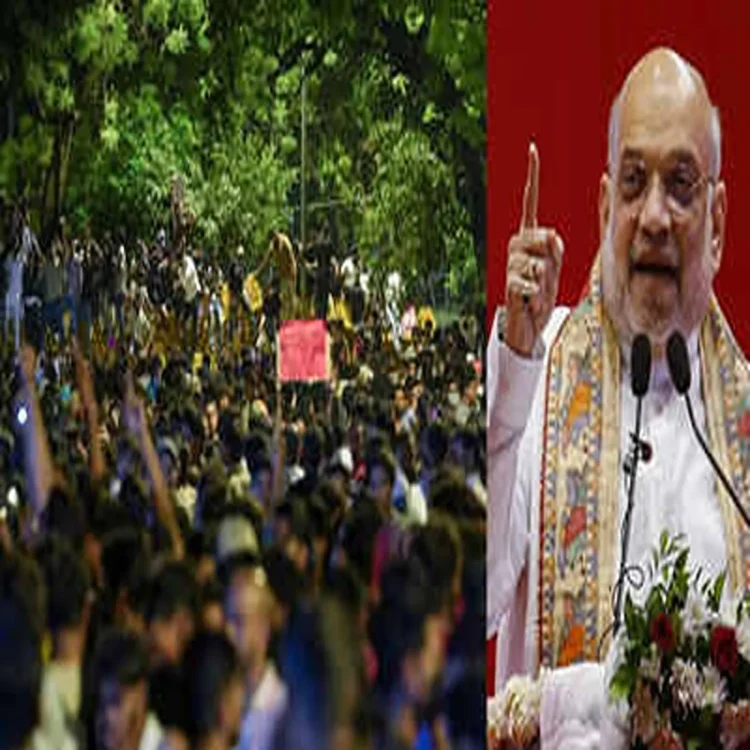
Government Reaffirms Focus on Students
In a message shared on X on Thursday, Amit Shah said the welfare and long-term future of India’s youth continue to be at the heart of the government’s agenda. He described the decision to create fast-track courts as a significant initiative that would strengthen action against individuals involved in paper leak incidents, which have raised serious concerns among students and their families.
Shah stated that the government’s commitment goes beyond policy announcements and is reflected in measures intended to protect the interests of students whose careers can be affected by examination irregularities.
Prime Minister Announces Legal Action
Earlier the same day, Prime Minister Narendra Modi also addressed the issue through a post on X, stating that no one attempting to jeopardize the future of young aspirants would escape accountability. He announced that the government had decided to establish dedicated fast-track courts to ensure quicker trials and strict punishment for those found guilty in paper leak cases.
The Prime Minister said that protecting students and preserving their future remains the government’s foremost responsibility. He also indicated that authorities have been instructed to take every necessary step to strengthen the response against examination-related malpractice.
Decision Comes After Student Demonstrations
The government’s announcement follows widespread protests over alleged irregularities in the NEET examination. Earlier this week, thousands of students, led by the Cockroach Janta Party (CJP), participated in the ‘Sansad Chalo’ march, demanding action over the examination controversy and calling for the resignation of Union Education Minister Dharmendra Pradhan.
The protest drew significant attention after clashes broke out between demonstrators and police personnel. Law enforcement officials used lathi-charge and tear gas in an effort to prevent protesters from moving forward. The confrontation resulted in injuries to several students, while authorities also reported that more than 100 police personnel were hurt during the operation.
Centre Signals Tougher Measures
The Centre has maintained that stronger legal mechanisms are necessary to preserve confidence in the country’s examination system. By proposing fast-track courts, the government aims to reduce delays in legal proceedings and ensure that those responsible for compromising competitive examinations face timely judicial action.
Officials believe that quicker disposal of such cases could act as a deterrent against organised paper leak networks and reinforce trust among students preparing for competitive examinations across the country.
Continuing Response to Examination Concerns
Prime Minister Modi noted that the establishment of fast-track courts forms part of a broader series of measures being introduced to protect students’ interests. He said the concerned ministries and officials have been directed to implement appropriate actions to address the issue comprehensively.
The Prime Minister had first publicly commented on the NEET paper leak controversy earlier this week while addressing a meeting of the NDA Parliamentary Party. Since then, the government has continued to emphasise its commitment to improving examination integrity and ensuring that deserving candidates receive a fair and transparent opportunity.