
Economy – India Urged to Act as Rupee Weakness Fuels Inflation Risks
Economy – India may need a more coordinated and long-term policy approach to deal with the growing challenges linked to a weakening rupee, rising imported inflation, and an expanding balance of payments gap, according to a recent assessment by the State Bank of India.
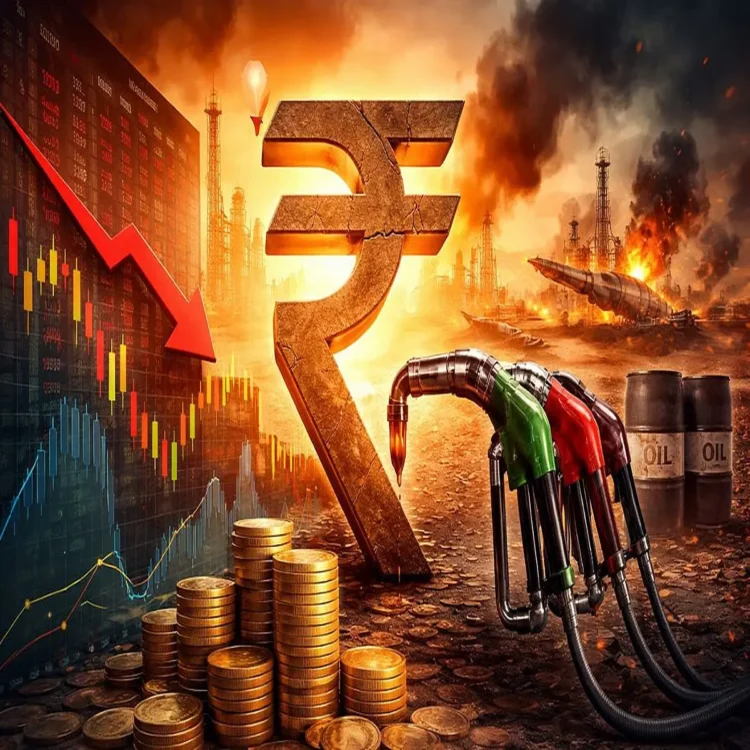
Concerns Over Currency Movement and Inflation
The report points to a key issue emerging from external economic shocks, particularly how they influence the exchange rate. A weaker rupee makes imports costlier, especially essential commodities such as crude oil and industrial inputs. Over time, these higher costs are often passed on to consumers, pushing overall prices upward.
Such developments can gradually influence inflation expectations, making it more difficult for policymakers to maintain price stability. The report emphasizes that the current fall in the rupee does not align with India’s underlying economic fundamentals, raising concerns about deeper structural imbalances.
Understanding the Broader Economic Impact
The concept of “second-round effects” is central to the report’s warning. Initially, a currency depreciation increases the cost of imported goods. However, the ripple effect spreads when businesses adjust their pricing to offset higher input costs, leading to sustained inflation across sectors.
If this trend continues unchecked, it may result in inflation expectations drifting away from policy targets. This situation complicates decision-making for central authorities, particularly in managing interest rates and liquidity.
Data Highlights Growing Pressure
Recent data indicates that the rupee declined by 6.39 percent between April 2025 and February 2026. Following geopolitical tensions in West Asia, it weakened further by 3.63 percent. At the same time, foreign institutional investors withdrew approximately USD 6.4 billion from Indian markets, adding further strain on the currency.
These combined factors have intensified pressure on the external sector, raising questions about the sustainability of relying on exchange rate adjustments alone.
Limits of Exchange Rate as a Buffer
The report cautions against viewing currency depreciation as a long-term stabilizing tool. While a weaker currency can sometimes support exports, it also increases the cost of imports, which can feed inflation domestically.
In the current global environment marked by uncertainty and volatility, this mechanism may not work effectively as a shock absorber. Instead, it risks becoming a channel through which inflation enters the domestic economy.
Outlook for Balance of Payments
Looking ahead, the report projects that India’s balance of payments may remain in deficit in the financial year 2027, with an estimated shortfall of USD 28 billion. The trade balance is also expected to stay negative, reflecting continued dependence on imports.
The current account deficit is forecast to widen to USD 54.1 billion in FY27, compared to USD 31.5 billion in FY26. Although the capital account is likely to record a surplus of USD 26.5 billion, driven by investment inflows, it may not be sufficient to bridge the overall gap.
Need for Structural Policy Measures
The possibility of the balance of payments remaining negative for a third consecutive year highlights the urgency for policy intervention. The report suggests that relying solely on currency movements is not a viable strategy in the present global scenario.
Instead, a broader and more structural approach is required. This may include measures to strengthen export competitiveness, manage import dependency, and ensure stable capital flows. Addressing these areas could help reduce external vulnerabilities while keeping inflation under control.
In summary, the report underscores the importance of proactive and comprehensive policymaking to safeguard economic stability amid evolving global and domestic challenges.