
Diplomacy – Modi Highlights Trade, Technology and Tourism at Global Envoys Meet
Diplomacy – Prime Minister Narendra Modi’s address emerged as the defining moment of the 11th Heads of Mission Conference, with a strong emphasis on integrating trade, technology, and tourism into India’s diplomatic approach. External Affairs Minister S. Jaishankar described these three sectors as central pillars shaping India’s engagement with the world.
Focus on Emerging Diplomatic Priorities
Sharing insights from the conference, Jaishankar noted that discussions extended beyond traditional diplomacy. Key themes included strengthening ties with neighbouring countries under the Neighbourhood First policy, expanding outreach to the Indian diaspora, and building resilience in an increasingly uncertain global environment. The idea of reducing strategic risks while maintaining economic stability also featured prominently.
He highlighted that the conference brought together voices from government, industry, and the technology sector, creating a broad platform for meaningful exchange. According to him, the discussions reflected the overarching theme of preparing India’s diplomacy for the year 2047, marking 100 years of independence.
Conference Setting and Participation
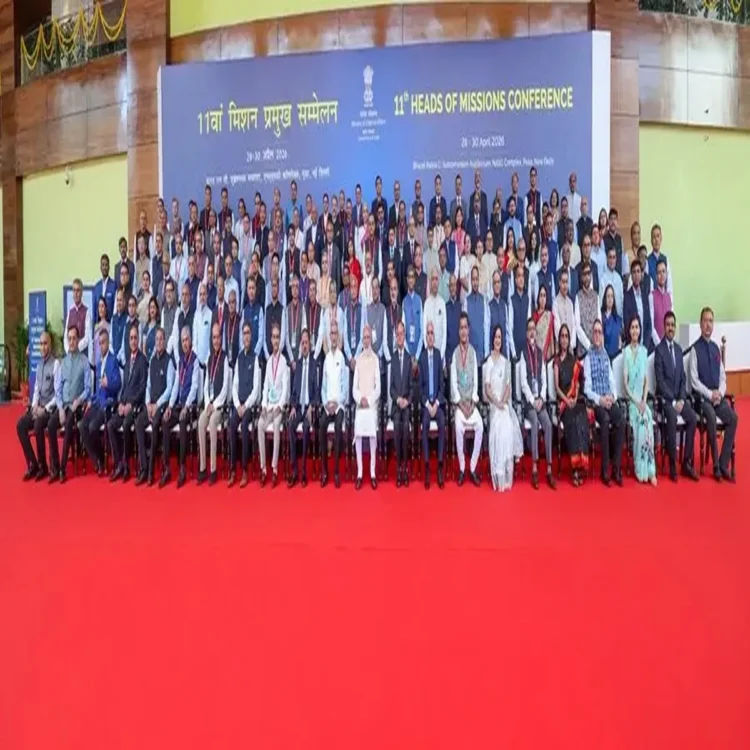
The three-day event, organised by the Ministry of External Affairs, took place from April 28 to April 30 at the National Agricultural Science Complex in New Delhi. It gathered Indian ambassadors, high commissioners, and senior officials tasked with representing the country abroad.
Prime Minister Modi addressed the participants during the conference, offering direction on how India can better position itself globally. His remarks focused on advancing national interests through stronger economic partnerships, innovation-driven collaboration, and deeper cultural connections.
Strengthening Global Engagement
In his communication following the event, the Prime Minister underlined the importance of expanding India’s international footprint. He pointed to the need for boosting trade relations, leveraging technological advancements, and fostering partnerships that align with long-term national goals.
Another major area of focus was strengthening ties with the Indian diaspora. Officials discussed ways to enhance engagement with overseas communities, recognising their role in promoting India’s interests and cultural identity across the globe.
Addressing a Changing Global Landscape
Jaishankar, who delivered the inaugural address, spoke about the rapid expansion of India’s global interactions over the past decade. He acknowledged that the international environment remains volatile, requiring agile and forward-looking diplomacy.
He stressed that Indian diplomats must be equipped to respond to evolving geopolitical challenges while continuing to secure the country’s strategic objectives. The conference served as a platform to align these priorities and prepare officials for future responsibilities.
Diverse Sessions and Activities
Throughout the conference, participants engaged in a range of activities designed to encourage collaboration and innovation. These included thematic discussions, brainstorming sessions, and simulation-based exercises aimed at addressing real-world diplomatic scenarios.
Topics covered ranged from geopolitical shifts and emerging technologies to storytelling about India’s development journey. The concept of “future-ready diplomacy” was a recurring theme, reflecting the need for adaptability in a fast-changing global context.
Presentations and Strategic Direction
Officials also made detailed presentations to the Prime Minister, outlining strategies for enhancing India’s global presence. These included plans to promote trade, technology, and tourism more effectively, as well as initiatives to present India’s growth narrative to international audiences.
The Ministry of External Affairs noted that the conference successfully combined policy discussions with practical planning, ensuring that India’s diplomatic corps remains aligned with national priorities.