
Delimitation – Kharge Calls for All-Party Consultation Before Revised Constitution Bill
Delimitation –Congress president Mallikarjun Kharge has appealed to Prime Minister Narendra Modi to convene an all-party meeting before the Centre introduces a revised Constitution amendment bill dealing with delimitation, arguing that political parties should be given enough time to examine the proposed changes before they are debated in Parliament.
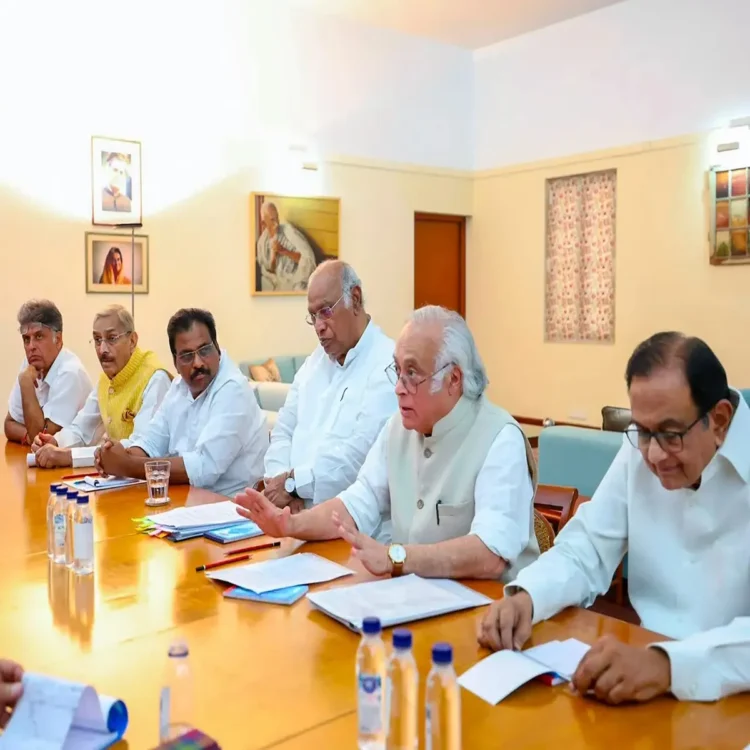
Kharge Seeks Wider Political Consultation
In a letter sent to the Prime Minister on Thursday, Kharge referred to his earlier communications with Parliamentary Affairs Minister Kiren Rijiju in March and April, in which he had requested discussions involving all political parties on the delimitation proposals. According to him, those requests did not receive a positive response.
The Congress president also recalled that the Constitution (131st Amendment) Bill, 2026, did not obtain the constitutionally required two-thirds majority in the Lok Sabha when it was taken up for consideration on April 17, 2026. He said that any revised version of the legislation should be discussed collectively before being introduced again.
Media Reports Trigger Fresh Appeal
Kharge stated that recent media reports indicate the Union government is preparing to table a revised version of the amendment bill during the upcoming Monsoon Session of Parliament. In light of these reports, he urged the Prime Minister to organize an all-party meeting so that political stakeholders can carefully review the updated proposals and provide informed feedback before parliamentary proceedings begin.
He emphasized that constitutional changes of this nature require broad consultation and sufficient time for examination rather than hurried legislative action.
Government’s Numbers Improve in Lok Sabha
The latest appeal comes at a time when the ruling National Democratic Alliance (NDA) is believed to be moving closer to securing the numbers needed to pass constitutional amendment legislation in the Lok Sabha. Such bills require the support of at least two-thirds of members present and voting, making political consensus an important factor.
Although the earlier attempt failed to reach the required majority, political developments since then have fueled speculation that the government may have a stronger chance if a revised proposal is presented during the Monsoon Session.
Opposition Signals Conditional Support
Adding a new dimension to the debate, Nationalist Congress Party (Sharadchandra Pawar) leader Supriya Sule indicated on Wednesday that her party could consider backing the proposed delimitation measure if the Centre provides an assurance that every state will receive a uniform 50 percent increase in both Lok Sabha and Assembly seats.
Her remarks suggest that at least some opposition parties may be open to negotiations if concerns over regional representation are adequately addressed.
Concerns Over Regional Representation
According to sources, one proposal under consideration involves increasing the number of Lok Sabha seats across all states by 50 percent. The reported move is aimed at addressing concerns expressed by several southern states, which have argued that a population-based delimitation exercise could reduce their influence in the lower house of Parliament.
Leaders from these states have consistently maintained that regions that successfully controlled population growth should not face diminished political representation as a consequence of future seat redistribution.
Expansion of Lok Sabha Under Consideration
The Centre is also exploring the possibility of expanding the strength of the Lok Sabha from the current 543 elected seats to as many as 850. The proposed expansion is linked to implementing the women’s reservation law ahead of the 2029 general election following the completion of the delimitation process based on the last published 2011 Census.
At present, the NDA is estimated to require 360 votes in the Lok Sabha to secure the two-thirds majority needed for passing a constitutional amendment, making support from additional parties potentially significant if the revised bill is brought before Parliament.