
Defence – Rajnath Singh Calls for Balance Between AI and Conventional Military Strength
Defence – Military modernization and indigenous naval development drive India’s future defence strategy – Defence Minister Rajnath Singh has underlined the importance of combining advanced technologies with traditional military capabilities, saying both will remain essential for safeguarding the country’s interests in the years ahead.
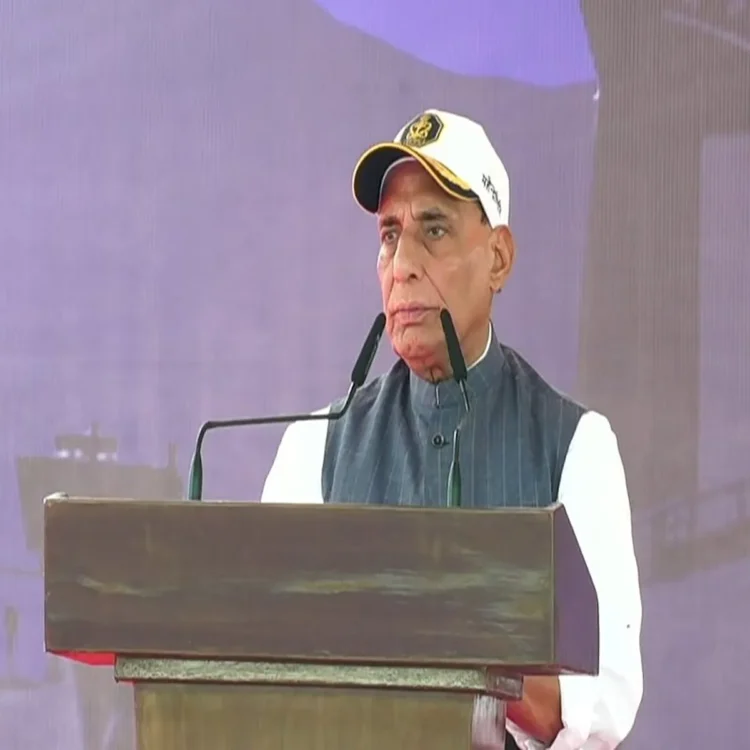
AI and Conventional Forces Must Progress Together
Speaking at the commissioning ceremony of INS Mahendragiri in Visakhapatnam on Saturday, Defence Minister Rajnath Singh said technological innovation is changing the character of modern warfare, but it cannot replace the value of trained armed forces and dependable conventional military power.
He noted that while Artificial Intelligence is expected to play a growing role in future conflicts, success on the battlefield will continue to depend on a nation’s determination, disciplined personnel, and credible defence capabilities. According to the minister, military preparedness should not rely solely on emerging technologies but must also preserve the strength of conventional platforms.
Balanced Defence Strategy Remains India’s Priority
Rajnath Singh said India’s defence policy focuses on maintaining a healthy balance between innovation and traditional military assets. He described modern technology and conventional equipment as complementary rather than competing elements of national security.
The minister cautioned that history offers several examples of countries that weakened their conventional forces while placing excessive faith in new technologies, eventually facing serious strategic consequences. He said India intends to strengthen both areas simultaneously by investing in advanced systems while continuously improving conventional defence infrastructure.
Pointing to INS Mahendragiri, Singh said the newly commissioned warship reflects India’s long-term commitment to this balanced defence approach.
Operation Sindoor Demonstrated Integrated Capabilities
Referring to Operation Sindoor, the Defence Minister said the recent military operation highlighted India’s ability to effectively combine modern technology with conventional military strength.
He stated that the armed forces demonstrated not only the capability to defend the nation but also the readiness to respond decisively whenever national security demands it. According to Singh, the operation illustrated how coordinated use of advanced systems and conventional assets enhances India’s defence preparedness.
Indigenous Warships Strengthen Industry and Economy
The Defence Minister also highlighted the broader economic impact of building naval vessels within the country. He said every new warship contributes to expanding India’s defence manufacturing ecosystem while improving industrial capabilities across multiple sectors.
According to Singh, shipbuilding supports industries such as steel production, electronics, propulsion systems, software development, sensors, logistics, and precision engineering. Growth in these sectors creates large-scale employment opportunities, encourages technological innovation, and strengthens India’s manufacturing base.
He added that every naval vessel should be viewed as a long-term investment that reinforces both maritime security and economic development.
Vision for India’s Maritime Future
Looking ahead, Singh said India has an extensive pipeline of naval projects planned over the coming years with the objective of establishing the country as a globally recognised hub for shipbuilding and maritime defence innovation.
He said the government aims to achieve this vision by working closely with domestic industries, private companies, MSMEs, startups, innovators, and international partners. The ongoing implementation of Maritime India Vision 2030, he added, is intended to accelerate this transformation.
The Defence Minister also referred to several policy measures introduced to support the maritime sector, including the Maritime Development Fund, the Shipbuilding Financial Assistance Scheme, and the Shipbuilding Development Scheme. These initiatives are expected to enhance shipbuilding capacity, strengthen India’s industrial foundation, and improve the country’s ability to protect its expanding maritime and economic interests.