
Culture – India’s Diverse Heritage Remains Integral to National Identity
Culture – India’s cultural landscape reflects centuries of shared traditions, architectural achievements, and evolving historical narratives. Union Culture Minister Gajendra Singh Shekhawat on Wednesday stressed that every chapter of the country’s long civilisational journey must be acknowledged and preserved, regardless of historical differences or political debates surrounding them.
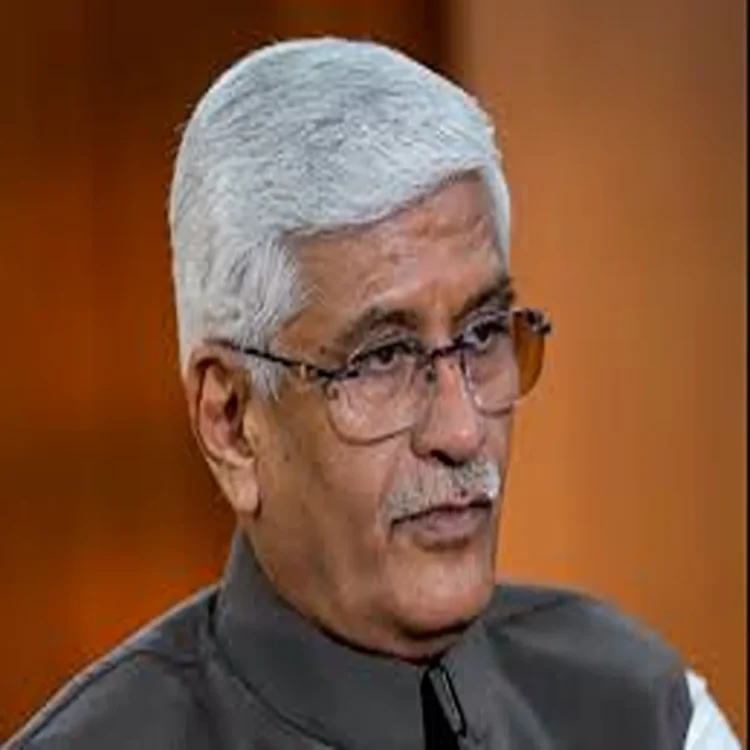
Minister Highlights India’s Shared Civilisational Legacy
During an interview with PTI Videos, Shekhawat described Indian civilisation as a continuous and inclusive historical experience that has evolved over thousands of years. He said the country’s identity cannot be separated from the many faiths, traditions, and communities that contributed to its development over time.
The minister explained that India’s heritage extends across multiple historical periods and religious influences. Referring to monuments from different eras, he mentioned ancient temple architecture such as Ellora’s Kailasa Temple and the Khajuraho temple complex alongside globally recognised Islamic monuments including the Taj Mahal. According to him, all these structures carry equal importance in understanding India’s cultural evolution.
Shekhawat stated that the nation’s historical narrative cannot selectively remove certain periods simply because they remain controversial. He noted that archaeological and historical sites connected to different eras, including Vedic heritage locations and excavated settlements like Rakhigarhi and Sanauli, are all part of the same civilisational continuum.
Remarks Come Amid Ongoing Religious Site Disputes
The minister’s comments arrive at a time when debates surrounding historical religious sites continue to attract public attention across several states. Certain groups have increasingly focused on emphasising India’s Hindu civilisational roots before the establishment of Islamic rule in parts of the subcontinent during the medieval period.
When asked about recurring tensions linked to disputed religious locations, Shekhawat avoided making direct comments on matters currently under judicial consideration. However, he remarked that if historical changes involving religious structures were proven to have occurred through force during previous centuries, society should acknowledge those facts with sensitivity and understanding.
He said discussions around such sites require broader reflection from all communities, particularly when questions of faith and historical memory are involved. According to the minister, resolving these concerns demands both awareness of historical realities and mutual respect between communities.
Tourism Proposal for Disputed Sites Rejected
Shekhawat also rejected suggestions that contested religious structures should simply be converted into neutral tourist attractions open to visitors from all backgrounds. Referring indirectly to ongoing disputes in Varanasi and Mathura, he argued that such locations hold deep emotional and religious significance that cannot easily be separated from their historical context.
He pointed out that the structures standing near the Kashi Vishwanath Temple in Varanasi and the Krishna Janmabhoomi site in Mathura remain subjects of strong public sentiment. According to him, people across the country are already aware of the historical debates connected to these sites and the circumstances under which the disputed structures were built.
Emphasis on Unity Through Diversity
Despite the ongoing disagreements over historical monuments and places of worship, the minister strongly defended India’s pluralistic identity. He said the country’s strength lies in its ability to bring together people from different faiths, cultural backgrounds, traditions, and regional practices under one national framework.
Shekhawat described India as a civilisation shaped by inclusivity and coexistence rather than uniformity. He said the diversity seen across languages, customs, religious beliefs, and cultural traditions forms the foundation of the country’s identity and social structure.
The remarks also come amid continuing legal disputes surrounding the Gyanvapi Mosque near the Kashi Vishwanath Temple in Varanasi and the Shahi Idgah Mosque near the Krishna Janmabhoomi site in Mathura. Several Hindu groups maintain that temples once existed at these locations before later structures were constructed during the Mughal era.