
Crime – Delhi Police Uncover Fake Antacid and Coffee Racket
Crime – Delhi Police have dismantled an illegal manufacturing network involved in producing and distributing fake antacid powder and counterfeit coffee products in the Madhu Vihar locality. The operation led to the arrest of four individuals and the seizure of a large quantity of counterfeit goods along with manufacturing equipment.
Illegal Units Operating in Residential Flats
According to police officials, the racket was being run from two rented residential flats in Madhu Vihar. These apartments had been converted into small-scale production units where spurious products were being prepared, packaged, and readied for distribution. The operation had reportedly been active for nearly two months before authorities intervened.
Deputy Commissioner of Police (Crime) Rahul Alwal stated that the accused had set up these units in a manner that avoided suspicion, using ordinary residential spaces to carry out large-scale illegal manufacturing.
Arrested Individuals and Their Roles
The four arrested individuals have been identified as Uttam Das (23), Papai Das Baragya, also known as Pankaj (19), Nitin Bhardwaj (38), and Sanjay Bansal (50), all residents of Delhi.
Initial investigation revealed that Uttam Das was managing the production units on-site, while Papai assisted him as a labourer. During questioning, both disclosed that they were working under the instructions of Nitin Bhardwaj, who was allegedly overseeing the operation.
Bhardwaj was later apprehended from Dehradun in Uttarakhand. Further interrogation led to the involvement of Sanjay Bansal, who was reportedly connected to the supply chain and distribution network. He was arrested near Kashmere Gate while attempting to leave the city.
Large Quantity of Fake Products Seized
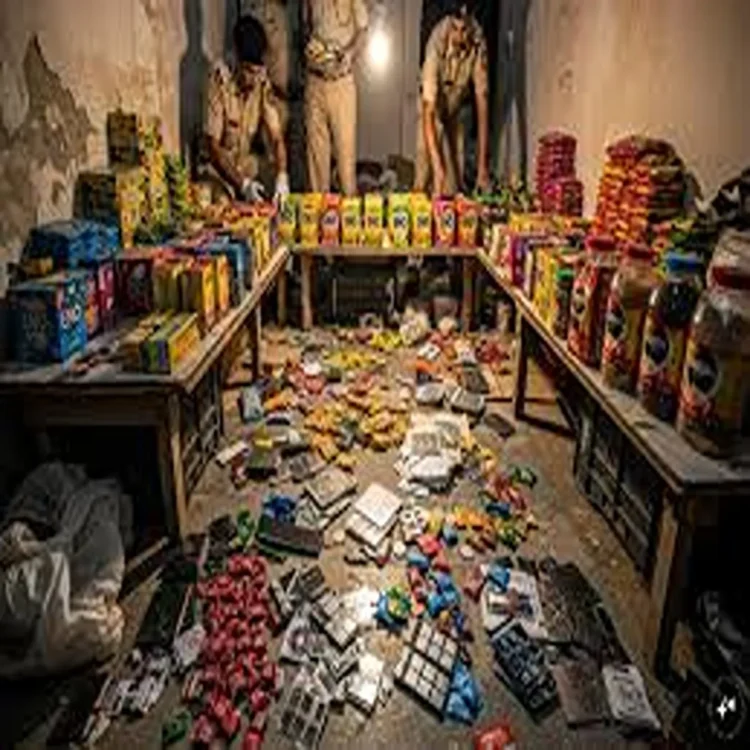
During the raids, police recovered a significant amount of counterfeit goods and raw materials. These included nearly one lakh sachets of fake antacid powder and around 50,000 coffee sachets that were ready for distribution.
Authorities also seized approximately 500 kilograms of coffee powder, two drums containing acidic substances, and several pieces of machinery used in the manufacturing process. Among the equipment recovered were three single-track filling machines with compressors, along with tools such as hot guns used for packaging.
In addition, packaging materials like foil rolls, printed stickers, boxes, cartons, and gunny bags were found at the site, indicating that the products were being made to closely resemble genuine branded items.
Nationwide Distribution Network
Investigators believe that the counterfeit products were not limited to local circulation. The accused were allegedly supplying these fake goods through both wholesale and retail channels across various parts of the country. The scale of the recovered material suggests a well-organised distribution network.
Officials are now working to trace the supply chain further and identify other individuals or entities who may have been involved in transporting or selling these products in different markets.
Health Risks and Ongoing Investigation
Police have highlighted the potential health risks associated with the consumption of such counterfeit products, particularly those involving edible items like coffee and medicinal products such as antacids. The use of unknown or substandard ingredients could pose serious dangers to consumers.
Authorities have stated that further investigation is underway to determine the full extent of the operation, including the origin of raw materials and the financial transactions linked to the racket.
The case underscores the ongoing challenges faced by law enforcement agencies in tackling counterfeit goods, especially those produced in concealed setups within residential areas.