
Congress – Jairam Ramesh Alleges VB-G RAM G Weakens Rural Work Rights
Congress – The Congress on Wednesday intensified its criticism of the Centre’s Viksit Bharat Guarantee for Rozgar and Ajeevika Mission (Gramin) Act, alleging that the new rural employment law weakens the legal protections previously available to workers under MGNREGA.
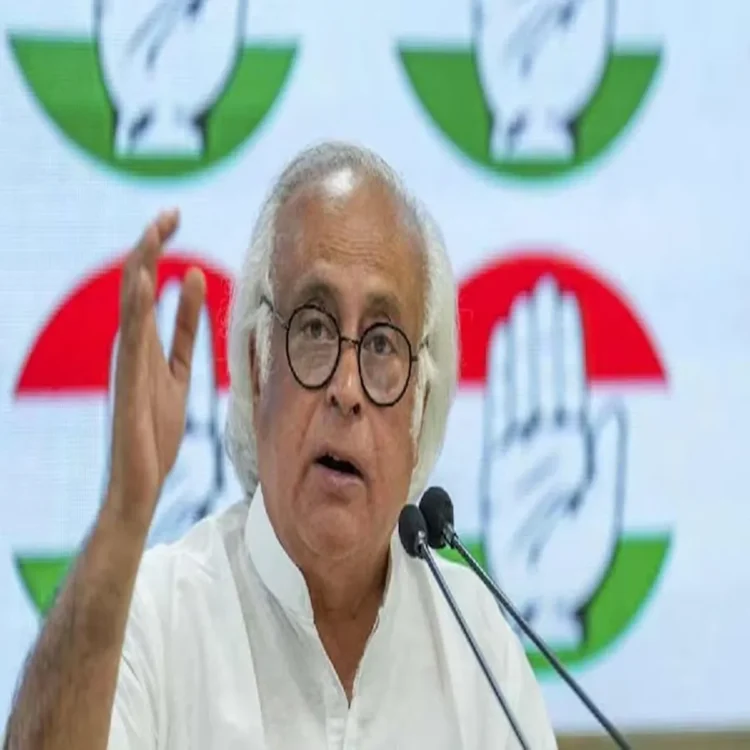
Senior Congress leader Jairam Ramesh described the legislation as “Rozgar Adhikar chori”, claiming that it moves away from a rights-based employment framework and shifts greater financial responsibility to state governments. His remarks came after he shared an article by former Jammu and Kashmir finance minister Haseeb Drabu on social media platform X.
Congress Questions Shift From Rights-Based Employment Model
Ramesh said the earlier Mahatma Gandhi National Rural Employment Guarantee Act had created a legal assurance of work for eligible rural households and strengthened the role of gram panchayats in implementing employment programmes.
According to him, the VB-G RAM G Act replaces that structure with a more centralised system. He alleged that the new approach could reduce the ability of local bodies to respond to employment demand in villages.
Referring to Drabu’s article, Ramesh said the former minister had examined the impact of the new legislation and raised concerns about its design. He argued that the law had been introduced in place of a programme that had played a significant role in providing work opportunities in rural areas.
Concerns Raised Over State Funding Responsibilities
The Congress leader also claimed that the new law could place a substantial financial burden on state governments. He said states may be required to bear costs that were earlier supported through a stronger central commitment under MGNREGA.
The party has maintained that rural employment schemes should protect workers during periods of low agricultural activity, economic stress and seasonal unemployment. Congress leaders have said that any replacement framework should ensure predictable funding and timely wage payments.
Ramesh further alleged that the legislation uses technology in a manner that could prevent some eligible workers from accessing benefits. He said digital systems should make welfare delivery easier rather than create barriers for people who may face difficulties with documentation, connectivity or verification procedures.
Drabu Article Flags Changes in Employment Guarantee
In his article published in an English-language newspaper, Drabu said MGNREGA was designed as a demand-driven programme that guaranteed up to 100 days of unskilled work to every eligible rural household.
He argued that the new VB-G RAM G Act changes the nature of that guarantee by replacing a legal entitlement with what he described as a centrally determined, formula-based transfer mechanism.
Drabu’s assessment has added to the political debate over the future of rural employment support, particularly in states where MGNREGA has been widely used by households seeking temporary work.
Demand for Restoration of Strengthened MGNREGA
The Congress has opposed the VB-G RAM G Act since it came into force on July 1. The party has demanded that the law be withdrawn and that MGNREGA be restored with stronger provisions for rural workers.
Congress has also raised objections over wage levels under the new system, calling them inadequate. The party has urged the government to consider the 2019 recommendations of the expert committee chaired by Dr Anoop Satpathy, along with inflation-linked revisions, to establish a fair minimum wage for rural labourers.
The VB-G RAM G Act took effect across the country on July 1, replacing MGNREGA, which had operated for nearly two decades. MGNREGA was introduced during the tenure of the Congress-led UPA government and became one of India’s major rural employment programmes.