
Census – Maharashtra Launches Digital Self-Enumeration Drive for Census 2027
Census – The Government of India has officially initiated the first phase of Census 2027, introducing a digital self-enumeration system that allows citizens to submit their information online before traditional field surveys begin.
Maharashtra Chief Minister Devendra Fadnavis formally commenced the self-enumeration campaign on Thursday in Mumbai, marking a significant step in the country’s next population census. The launch event was held at his official residence, Varsha, where he personally completed his own digital entry as part of the rollout.
Senior officials present at inauguration
The event saw the presence of several key officials and family members, reflecting the importance of the initiative. Among those attending were Amruta Fadnavis and Divija Fadnavis, along with senior administrative figures including Additional Municipal Commissioner Vipin Sharma, Principal Census Officer Nirupama J Dange, Deputy Census Registrar AN Rajeev, Deputy Registrar Yashwant Patil, and BMC Census Officer Santosh Gaikwad.
Officials highlighted that the digital self-enumeration phase, which began on May 1, 2026, is designed to simplify the process for citizens and improve overall data accuracy. Residents can now provide their demographic details online, reducing dependency on physical surveys during the initial stage.
A major shift toward digital census methods
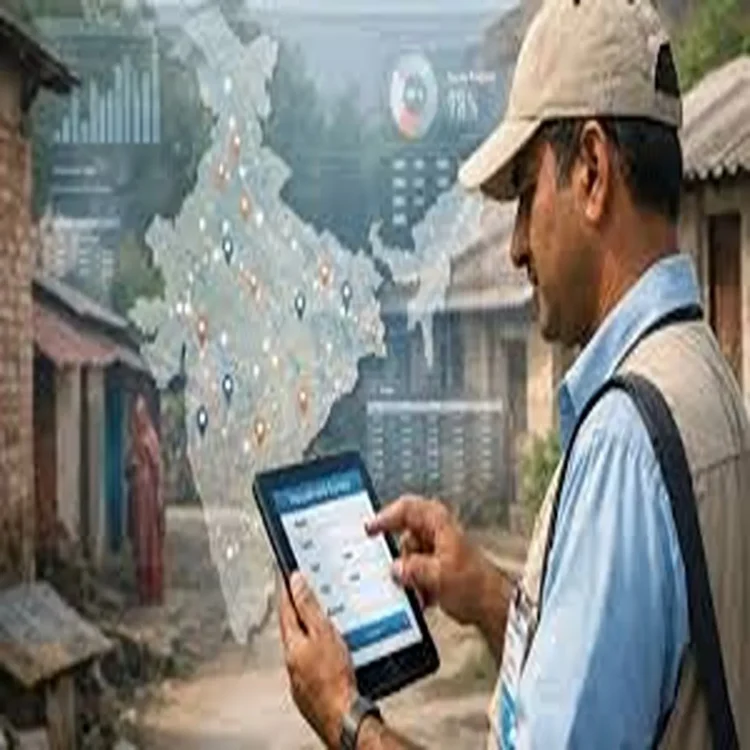
Census 2027 marks a notable shift in how population data is collected in India. For the first time, a large-scale optional self-enumeration system has been introduced, allowing people to input their details independently using digital platforms. Authorities believe this approach will not only enhance convenience but also reduce errors associated with manual data collection.
The exercise will be supported by modern technology, including mobile-based data entry tools and a centralized monitoring system known as the Census Management & Monitoring System (CMMS). This system will enable near real-time tracking of progress across regions, helping officials manage the vast operation more efficiently.
Scale and significance of Census 2027
The upcoming census will be the 16th in India’s history and the eighth since Independence. It is expected to be the largest population enumeration exercise globally, covering millions of households across urban and rural areas.
A key feature of this census is the inclusion of geo-referenced mapping, which ensures that each area is accurately documented. This will help create more precise datasets that can support planning and governance at both state and national levels.
In addition, the Population Enumeration phase will include a comprehensive caste-based data collection, which is expected to provide deeper insights into the country’s social structure. This information is likely to play a role in shaping future welfare programs and policy decisions.
Focus on data security and public participation
Authorities have emphasized that data protection remains a top priority throughout the process. The digital systems used in Census 2027 are designed to ensure secure storage and handling of personal information, addressing concerns about privacy.
Officials also underlined the importance of public participation in making the exercise successful. By encouraging citizens to complete their self-enumeration early, the government aims to streamline the later stages, which will involve door-to-door verification by census staff.
Background and delay due to pandemic
India has traditionally conducted its census every ten years. However, the 2021 census could not be carried out due to disruptions caused by the COVID-19 pandemic. As a result, Census 2027 will serve as the next official enumeration, continuing the long-standing decennial tradition.
With the introduction of digital tools and updated methodologies, this census is expected to set a new benchmark in population data collection. Officials believe the improved accuracy and speed of data processing will strengthen evidence-based policymaking and support more targeted development initiatives across the country.